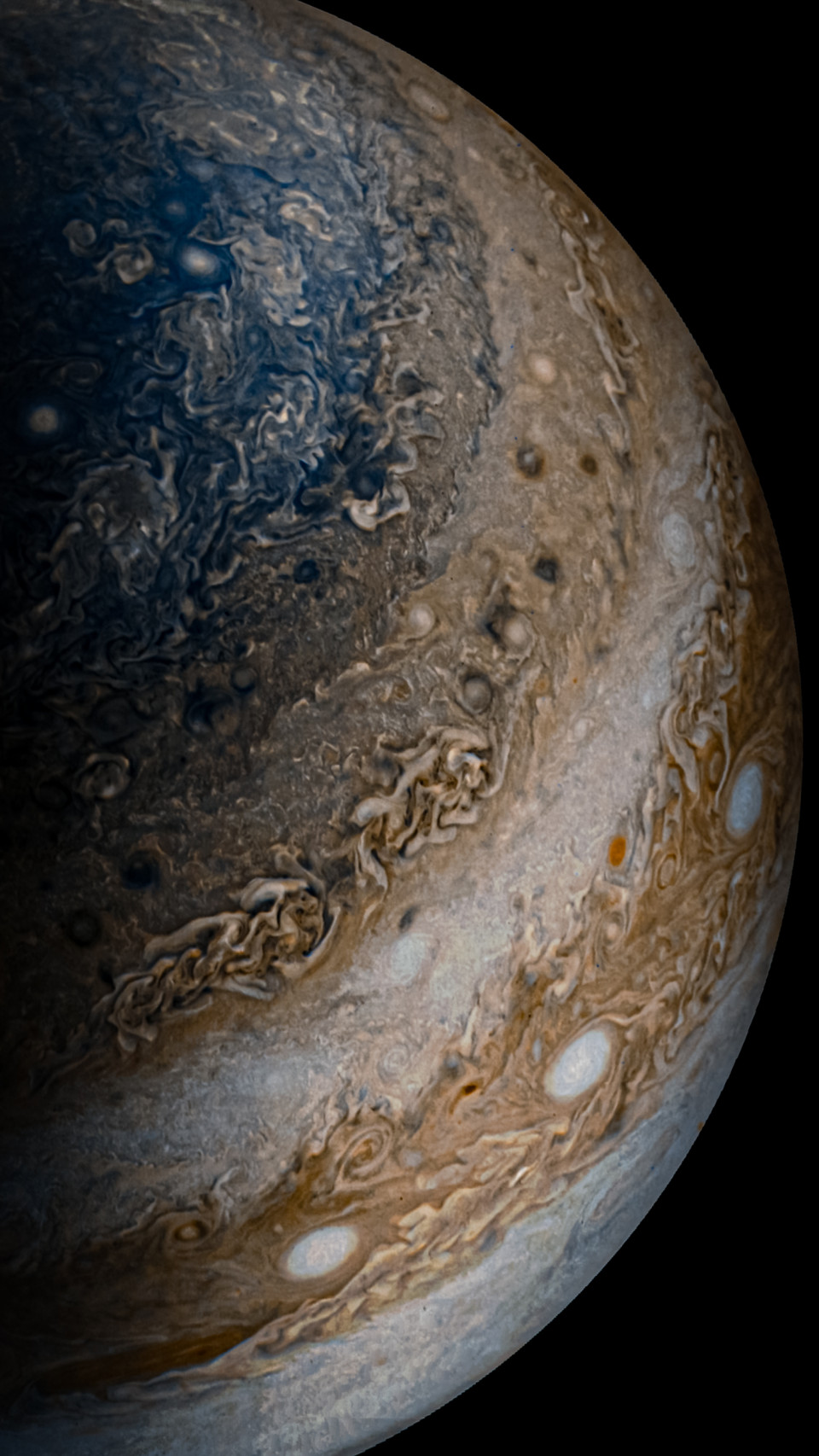
Jupiter,
developed by
volunteers
A camera flown for outreach sends home raw frames. The mission posts them and asks the public to make the pictures.
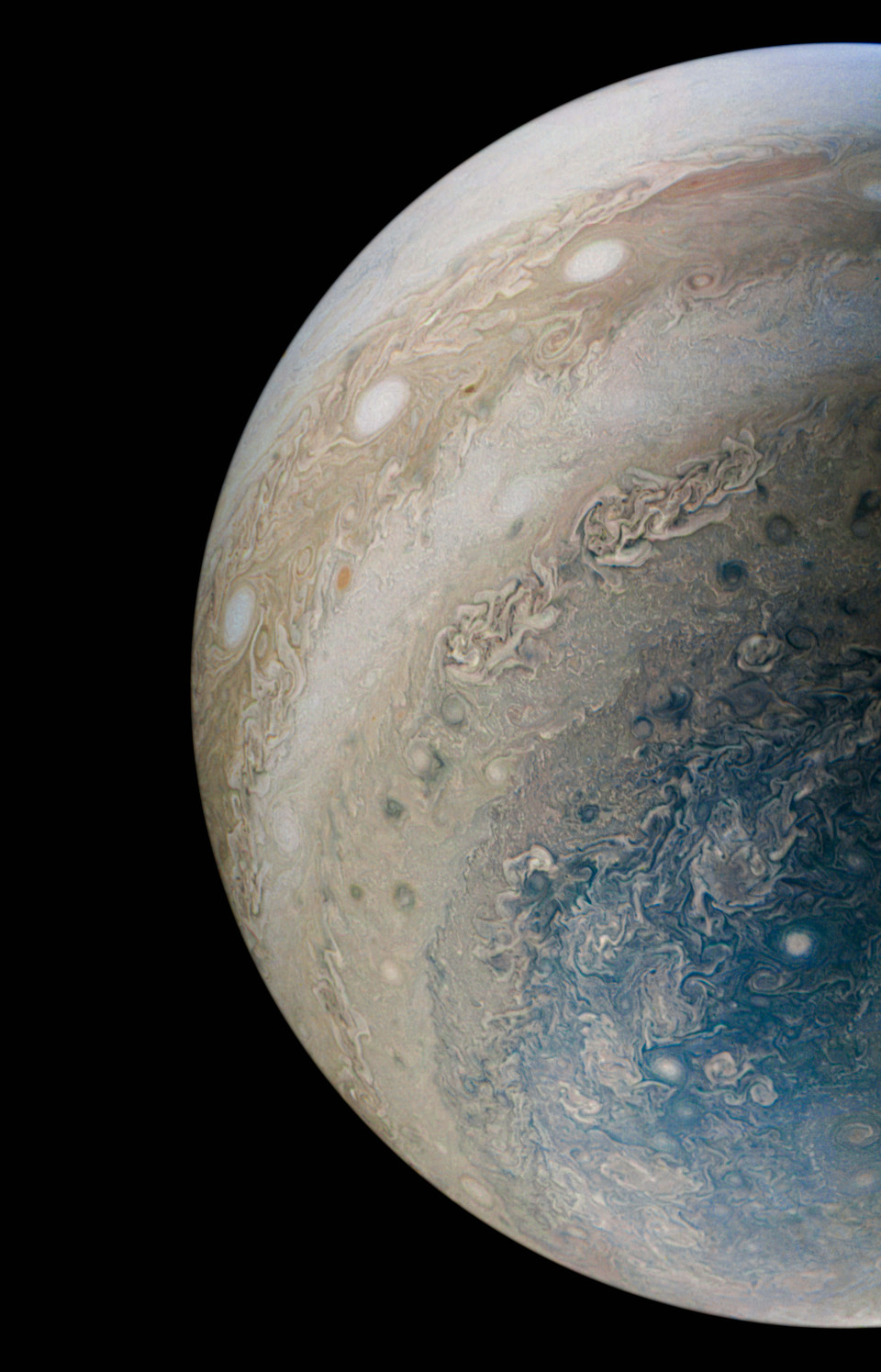
The planet
Everything that follows is an argument about how to photograph this.
- Composition
- Hydrogen and helium, no surface
- Equatorial diameter
- 139,820 km — about eleven Earths across
- Mass
- 318 Earths, and more than twice every other planet combined
- One rotation
- 9 hours 56 minutes — the fastest in the solar system
- One orbit
- 11.9 Earth years, at roughly 778 million km from the Sun
- Cloud-top temperature
- About −145 °C
- Moons
- Four giant ones, and more than ninety smaller
- Magnetosphere
- The largest structure in the solar system
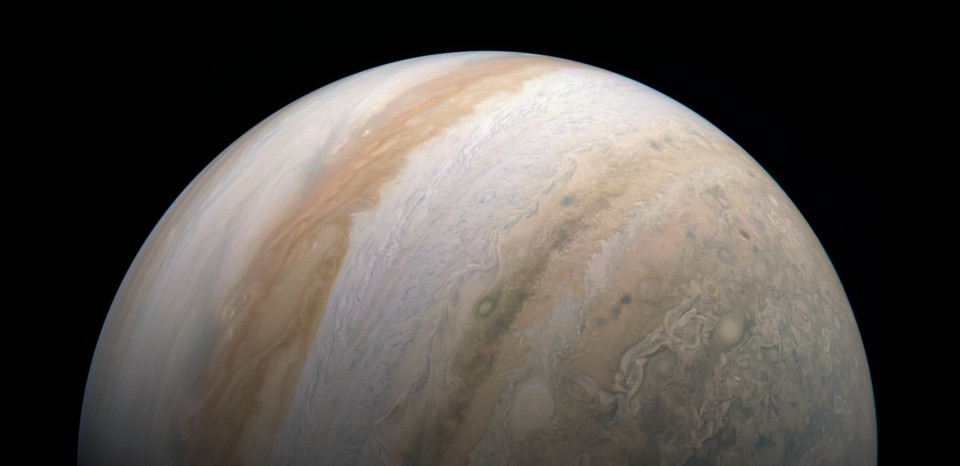
The stripes are three thousand kilometres deep
They look painted on. They are not. Juno mapped the planet’s gravity field closely enough to trace the jet streams downward, and found the banded flow reaching some 3,000 kilometres below the cloud tops. Earth’s entire weather sits in a film a few kilometres thick.
There is nothing for it to sit on, either. Jupiter is hydrogen and helium nearly all the way down, and it turns once in under ten hours — faster than anything else in the solar system. That spin is what sorts the weather into stripes: pale zones where gas rises, dark belts where it sinks.
Storms parked in formation
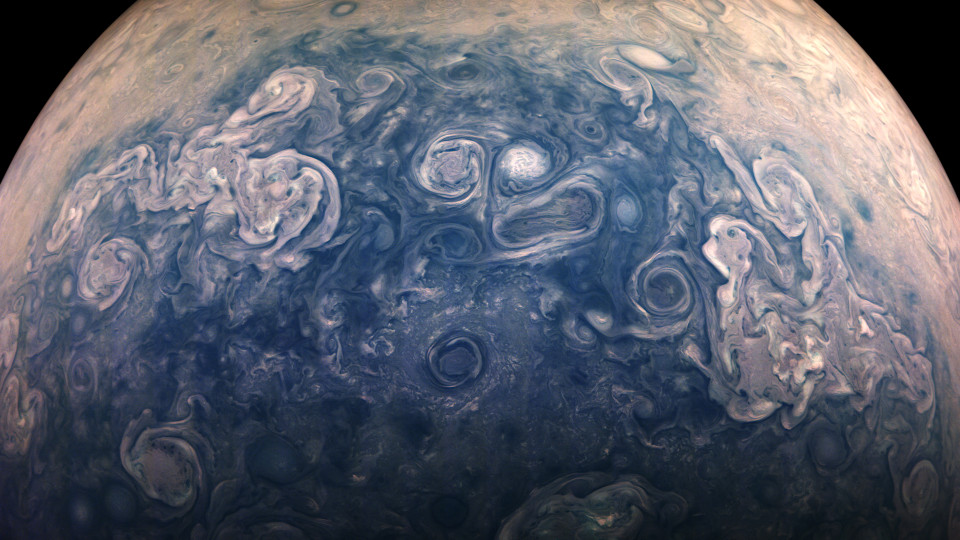
Juno's polar orbit gave the first proper look over the top of the planet, and the stripes turned out to stop. In their place: one giant cyclone at the north pole, about 3,000 kilometres across, with eight more arranged around it. The south has its own smaller group.
They do not wander off or blow themselves out the way hurricanes do. They oscillate around fixed positions and drift slowly around the pole, holding the formation for years.
The Great Red Spot is the other constant, and it is shrinking — twice Earth's width in 1979, about 1.3 times now, with roots reaching some 320 kilometres below the cloud tops.
A camera that cannot hold still
JunoCam is a pushframe imager. Its filter strips sit bonded directly onto the detector — 1600 pixels wide, about 155 rows high — and the spacecraft's own rotation drags them across the planet.
At the nominal two revolutions per minute, a frame lands roughly every 400 milliseconds. Nothing about the picture exists until someone assembles those strips.
The spin would smear anything exposed longer than 3.2 milliseconds
Bonded straight onto the photoactive surface. There is no colour wheel to turn.
Two revolutions per minute drag the strips across the planet, a frame every 400 ms.
a smear
a point
One row every 3.2 ms, up to about a hundred steps, cancelling the motion.
Eight bits, and fading
Pixels leave the detector 12 bits deep and are companded to 8 bits inside the instrument. Everything posted on the mission site is that 8-bit form; radiometric work uses the linear 12-bit products archived with the Planetary Data System.
The camera is also being destroyed, and Jupiter is doing it. The planet's magnetosphere is the largest structure in the solar system and drives the harshest radiation belts around any planet — fed in part by material thrown off Io — and Juno flies straight through them on every pass.
Later perijoves come back with reduced dynamic range and a higher noise floor. The mission has handed that to citizen scientists as a problem to solve.
What counts as processing
Cropping counts. So does pulling one atmospheric feature out of the murk, pushing colour past what an eye would see, stitching frames into collages, and reconstructing colour from the separate filter strips.
The results have gone well past the gallery: illustrating articles, reported to the scientific community, cited in journal papers with attribution. Some of it the team simply treats as art.
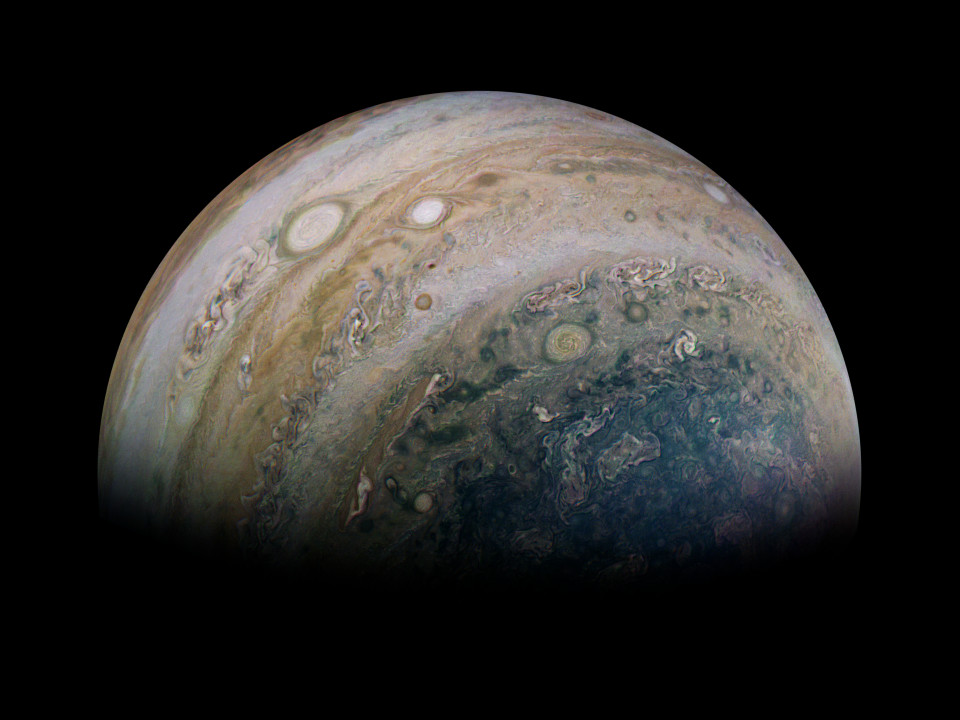
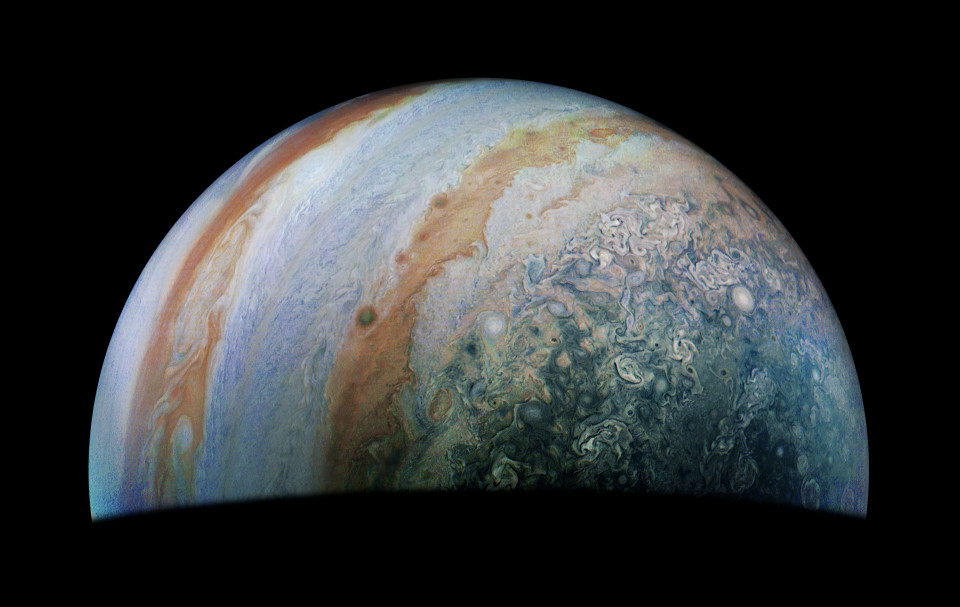
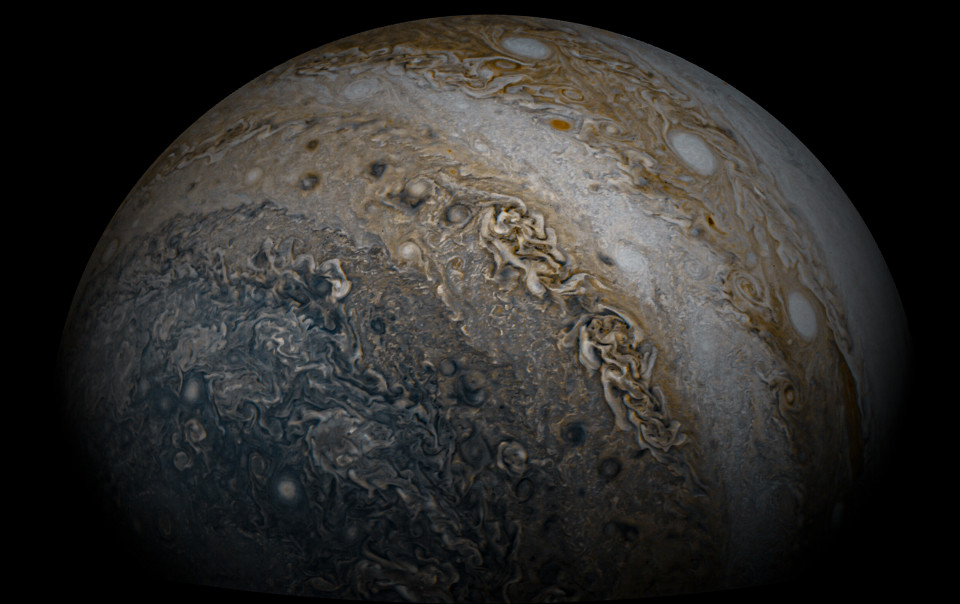
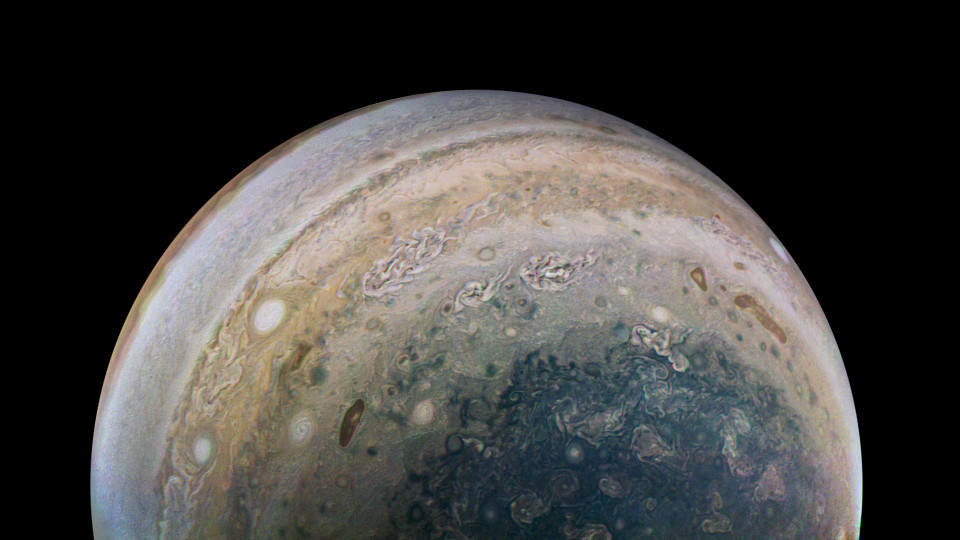
Which one is Jupiter?
One frame, one processor, one set of 8-bit pixels. The only thing that changed between these two pictures is how far the brightness was pushed before the file was saved.
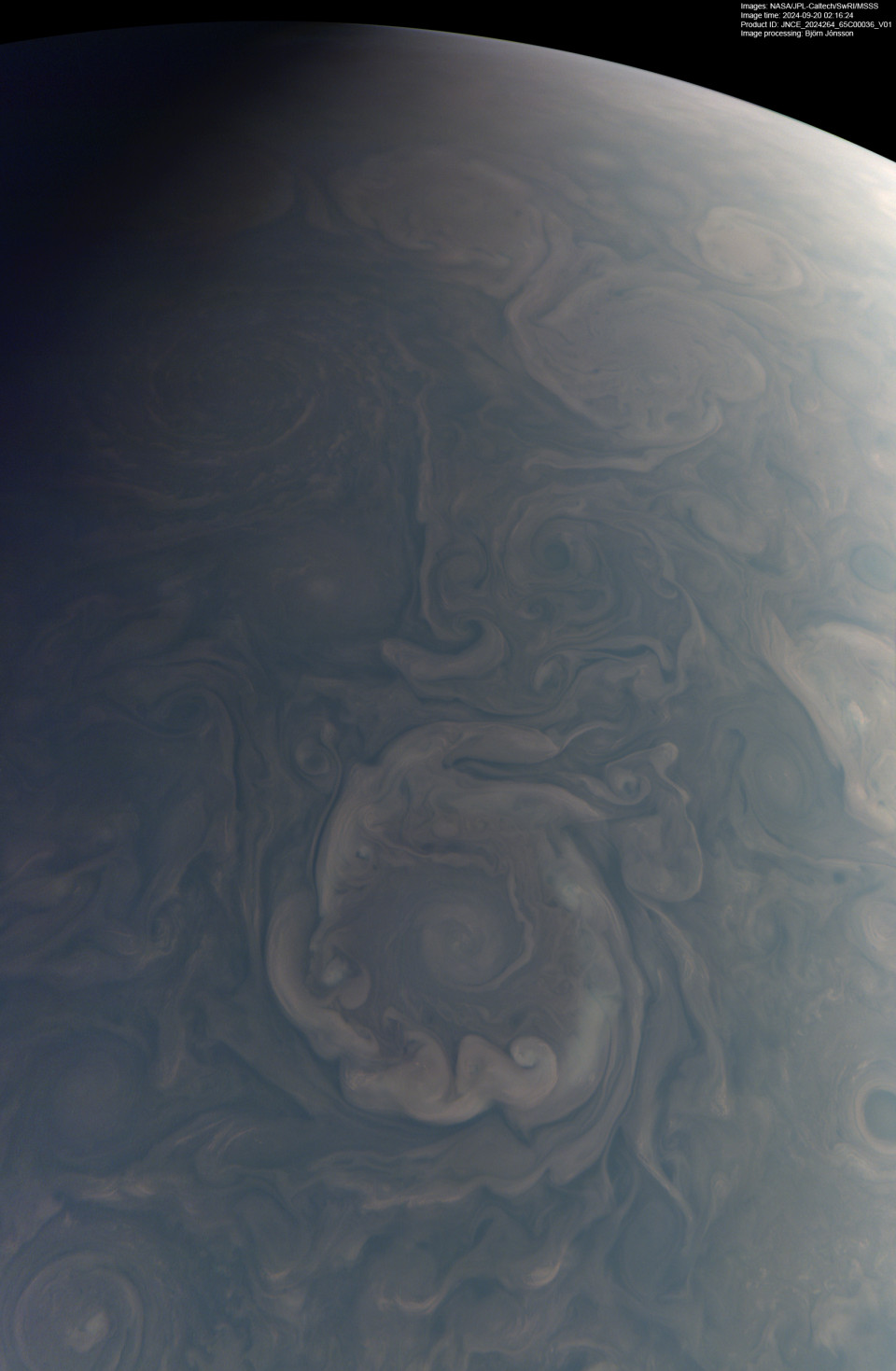
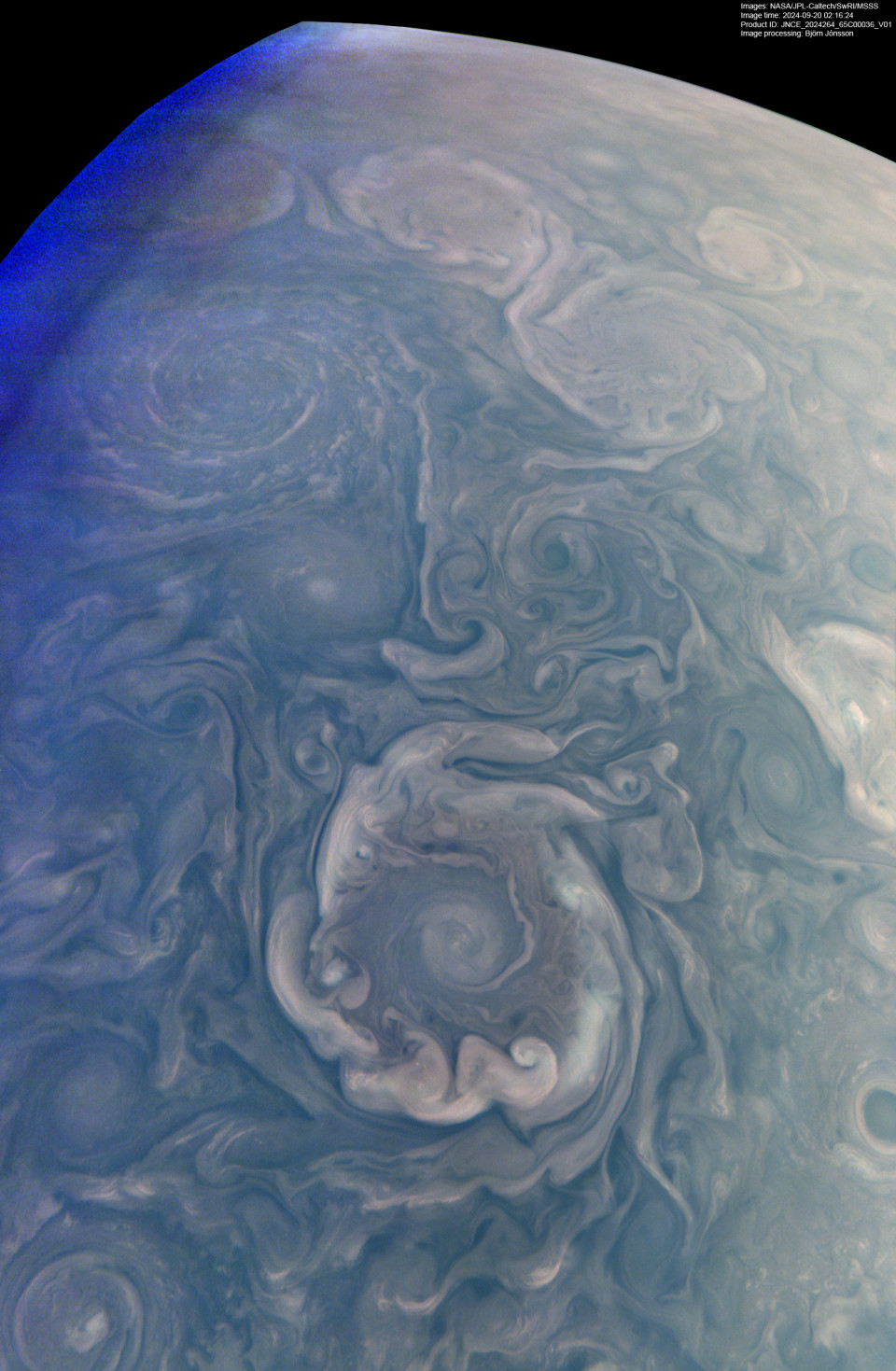
Neither is wrong, and neither is a measurement. Science is done on the linear 12-bit products in the Planetary Data System. Every Jupiter picture the public has ever seen — including both of these — is somebody’s decision about what to make visible.
What comes back
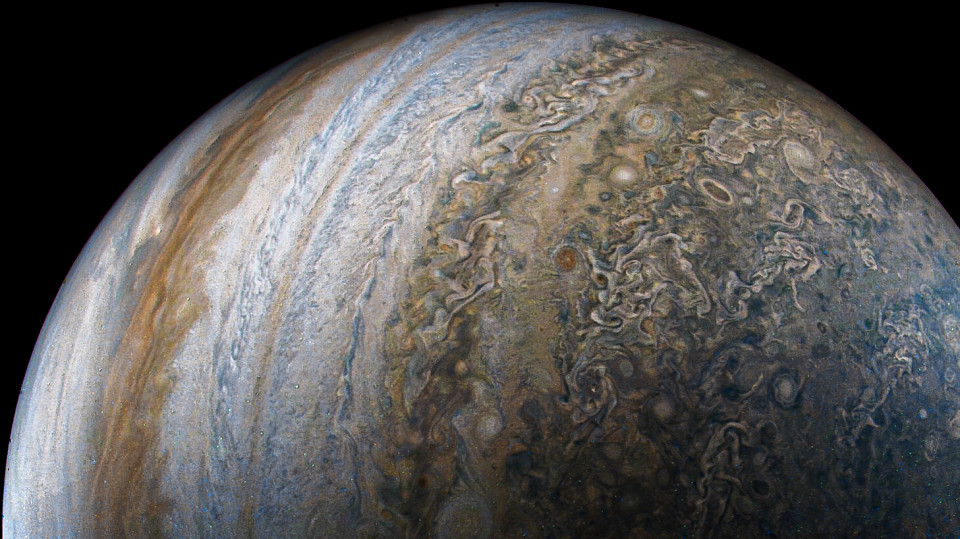
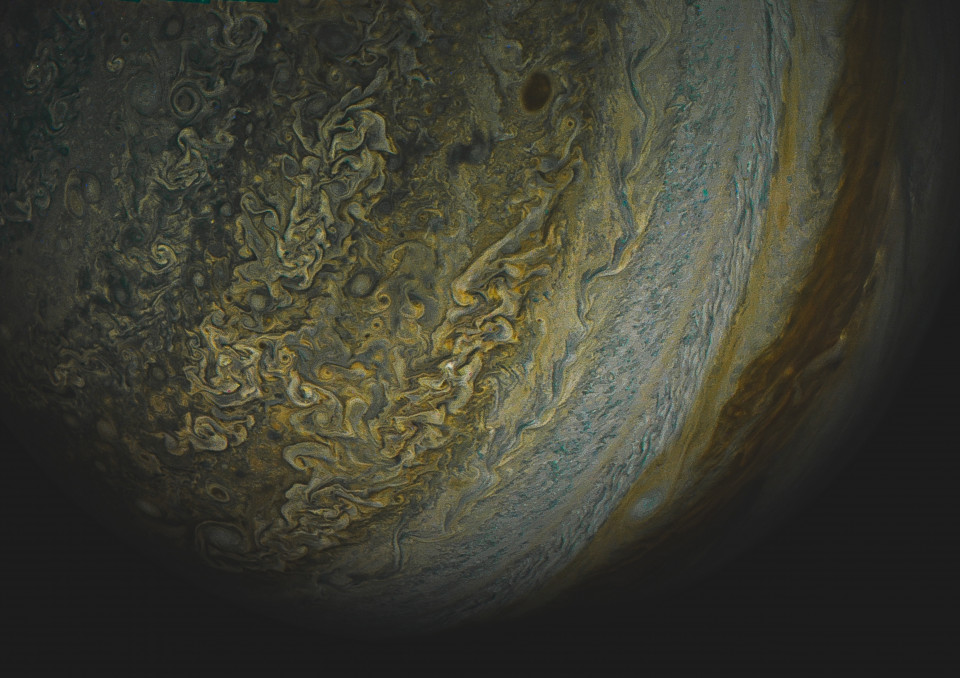
The gallery runs to hundreds of pages of public submissions. Six of them, below, cover most of the range: the Red Spot, a moon, a polar cyclone field, a belt, a single storm, and a whole disc — one instrument, six sets of hands, six different ideas of what the data is for.
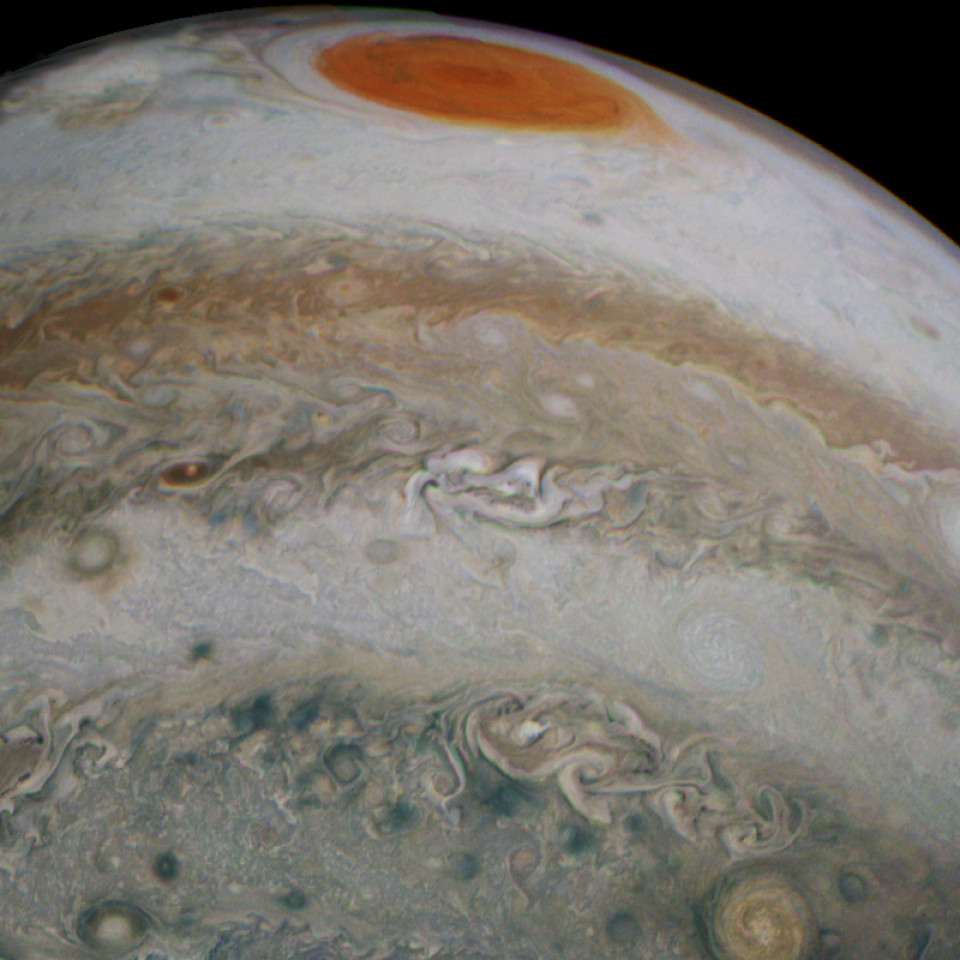
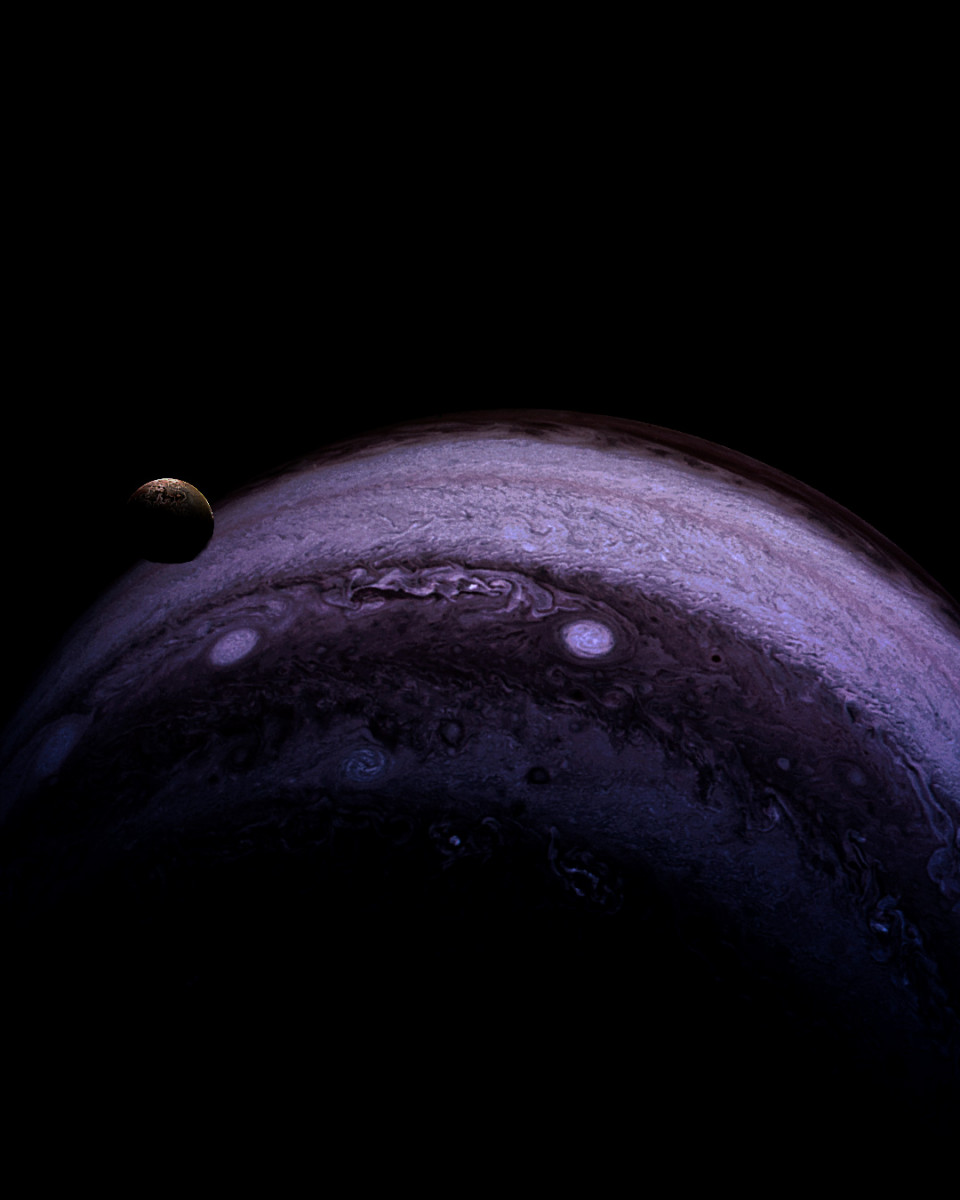
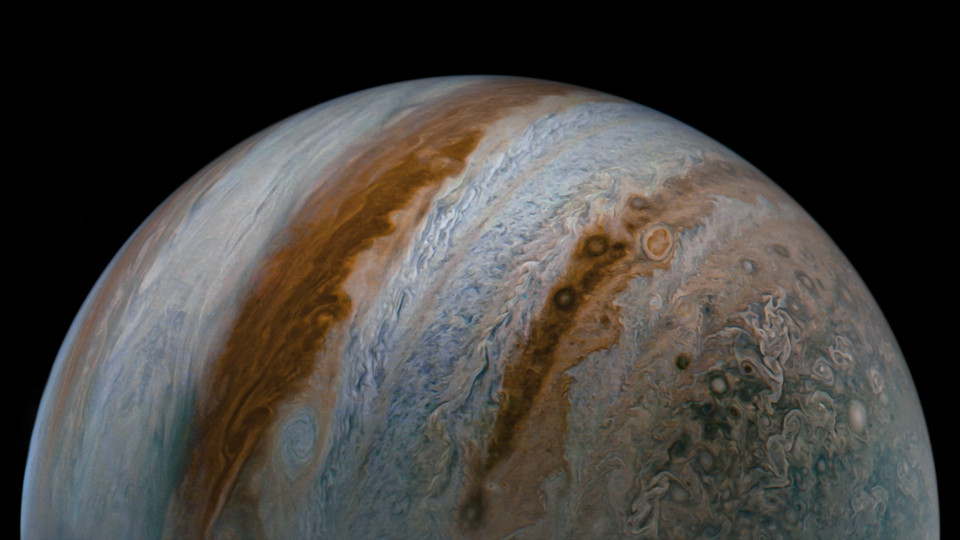
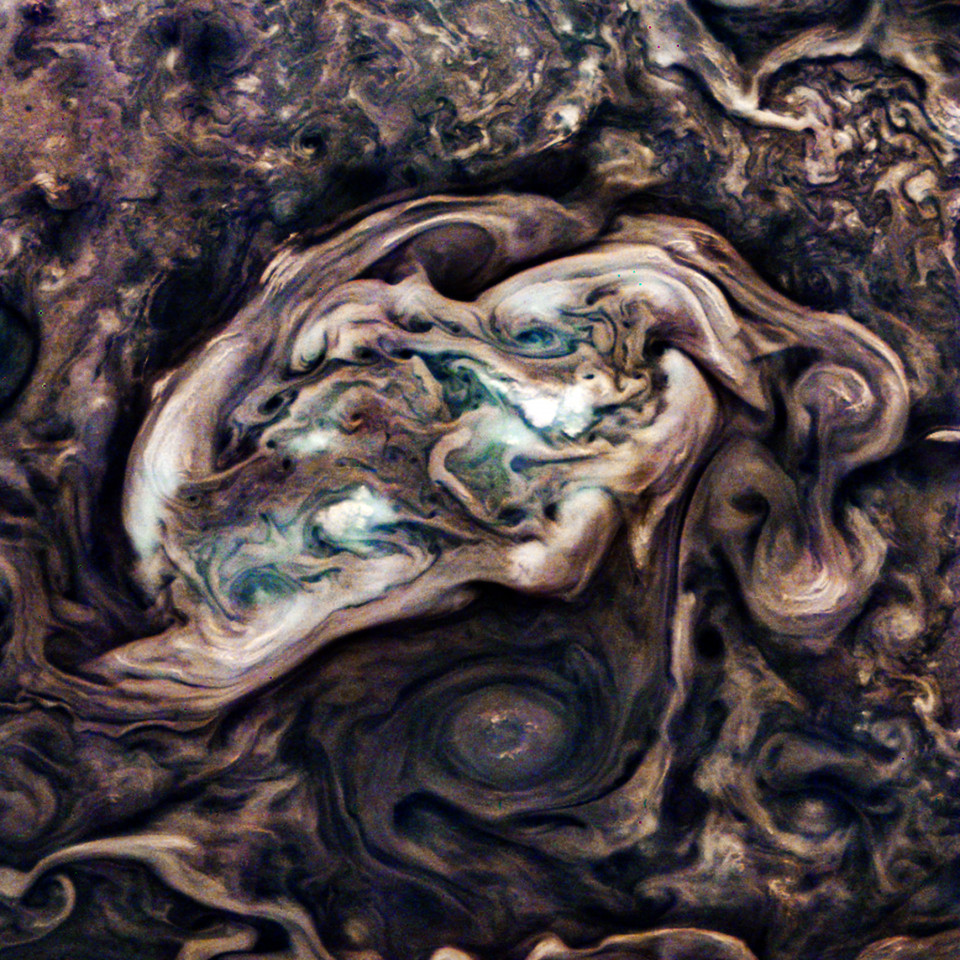
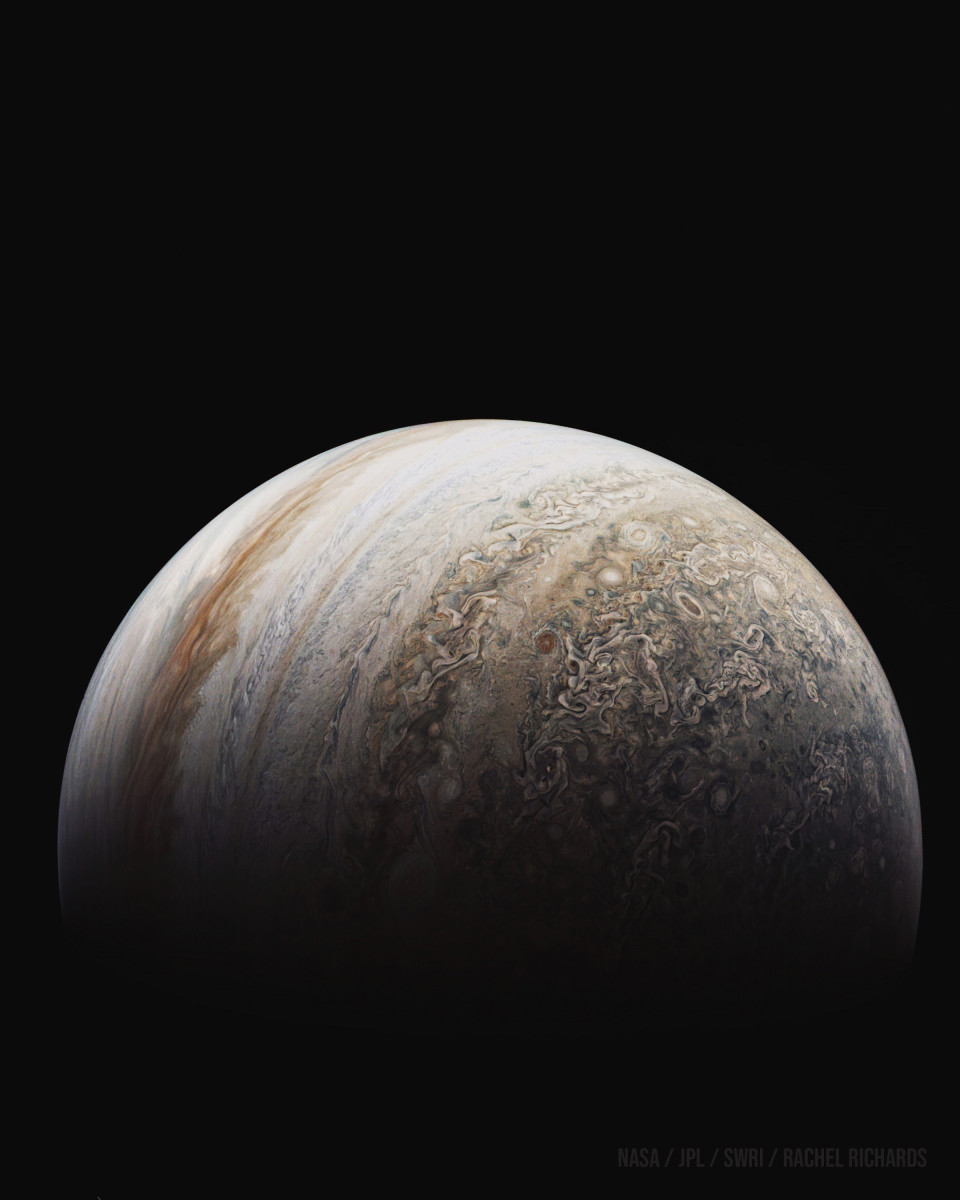
There is no photograph of Jupiter. There are only readings of it.
The mission built an outreach camera, published the raw frames, and let the public decide what the planet looks like. Almost every Jupiter image you know came out of that arrangement.
It is the most-seen picture of another world, and it has no single author.