Jupiter, developed by strangers
A camera flown as an outreach instrument sends home raw frames. The mission posts them and asks the public to make the pictures.
JunoCam is a pushframe imager. Its filter strips are bonded straight onto the detector — 1600 pixels wide, about 155 rows high — and the spacecraft's own rotation drags them across the planet. At two revolutions per minute a frame arrives roughly every 400 milliseconds.
The spin would smear any exposure longer than 3.2 milliseconds, so the camera shifts the image down one row every 3.2 milliseconds to cancel the motion. Pixels leave the detector 12 bits deep and are compressed to 8 inside the instrument. That 8-bit form is what the public receives.
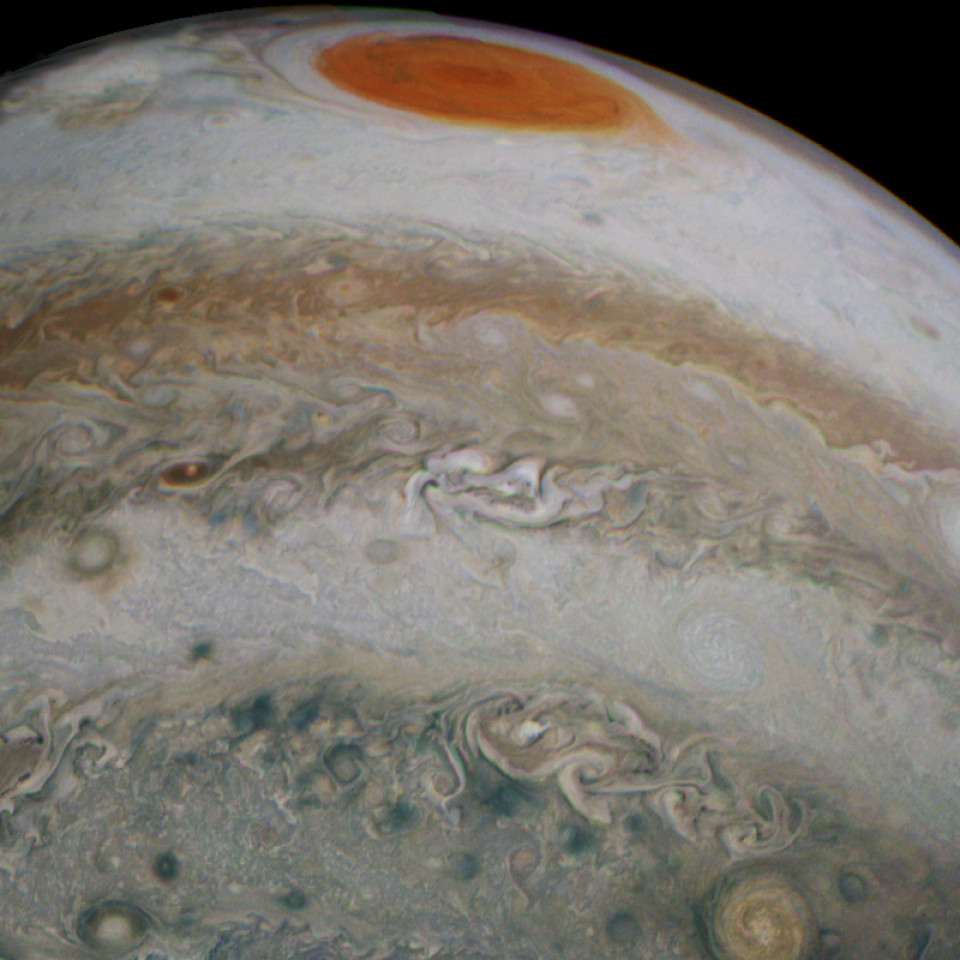
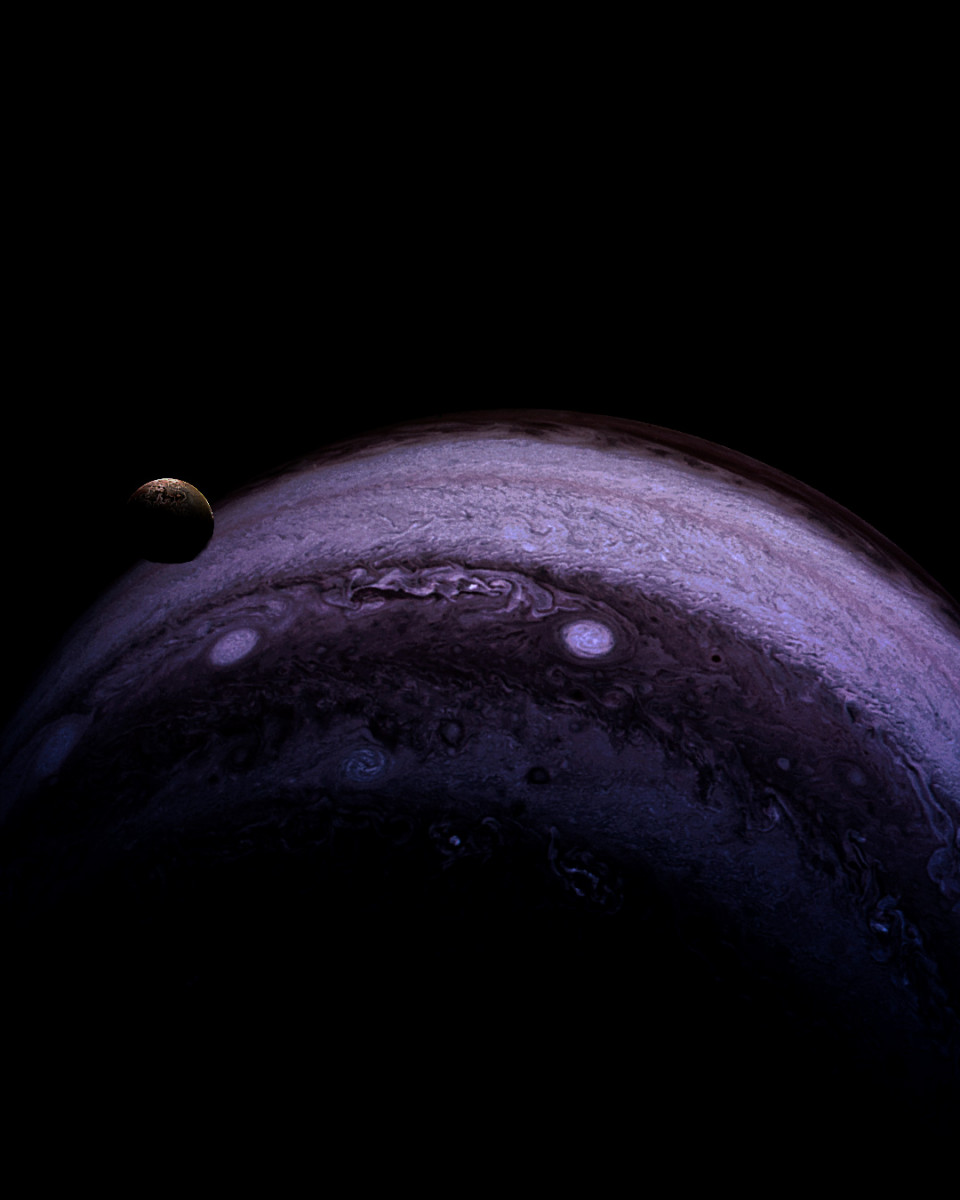
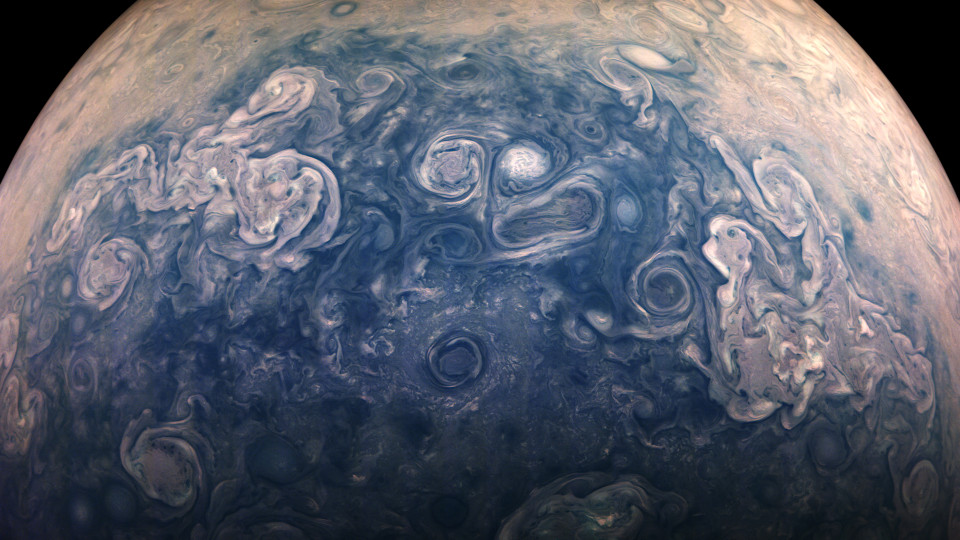
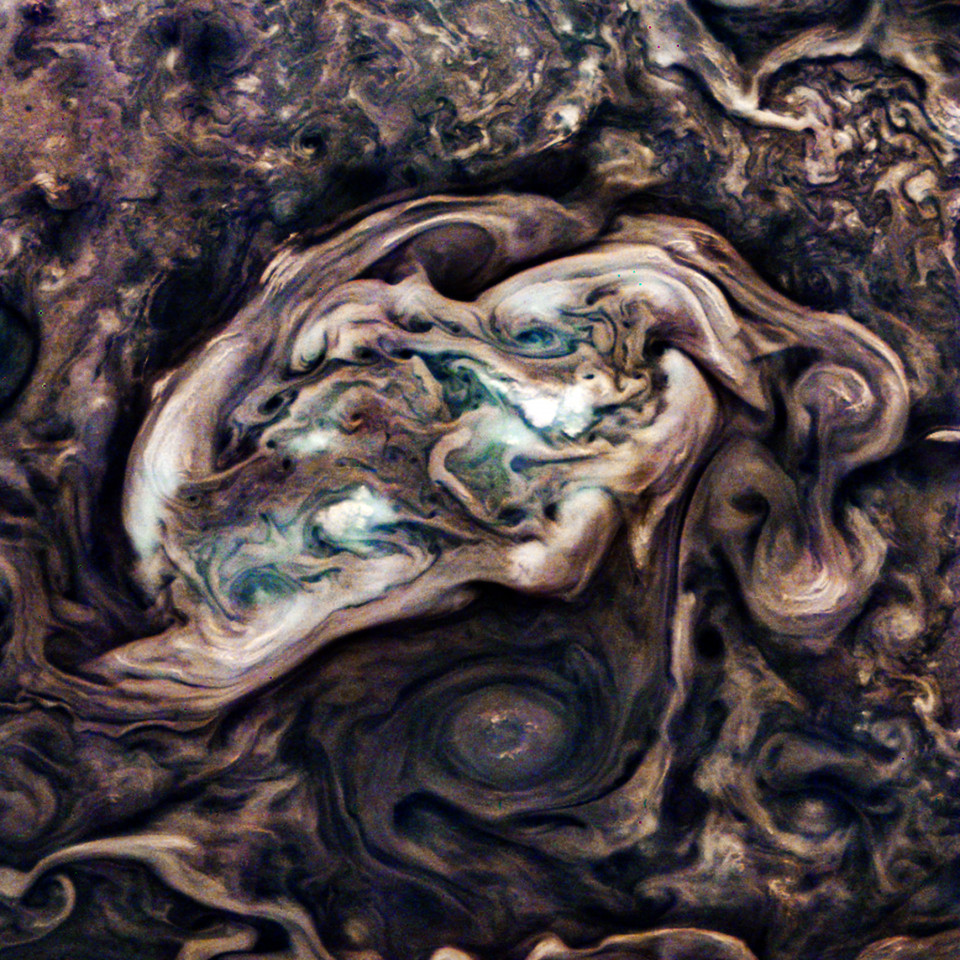
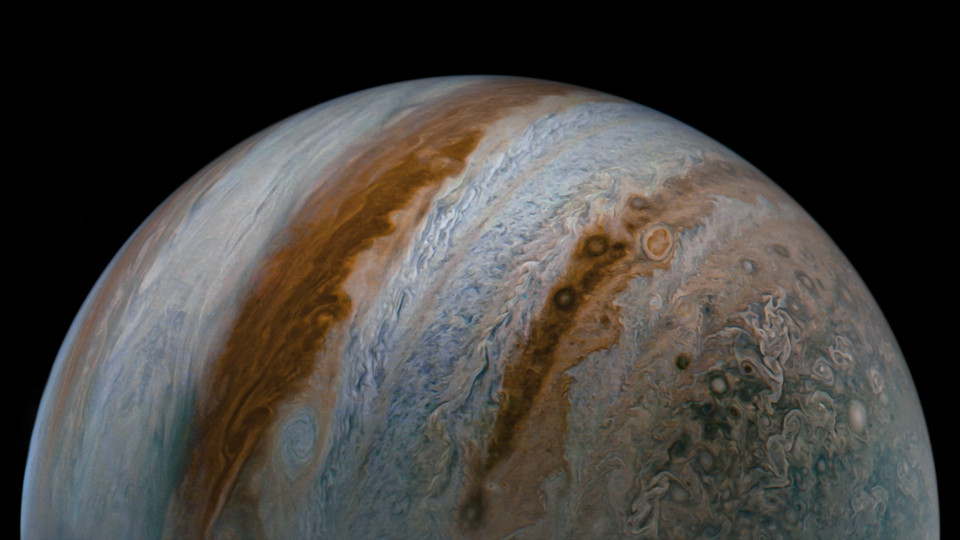
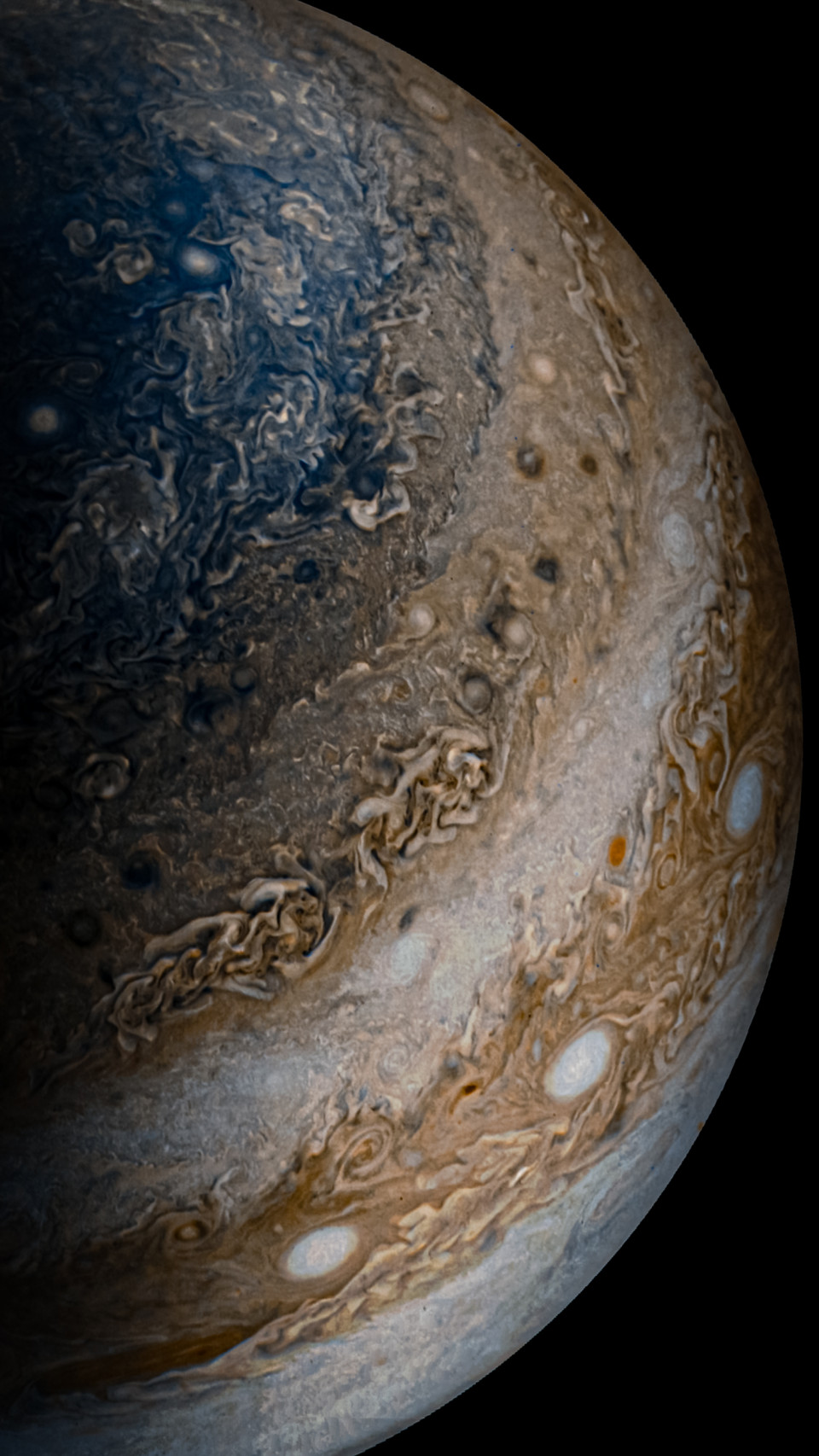
What happens next is not the mission's work. Cropping counts. So does pulling one storm out of the murk, pushing colour past what an eye would see, stitching frames into collages, reconstructing colour from the separate strips. No two people develop the same frame the same way, and the disagreement is the record.
The camera is also wearing out. Jupiter’s radiation belts have cut its dynamic range and raised its noise floor, and the mission has asked the public to find new ways to read what still comes back.
No surface, and the fastest rotation in the solar system. The spin sorts the weather into stripes — pale zones rising, dark belts sinking — and stops at the poles, where cyclones sit parked in formation.