Cosmos A pocket planetarium · iOS prototype
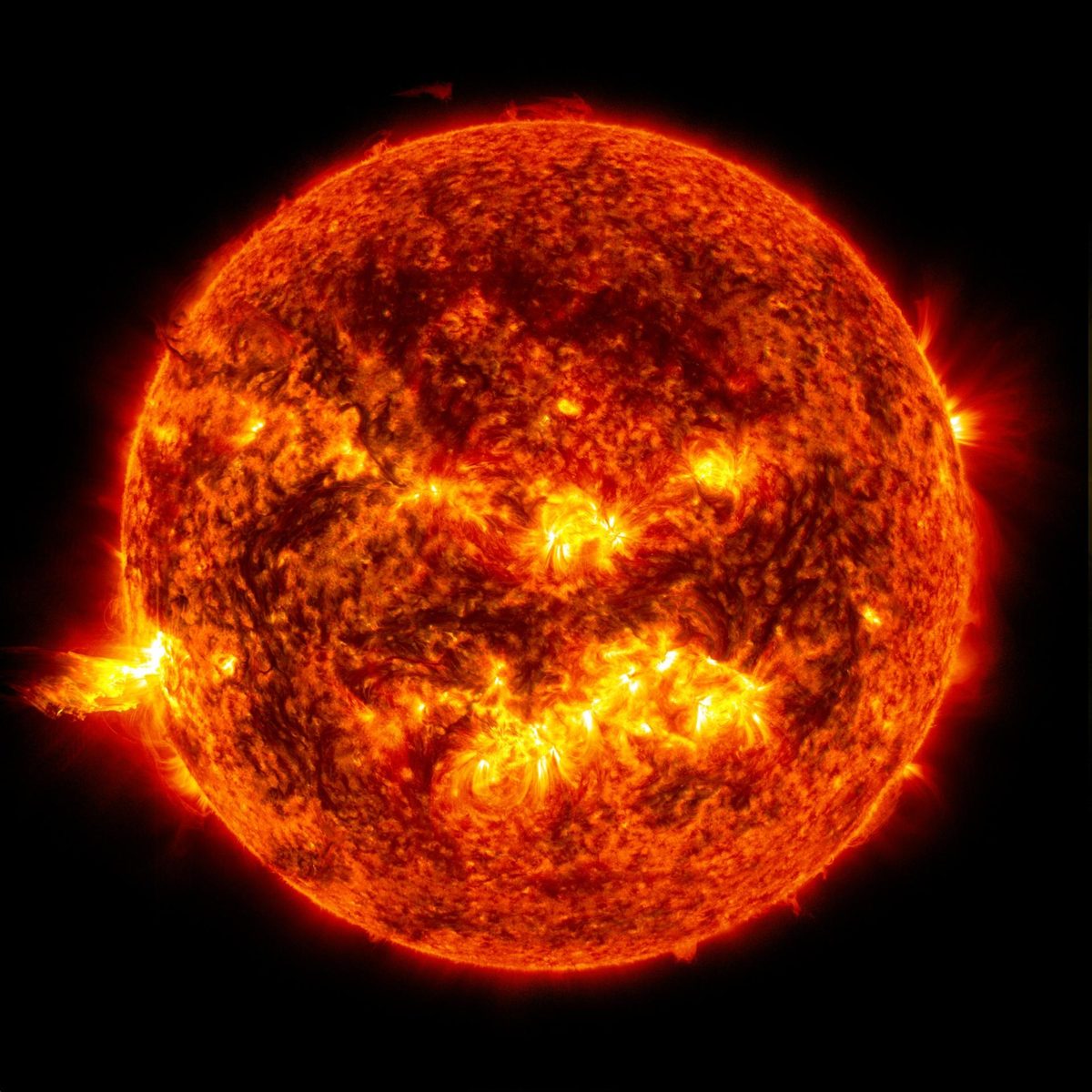
The limb of the Sun
Sol · A pocket planetarium
Cosmos

The Sun, eight planets, twenty-two moons and thirty photographs of Jupiter, developed by strangers. Drift outward, or let the show carry you.

or scroll to leave the Sun
{{ jp.auLabel }}
{{ jp.imgEl }}
{{ jp.kicker }}
{{ jp.name }}

{{ jp.hook }}

Open the plate
The journey ends at Neptune, 30 AU out. The moons and the JunoCam gallery continue below.
Satellite reference
Twenty-two moons

Two of them larger than Mercury. One with weather. One running backwards. Two that are barely more than gravel.

{{ moonCount }}
JunoCam · Jupiter
Developed by strangers

The mission posts JunoCam’s raw frames and invites anyone to process them. These thirty passed through someone’s afternoon.

{{ frameCount }}
{{ p.imgEl }}
{{ p.treatment }}
{{ p.title }}
{{ p.region }}
Provenance
Where the numbers come from

Every figure here is time-independent: size, shape, spin, gravity, field and atmosphere. Each is read from the same tables the Sol orrery renders from.

{{ s.k }}
{{ s.v }}

Spacecraft imagery NASA/JPL-Caltech and partners, public domain. Moon and ring maps Solar System Scope, CC BY 4.0. Type set in Cormorant Garamond and Lora.

{{ bodyImgEl }}
{{ bodyKicker }}

{{ bodyName }}

{{ bodyCredit }}

{{ bodyDesc }}

{{ f.k }}
{{ f.v }}
You, here

If the bathroom scales say {{ weight }} kg at home, here they would read {{ weightHere }}.

10 kggravity here: {{ bodyG }} m/s² · Earth 9.80120 kg
{{ moonImgEl }}
{{ moonRoman }}

{{ moonName }}

{{ moonCredit }}

{{ moonDesc }}

{{ f.k }}
{{ f.v }}
True relative size
The seven largest, and Mercury
{{ sd.imgEl }}
{{ sd.name }}
{{ sd.km }}
Pinch, drag or slide · {{ scaleZoomLabel }} Mercury is dashed — a planet, for comparison
{{ lbCounter }}
{{ lbZoomLabel }}
{{ lbImgEl }}
{{ lbRegion }} · {{ lbTreatment }}
{{ lbTitle }}

{{ lbNote }}

{{ lbDims }} px · {{ lbCredit }}
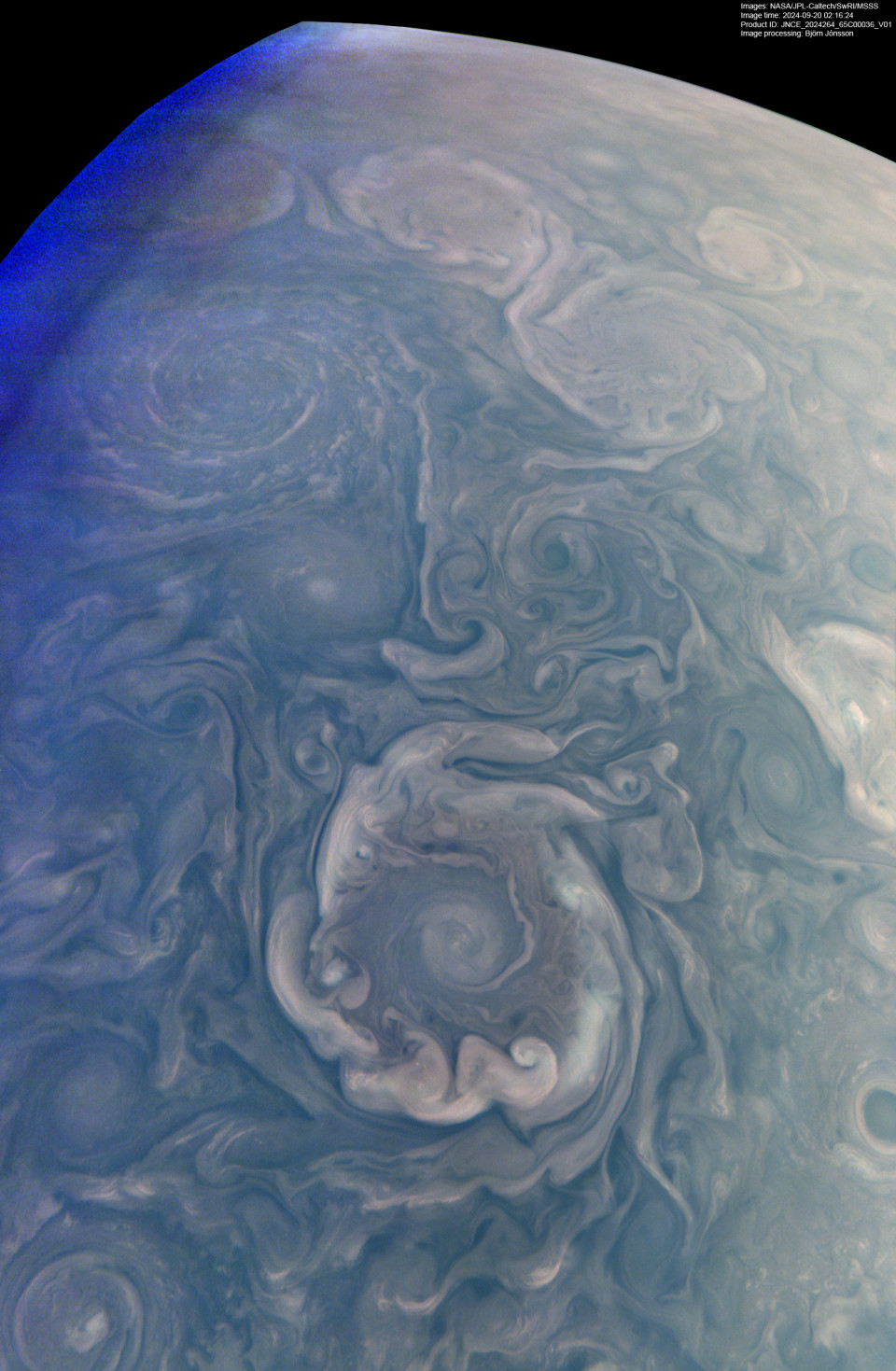
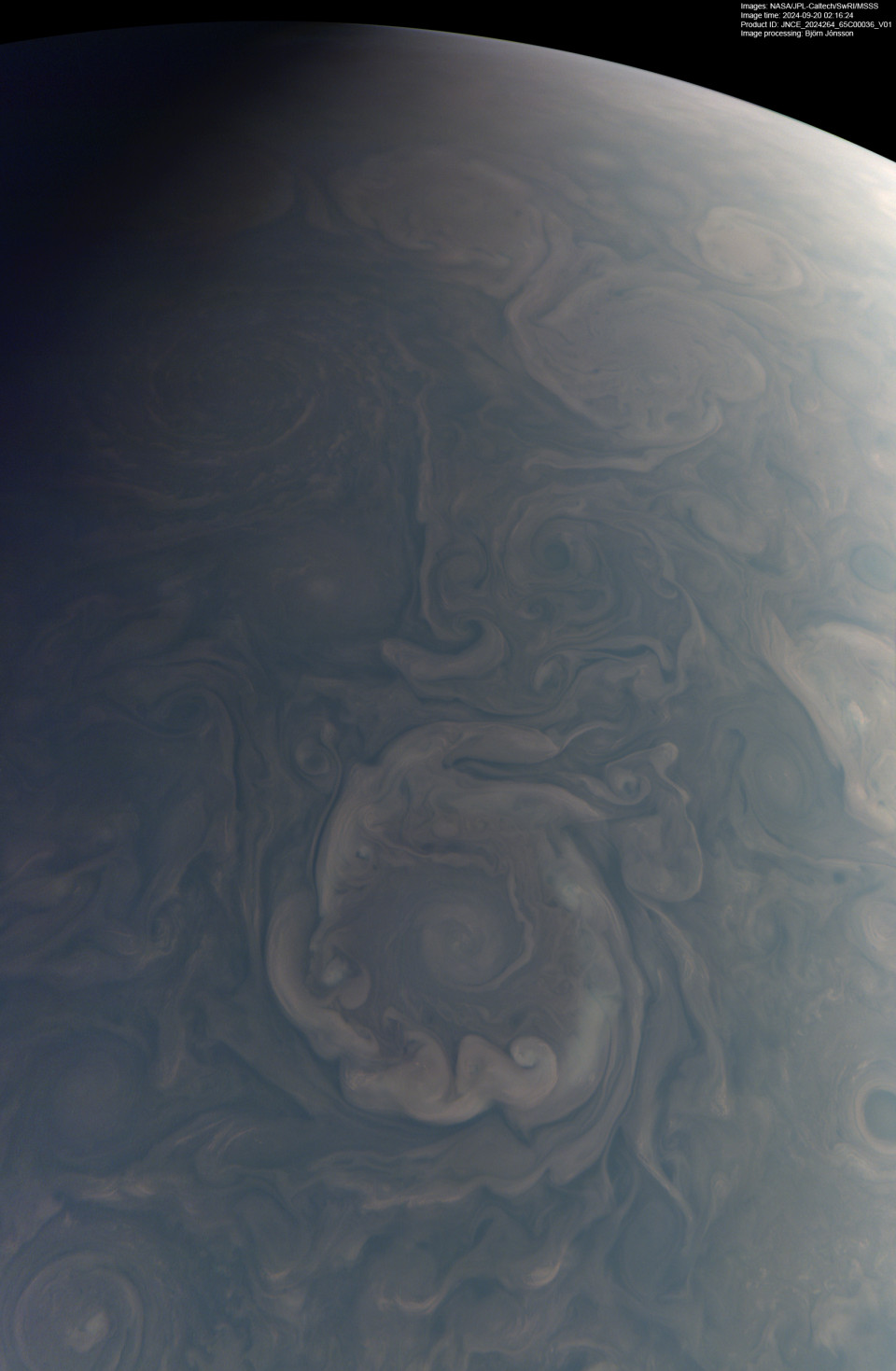
Same frame, twice
Cyclone, developed
Cyclone, lifted Cyclone, as received
As received
Lifted

Almost everything in the lifted version is present in the dark one — simply too dark to see. Processed by Björn Jónsson. NASA/JPL-Caltech/SwRI/MSSS.

{{ storyKicker }}

{{ storyTitle }}

{{ storyLede }}

{{ st.k }}
{{ st.v }}

{{ sec.k }}

{{ sec.v }}

Technical detail from the Mission Juno image processing gallery · missionjuno.swri.edu
Tonight’s show
{{ showImgEl }}
{{ showKicker }}
{{ showName }}

{{ showHook }}

{{ showFact }}
Tap the edges to move · tap a tick to jump
Journey · Moons · Gallery · Colophon in the tab bar. Everything tappable: bodies open plates, moons open sheets, frames open the loupe. Figures NASA Planetary Fact Sheets · IAU WGCCRE 2015.