Eleven bodies,
one table
The Sun, the eight planets and the Moon, each with the size, spin, gravity, field and atmosphere the renderer works from.
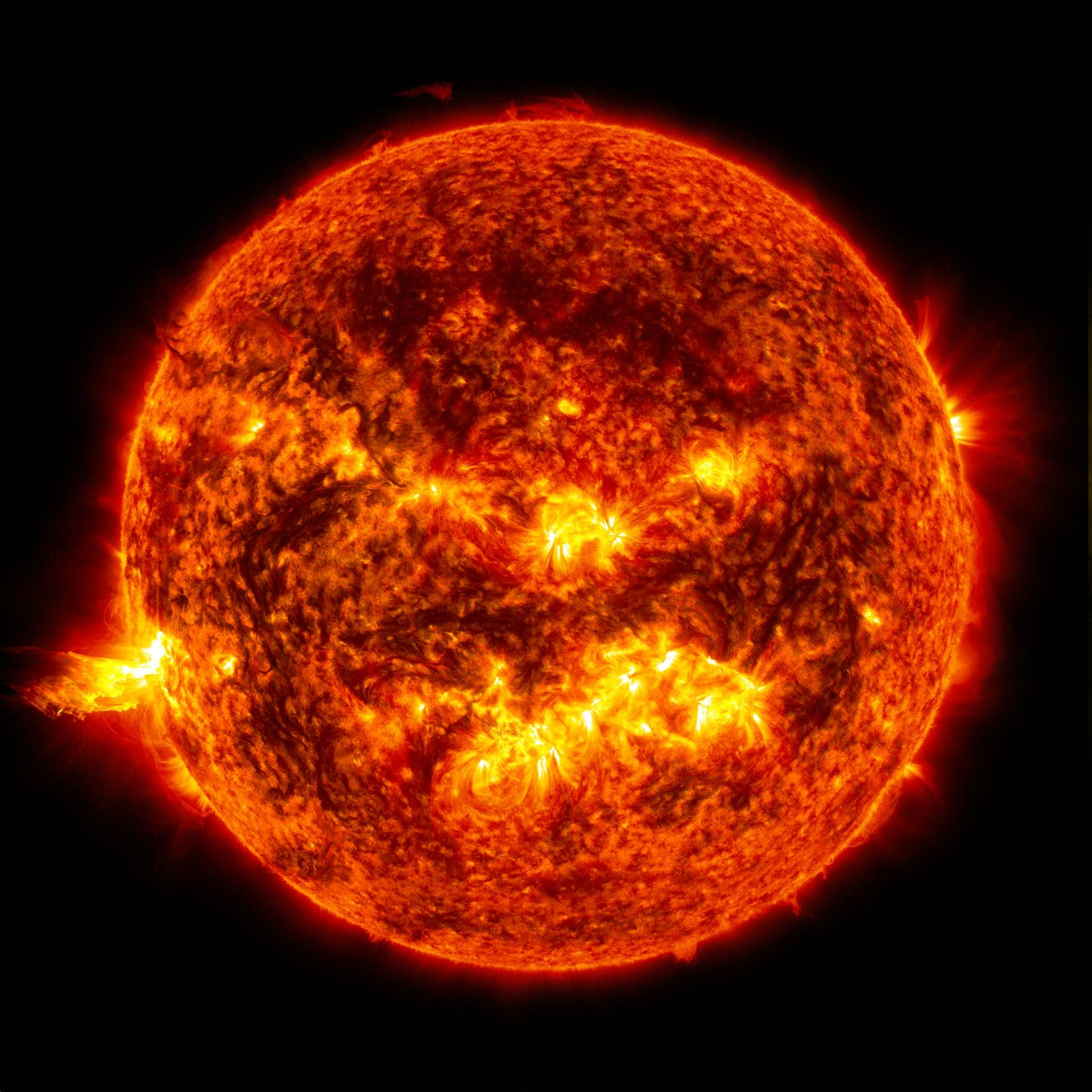
A G2V main-sequence star; luminosity 3.828×10²⁶ W. Rotates differentially (~25 d equator, ~34 d poles). Surface granulation, sunspots, an X-ray corona at ~1–3 MK, and a continuous solar wind.
The Sun
- Radius
- 695,700 km
- Mass
- 1.9885×10³⁰ kg — 332,950 Earths
- Surface gravity
- 274.0 m/s²
- Rotation
- 25.38 d (Carrington sidereal)
- Axial tilt
- 7.25°
- Effective temperature
- 5,772 K — 5,499 °C
- Composition
- H₂ plasma — 73% H, 25% He by mass
- Escape velocity
- 617.5 km/s
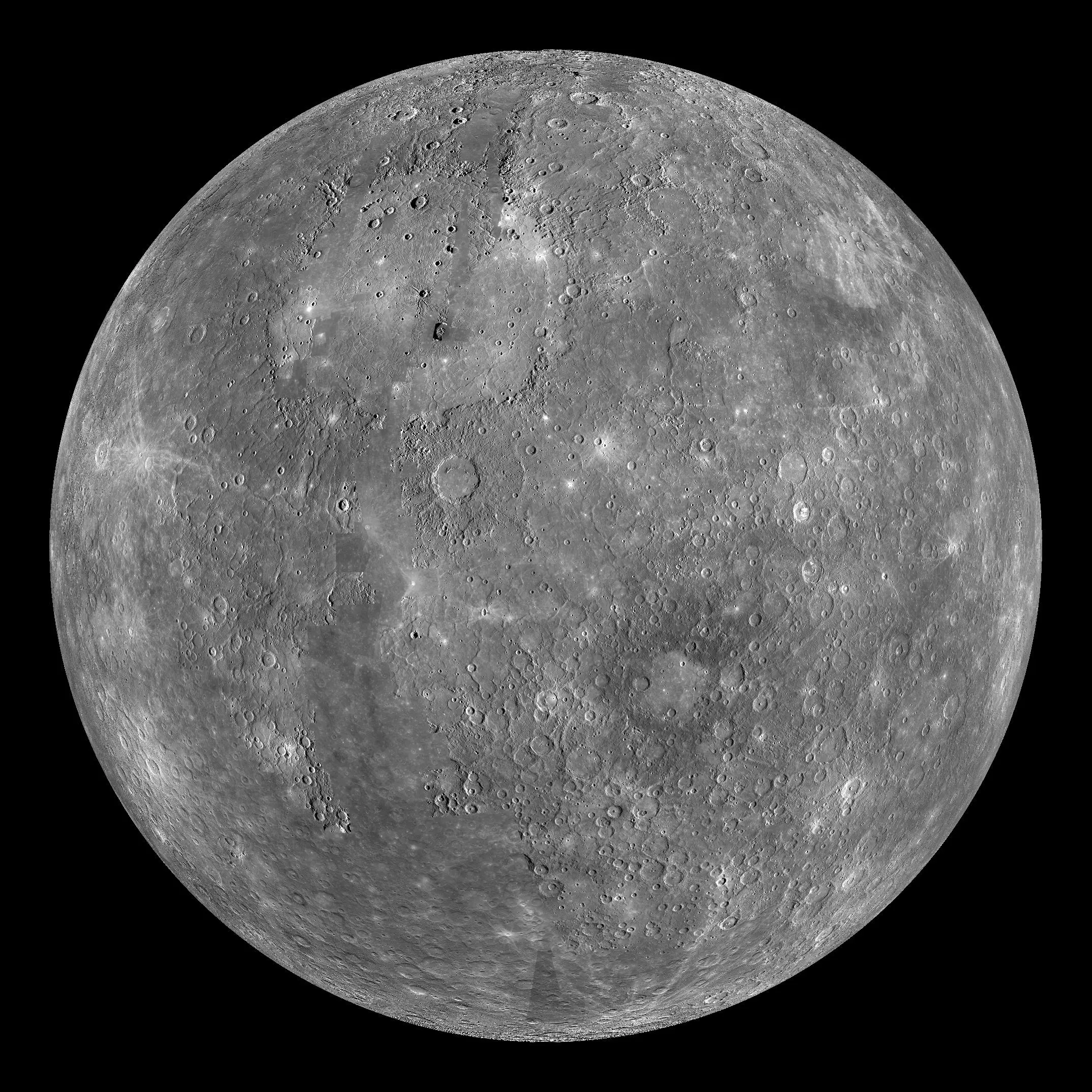
Airless, heavily cratered, 3:2 spin–orbit resonance. A weak global dipole — surface field ~1% of Earth's, dipole moment ~0.06% — sustains a small magnetosphere.
Mercury
- Equatorial radius
- 2,439.7 km
- Mass
- 3.301×10²³ kg — 0.055 Earths
- Surface gravity
- 3.70 m/s²
- Rotation
- 58.65 d — 3:2 with its year
- Axial tilt
- 0.034°
- Mean temperature
- 440 K — 167 °C
- Atmosphere
- Trace exosphere — O, Na, H, He, K
- Magnetic field
- 0.0006× Earth's dipole
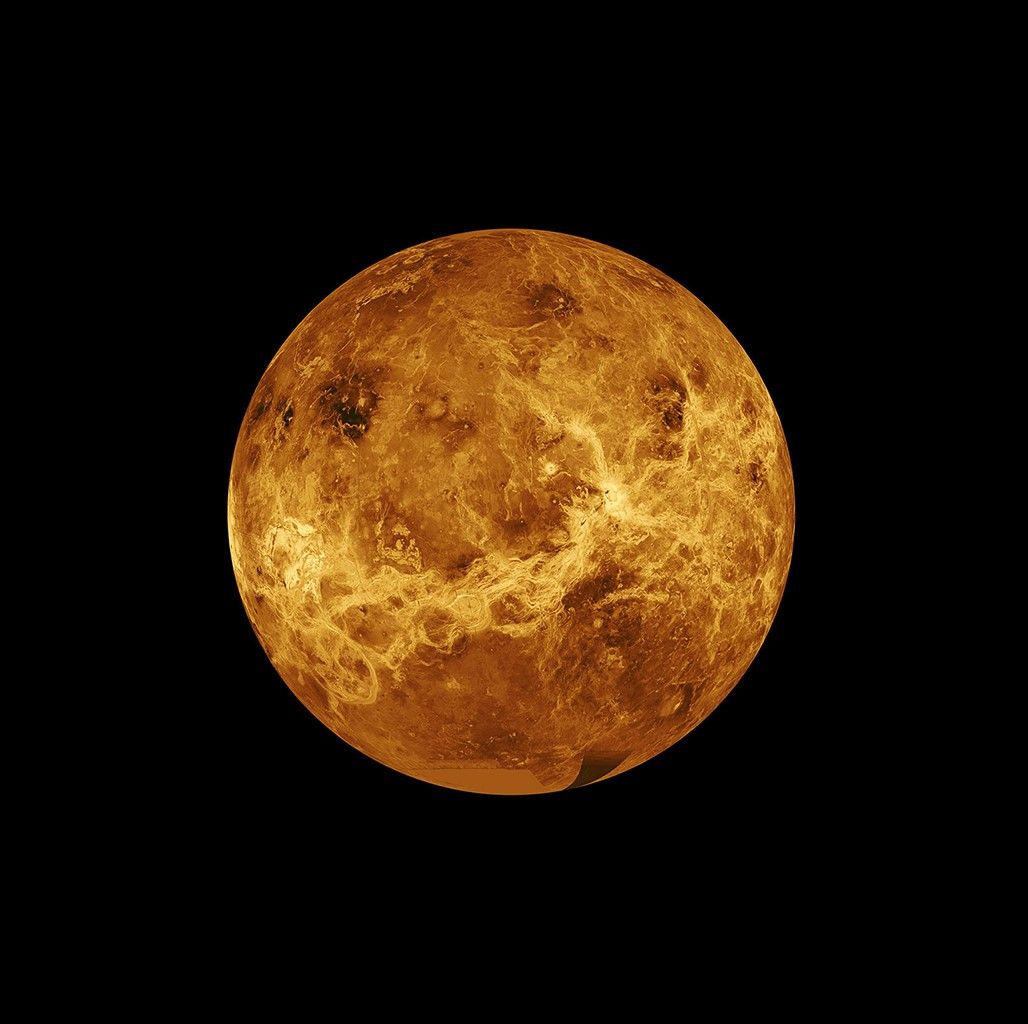
A runaway greenhouse: 92 bar of CO₂, 737 K surface. Rotates retrograde once per 243 days — slower than its year. No intrinsic magnetic field (only an induced one).
Venus
- Equatorial radius
- 6,051.8 km
- Mass
- 4.867×10²⁴ kg — 0.815 Earths
- Surface gravity
- 8.87 m/s²
- Rotation
- 243.02 d, retrograde
- Axial tilt
- 177.36° — effectively upside down
- Mean temperature
- 737 K — 464 °C
- Atmosphere
- 92 bar — 96.5% CO₂, 3.5% N₂
- Magnetic field
- None intrinsic — induced only
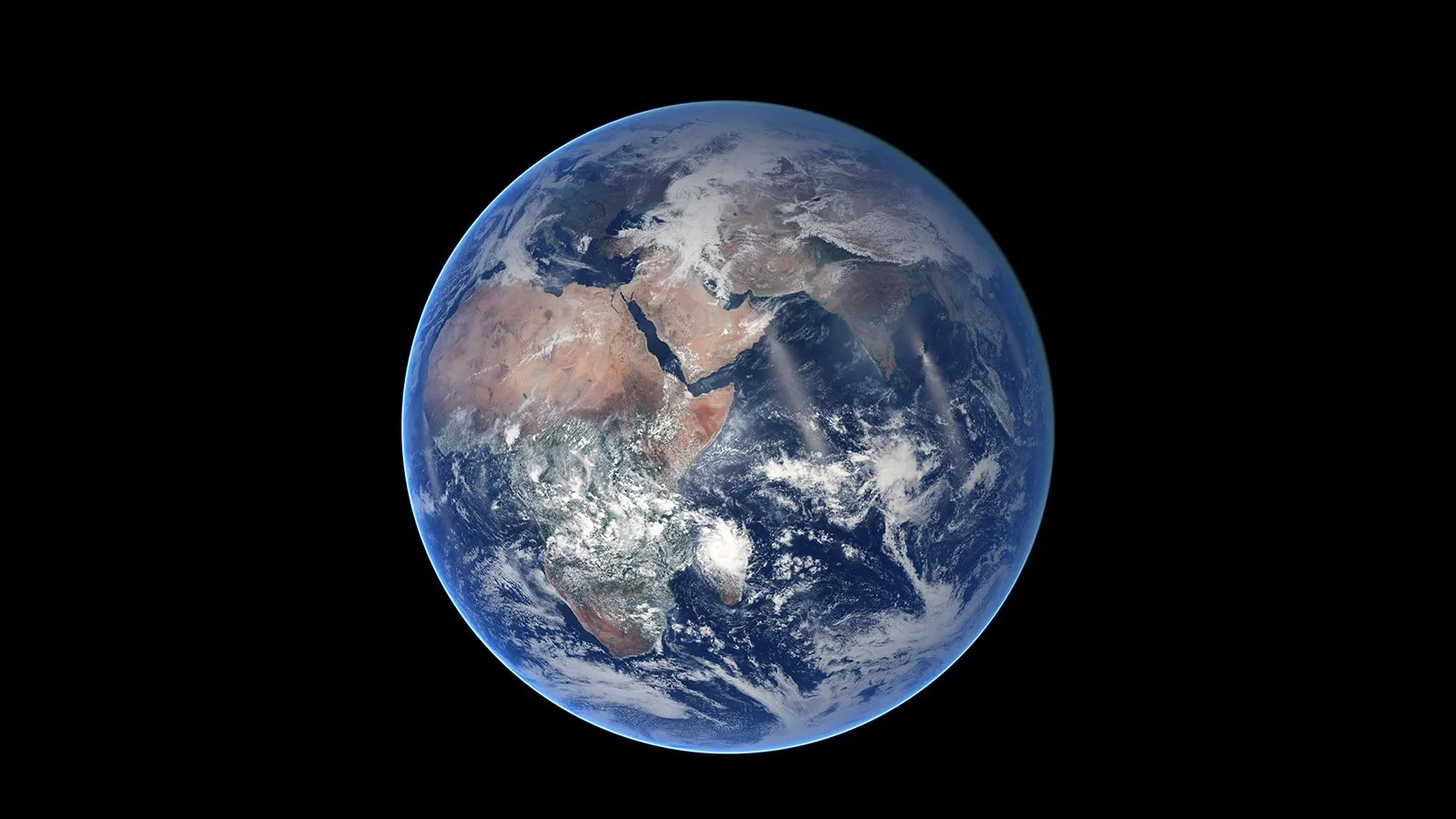
Liquid-water oceans, a nitrogen–oxygen atmosphere, and a strong dipole field (the reference, 8×10²² A·m²) driving a protective magnetosphere and aurorae.
Earth
- Equatorial radius
- 6,378.1 km — polar 6,356.8
- Mass
- 5.9722×10²⁴ kg — the reference
- Surface gravity
- 9.80 m/s²
- Rotation
- 23.9345 h (sidereal)
- Axial tilt
- 23.44° — precessing over ~25,770 y
- Mean temperature
- 288 K — 15 °C
- Atmosphere
- 1.0 bar — 78% N₂, 21% O₂, 1% Ar
- Magnetic field
- 8×10²² A·m² — the reference dipole
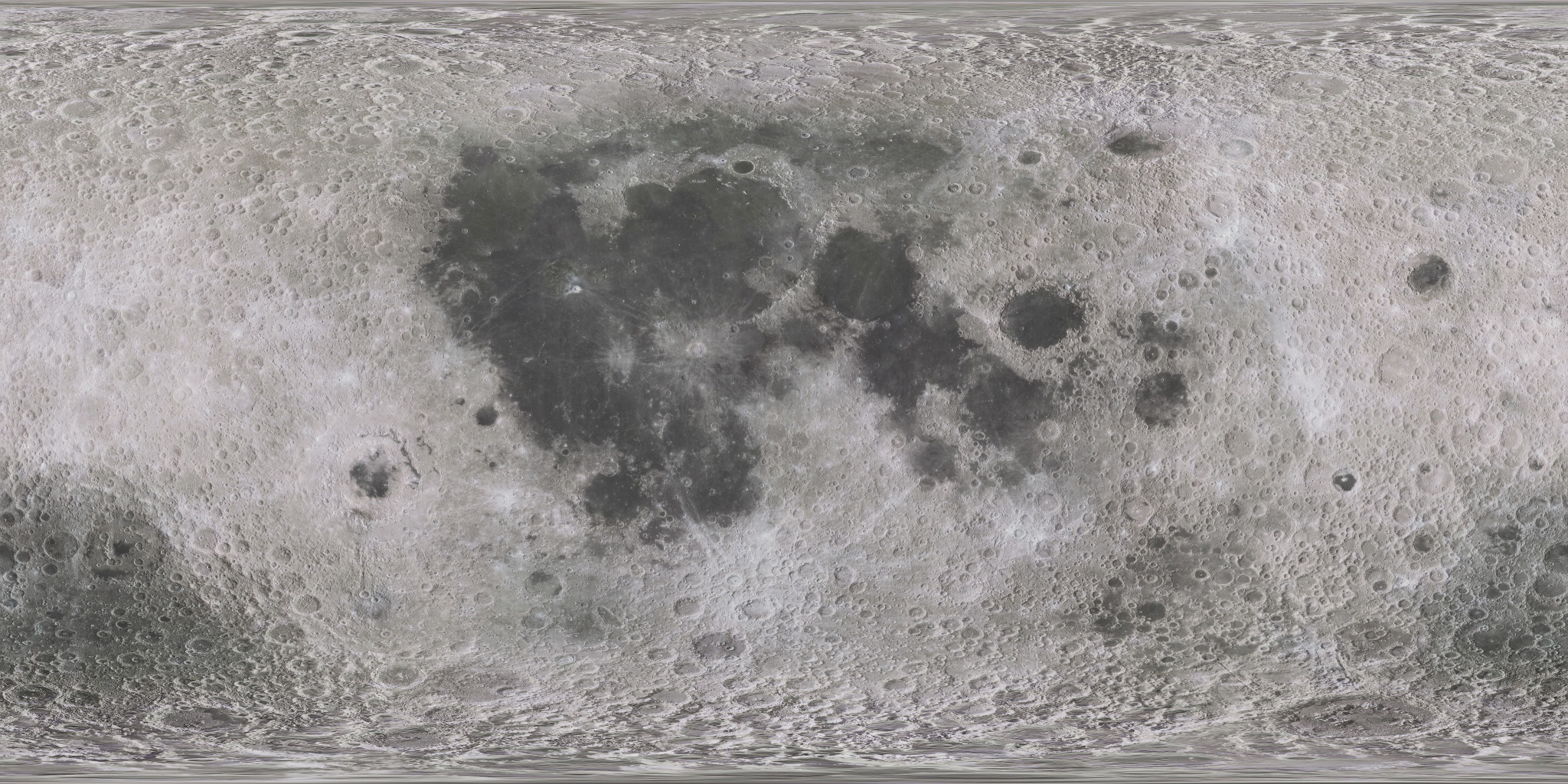
Earth's tidally-locked companion: dark basaltic maria, bright cratered highlands, no atmosphere or global field. Libration — 7.9° in longitude, 6.7° in latitude — exposes 59% of the surface over time.
The Moon
- Equatorial radius
- 1,737.4 km
- Mass
- 7.346×10²² kg — 0.0123 Earths
- Surface gravity
- 1.62 m/s²
- Rotation
- 27.322 d — synchronous
- Axial tilt
- 6.68°
- Mean temperature
- 250 K — −23 °C
- Atmosphere
- Tenuous exosphere — He, Ar, Na
- Magnetic field
- None
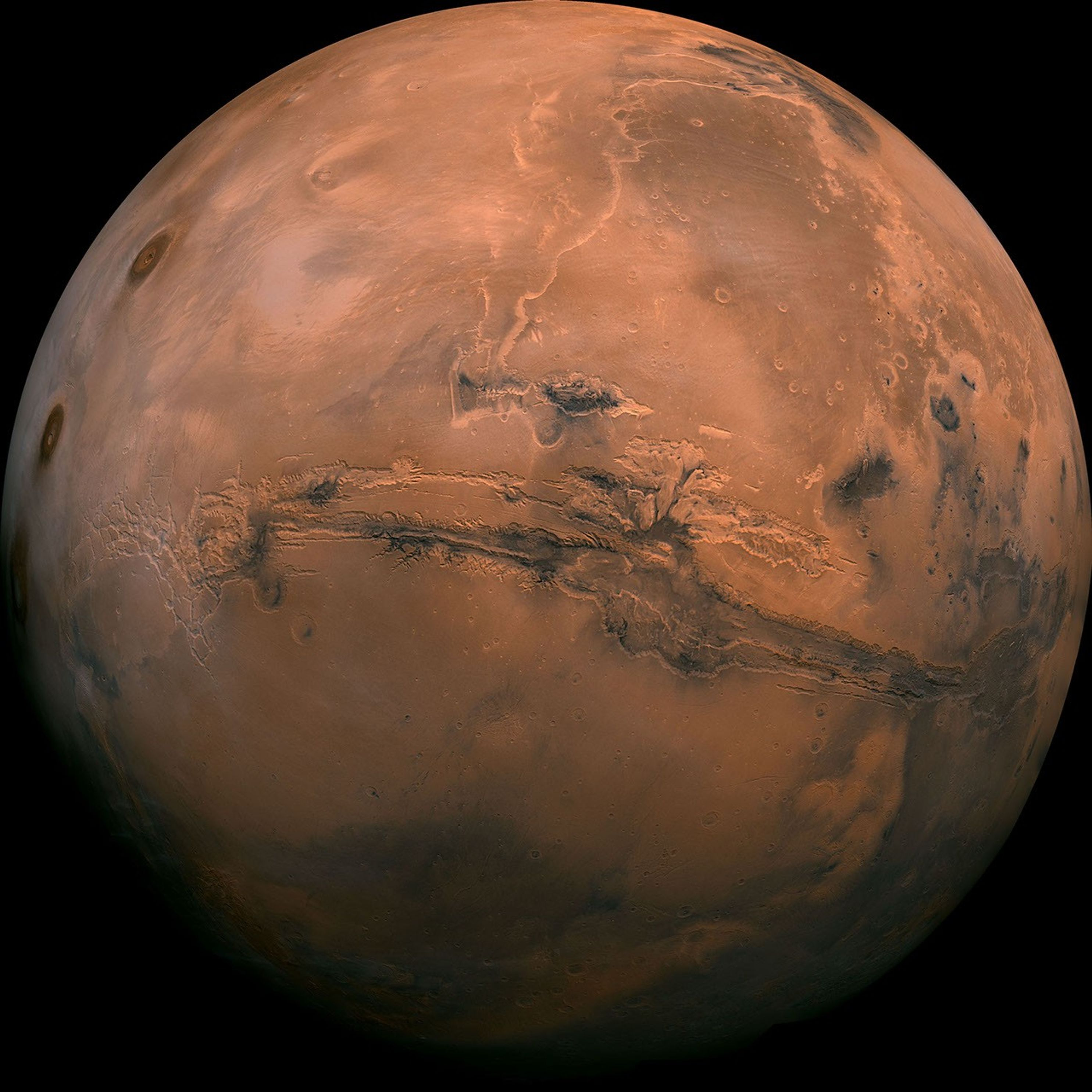
Thin CO₂ air, polar CO₂/water ice caps, iron-oxide dust. No global field today — only crustal remanent magnetism in the southern highlands.
Mars
- Equatorial radius
- 3,396.2 km — polar 3,376.2
- Mass
- 6.417×10²³ kg — 0.107 Earths
- Surface gravity
- 3.71 m/s²
- Rotation
- 24.6229 h
- Axial tilt
- 25.19°
- Mean temperature
- 210 K — −63 °C
- Atmosphere
- 0.0064 bar — 95% CO₂, 2.7% N₂
- Magnetic field
- None global — crustal remanence
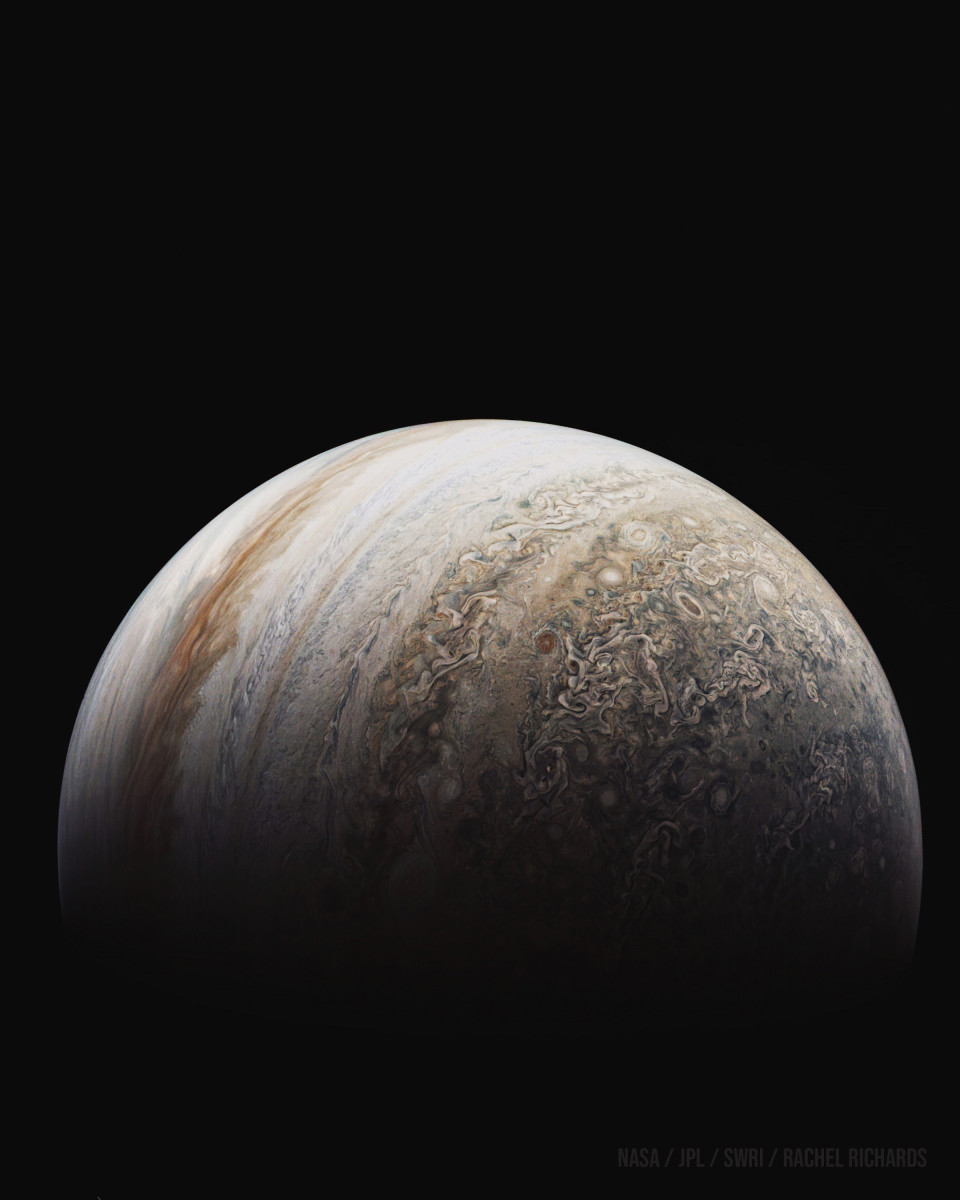
The largest planet — visibly oblate (flattening 6.5%). Fastest rotation (9.9 h) drives zonal bands and the centuries-old Great Red Spot. A colossal magnetosphere ~20,000× Earth's dipole.
Jupiter
- Equatorial radius
- 71,492 km — polar 66,854
- Mass
- 1.898×10²⁷ kg — 318 Earths
- Surface gravity
- 24.79 m/s²
- Rotation
- 9.9259 h — the fastest
- Axial tilt
- 3.13°
- Mean temperature
- 165 K — −108 °C
- Atmosphere
- 90% H₂, 10% He; NH₃/H₂O clouds
- Magnetic field
- 20,000× Earth's dipole
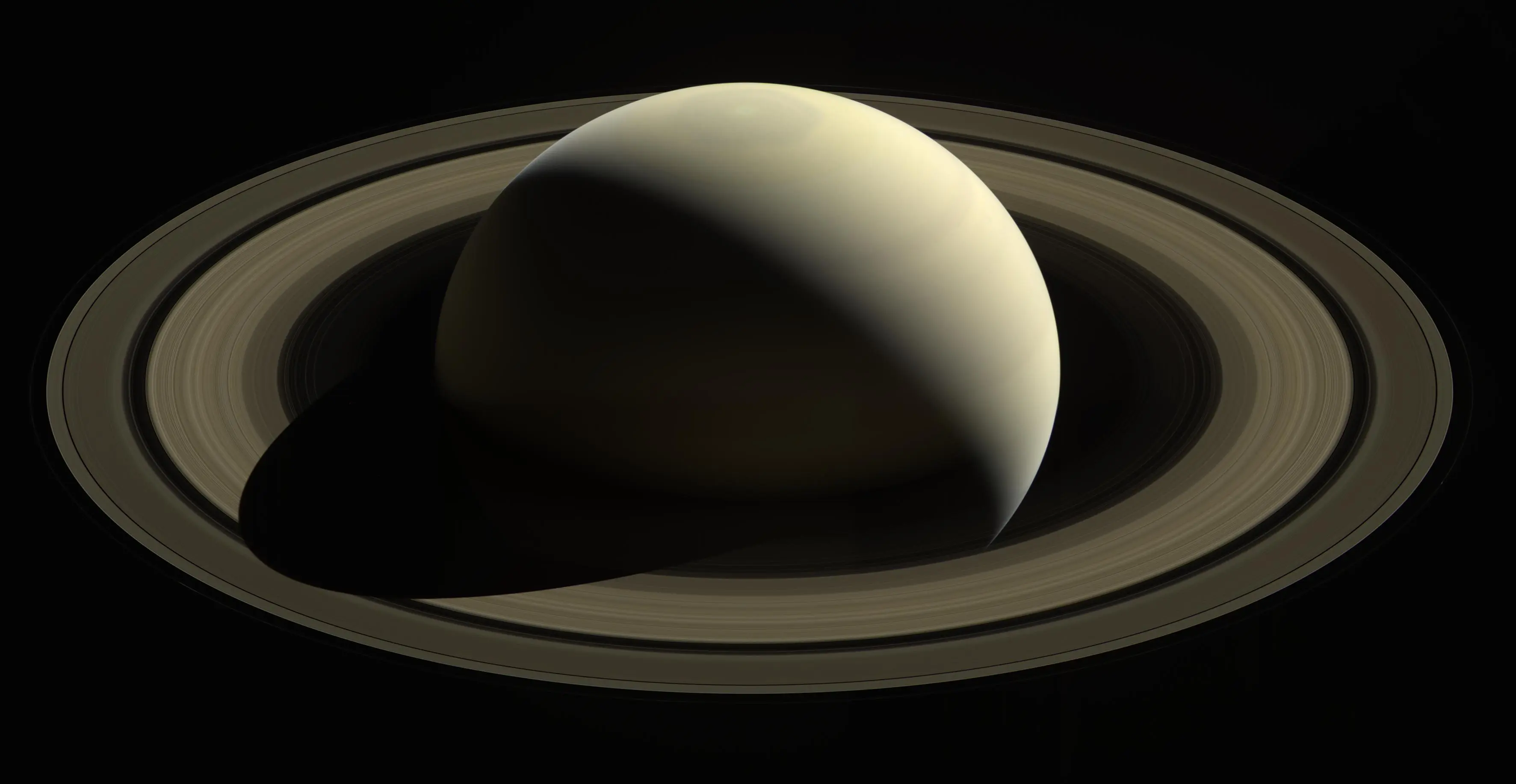

Saturn
Less dense than water. Rings of ice and rock from 1.2 to 2.3 Saturn-radii, split by the Cassini Division. The most oblate planet, flattened 9.8%.
- Equatorial radius
- 60,268 km — polar 54,364
- Mass
- 5.683×10²⁶ kg — 95 Earths
- Density
- 0.687 g/cm³ — it would float
- Rotation
- 10.656 h
- Axial tilt
- 26.73°
- Rings
- 74,500 – 136,780 km from centre
- Mean temperature
- 134 K — −139 °C
- Magnetic field
- 580× Earth's dipole
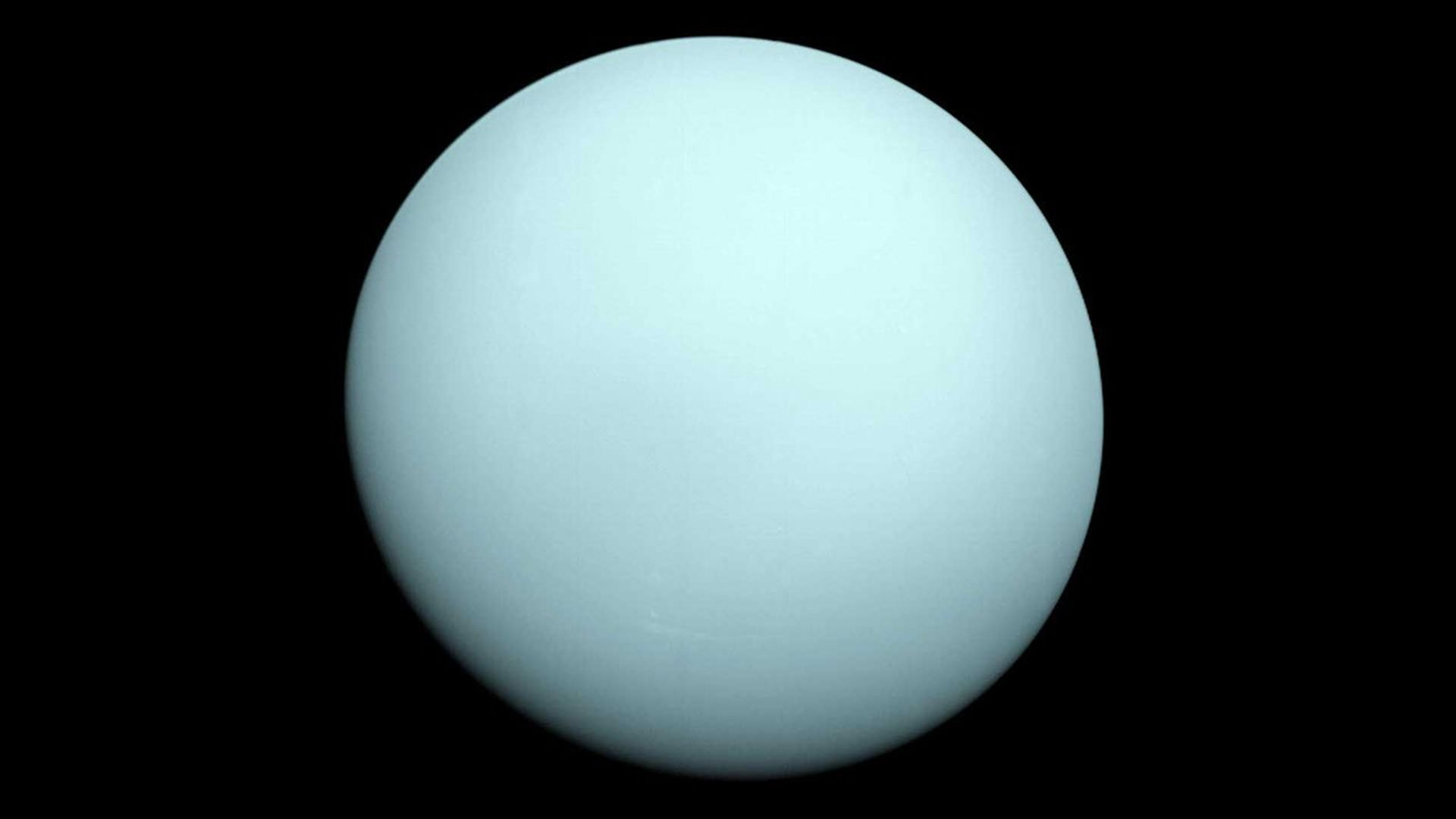
Tipped 98° — it rolls along its orbit on its side. Methane absorbs red light, giving its cyan hue. A field tilted 59° from the spin axis and offset from centre.
Uranus
- Equatorial radius
- 25,559 km — polar 24,973
- Mass
- 8.681×10²⁵ kg — 14.5 Earths
- Surface gravity
- 8.69 m/s²
- Rotation
- 17.24 h, retrograde
- Axial tilt
- 97.77° — on its side
- Mean temperature
- 76 K — −197 °C
- Atmosphere
- 83% H₂, 15% He, 2% CH₄
- Magnetic field
- 50× Earth's, tilted 59°
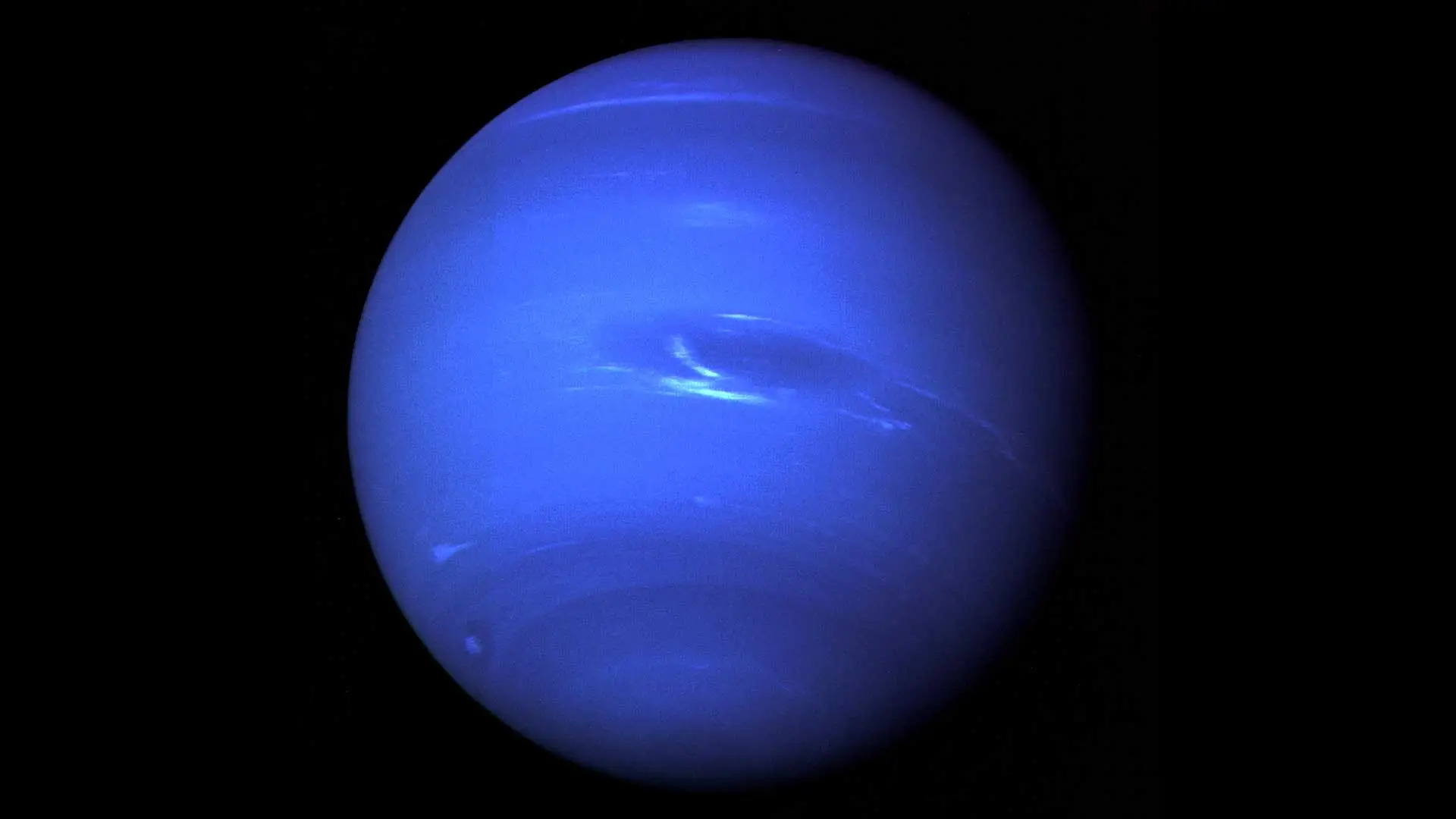
Deepest blue of the giants, with the strongest winds in the solar system (~2,000 km/h) and transient dark storms. A field tilted 47° and offset.
Neptune
- Equatorial radius
- 24,764 km — polar 24,341
- Mass
- 1.024×10²⁶ kg — 17.1 Earths
- Surface gravity
- 11.15 m/s²
- Rotation
- 15.9663 h (IAU 2015)
- Axial tilt
- 28.32°
- Mean temperature
- 72 K — −201 °C
- Atmosphere
- 80% H₂, 19% He, 1.5% CH₄
- Magnetic field
- 27× Earth's, tilted 47°
The moons
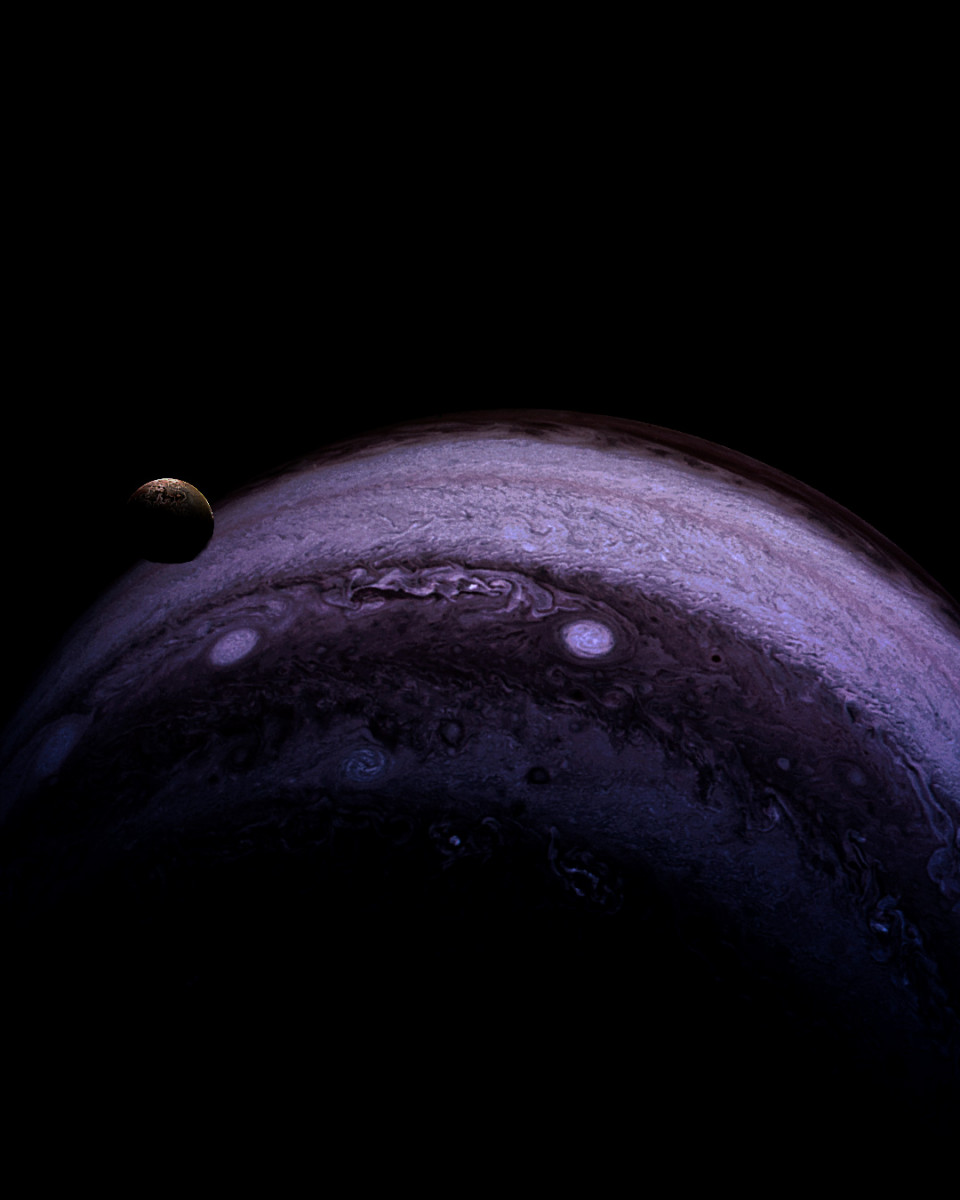
Only two of them have been photographed close enough to fill a frame from a spacecraft in orbit around their primary. One is ours; the other is the most volcanic body in the solar system.
Where the numbers come from
Every figure here is time-independent: size, shape, spin, gravity, field and atmosphere. Positions come from the ephemeris engine, not from this table.
- Physical data
- NASA Planetary Fact Sheets, nssdc.gsfc.nasa.gov
- Spin and pole
- IAU Working Group on Cartographic Coordinates and Rotational Elements 2015 — Archinal et al. 2018
- Surface maps
- Solar System Scope (CC-BY 4.0), from NASA MESSENGER, Magellan, Viking, MGS/MOLA, Cassini, Juno, Voyager 2, LRO and Clementine
- Earth and Sun
- NASA Visible Earth Blue Marble; NASA/SDO HMI continuum — both public domain
- Io
- NASA / JPL-Caltech / SwRI / MSSS, processed by a JunoCam citizen scientist