Twenty-two
moons
Two of them larger than Mercury. One with weather. One running backwards. Two that are barely more than gravel.
- Earth
- 1
- Mars
- 2
- Jupiter
- 4
- Saturn
- 7
- Uranus
- 5
- Neptune
- 3
The roster
Radius in kilometres, orbital period in days. The spread runs from Deimos, six kilometres across, to Ganymede, which would be counted a planet if it went round the Sun instead.
| Moon | Primary | Radius | Period |
|---|---|---|---|
| The Moon | Earth | 1,737.4 | 27.322 |
| Phobos | Mars | 11.1 | 0.319 |
| Deimos | Mars | 6.2 | 1.262 |
| Io | Jupiter | 1,821.5 | 1.769 |
| Europa | Jupiter | 1,560.8 | 3.551 |
| Ganymede | Jupiter | 2,631.2 | 7.155 |
| Callisto | Jupiter | 2,410.3 | 16.689 |
| Mimas | Saturn | 198.2 | 0.942 |
| Enceladus | Saturn | 252.1 | 1.370 |
| Tethys | Saturn | 531.1 | 1.888 |
| Dione | Saturn | 561.4 | 2.737 |
| Moon | Primary | Radius | Period |
|---|---|---|---|
| Rhea | Saturn | 763.5 | 4.518 |
| Titan | Saturn | 2,574.8 | 15.945 |
| Iapetus | Saturn | 734.3 | 79.333 |
| Miranda | Uranus | 235.8 | 1.413 |
| Ariel | Uranus | 578.9 | 2.520 |
| Umbriel | Uranus | 584.7 | 4.144 |
| Titania | Uranus | 788.9 | 8.706 |
| Oberon | Uranus | 761.4 | 13.463 |
| Triton | Neptune | 1,352.6 | 5.877 |
| Proteus | Neptune | 208.0 | 1.122 |
| Nereid | Neptune | 170.0 | 360.068 |
The seven largest, and Mercury
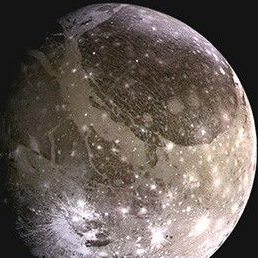
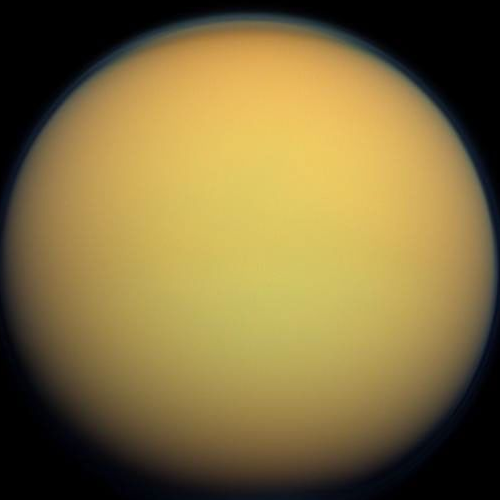
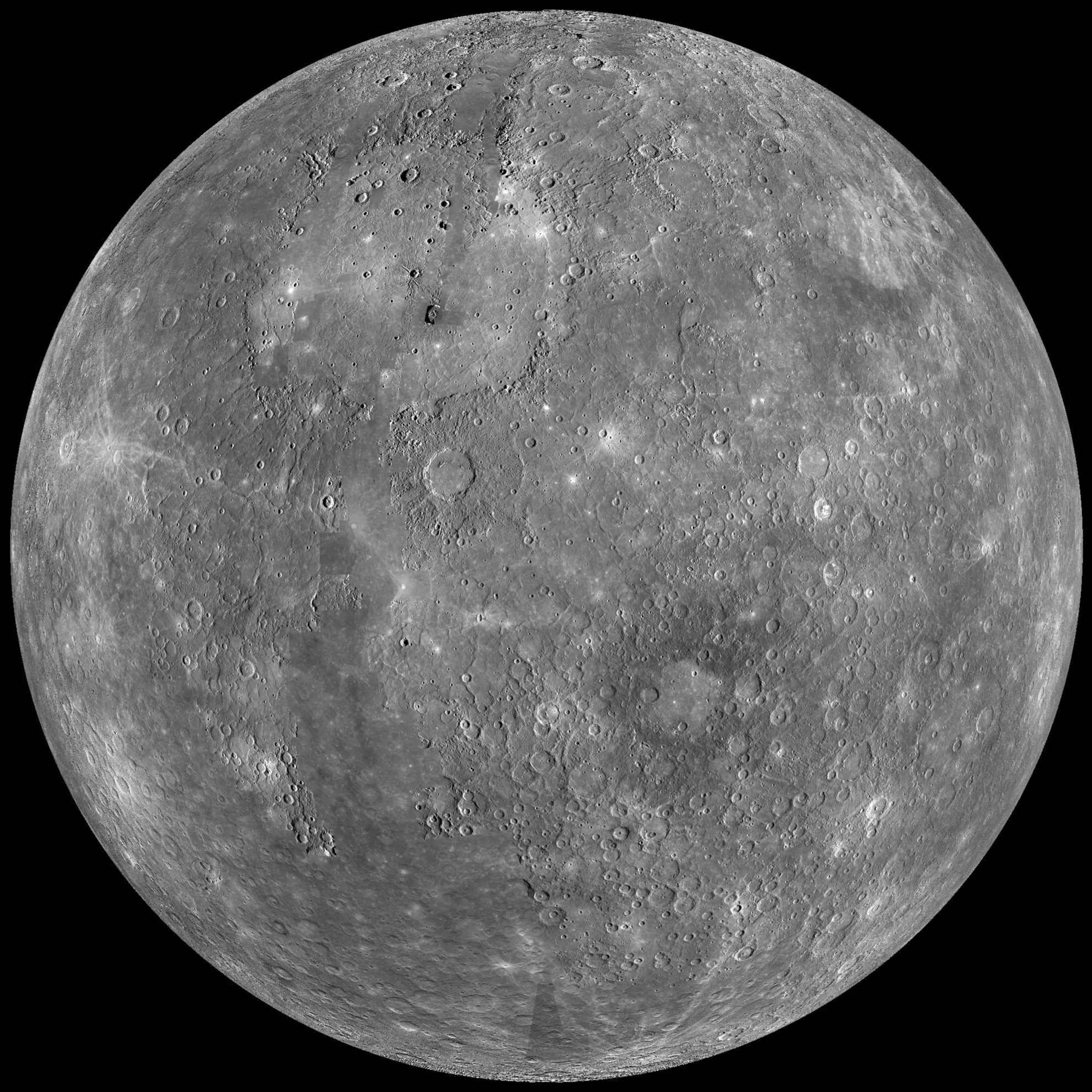
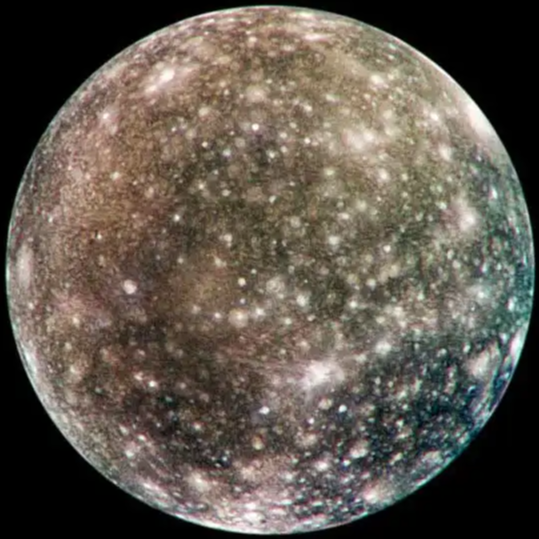
Two moons are wider than the innermost planet. Neither is remotely as heavy: Mercury is rock and iron, while Ganymede and Titan are roughly half water ice.
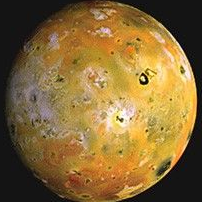
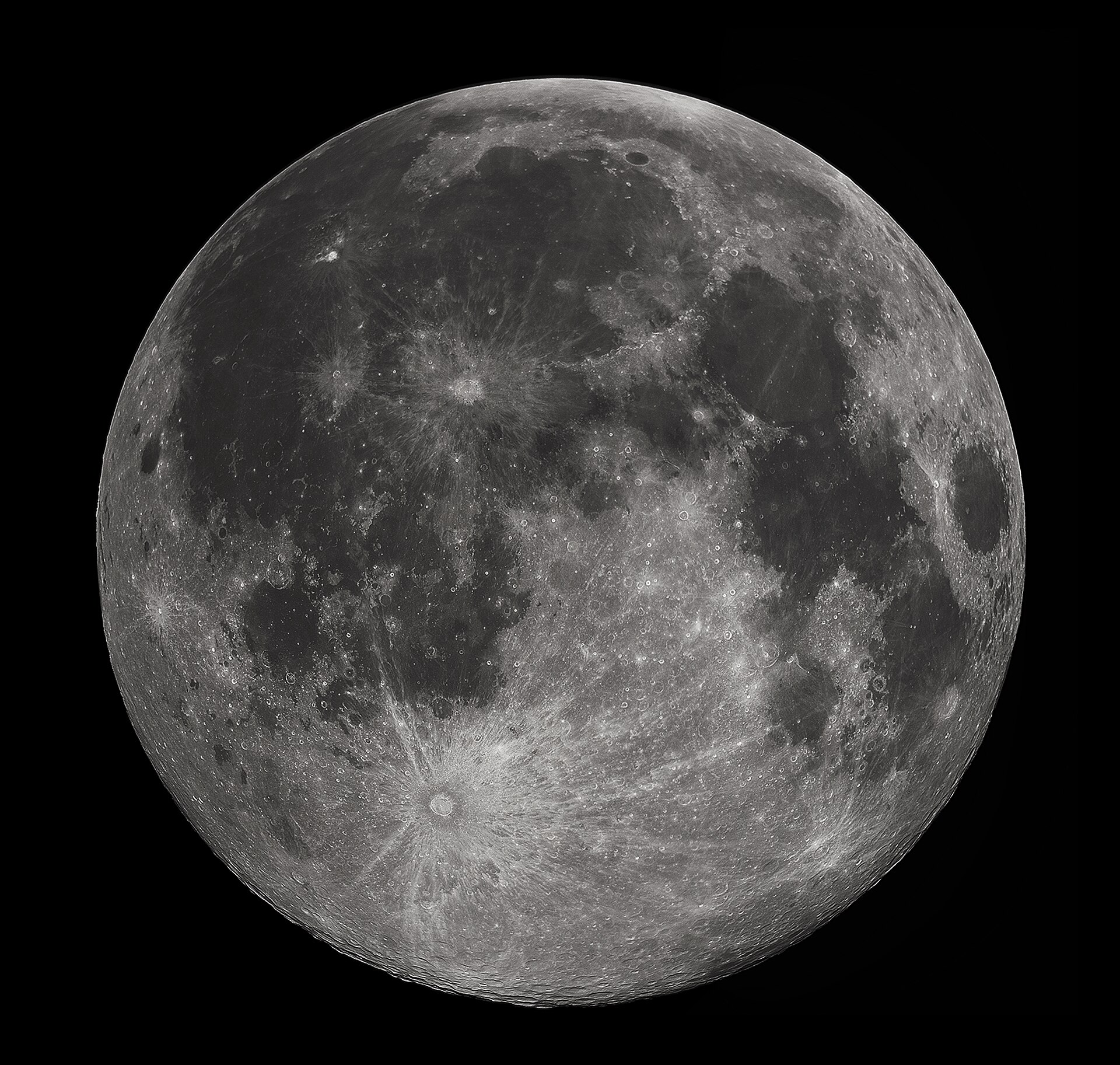
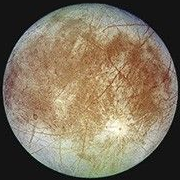
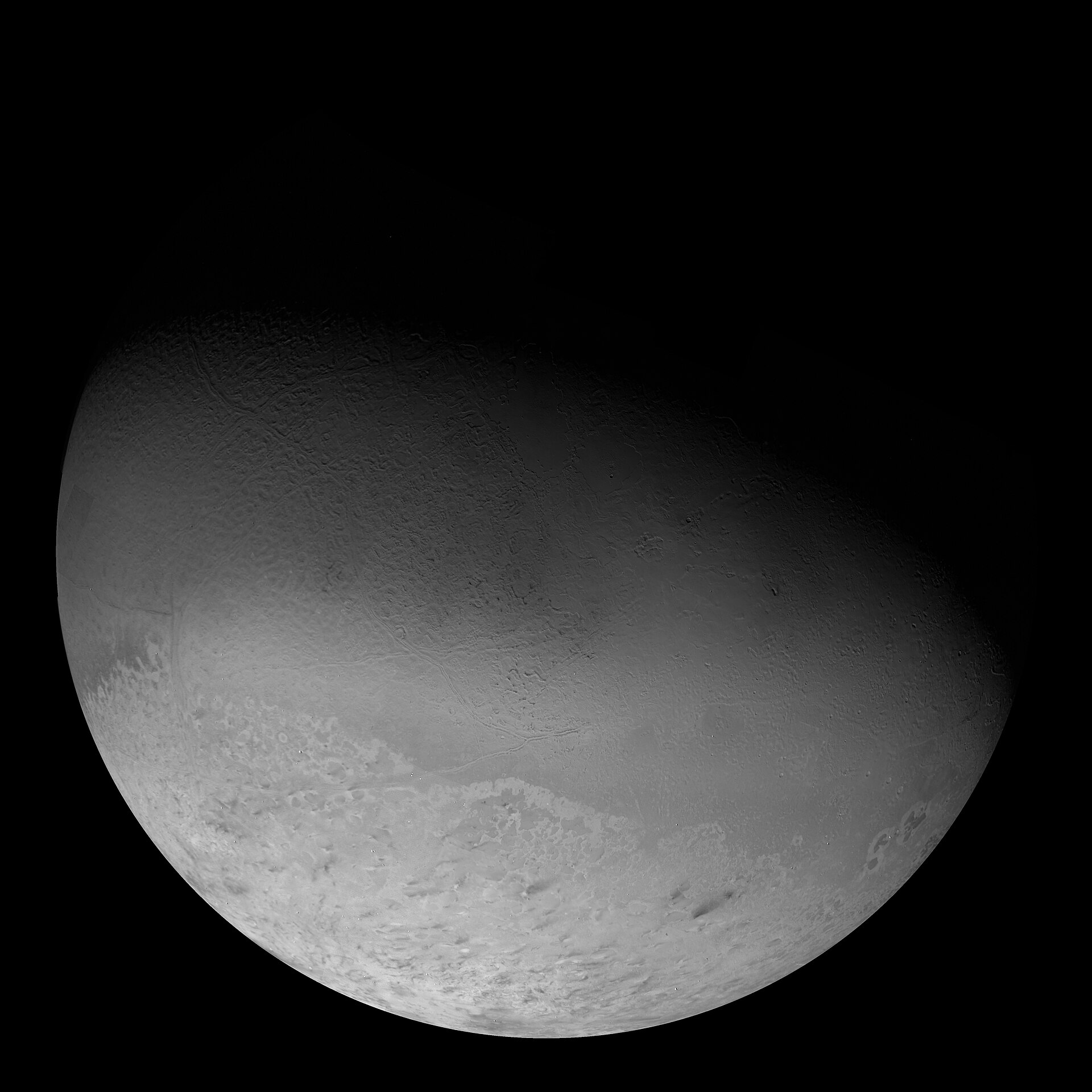
Two rocks on short leashes
Phobos is eleven kilometres across and orbits in under eight hours — faster than Mars turns, so from the surface it rises in the west and sets in the east twice a day.
It is also falling. Tidal drag is pulling it inward, and it will break up or strike the planet within about fifty million years.
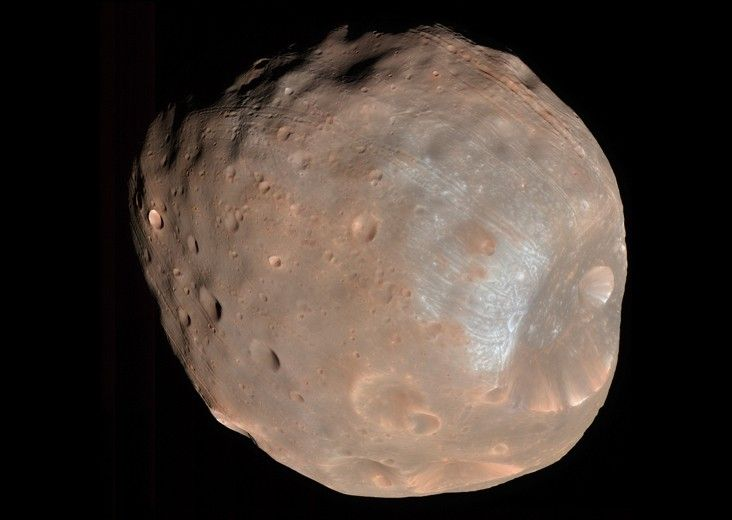
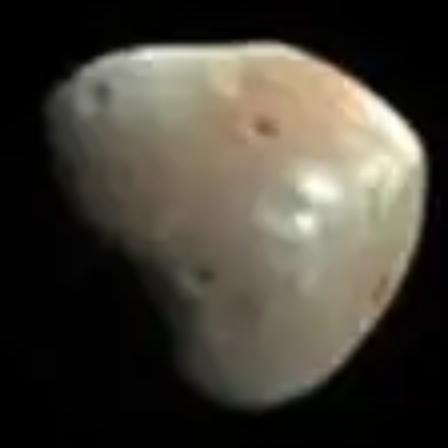
Both photographs, to scale with each other. At the scale of the previous slide, either would be smaller than this full stop.
- Phobos — orbit
- 9,379 km, 0.319 d
- Phobos — density
- 1.872 g/cm³
- Deimos — orbit
- 23,459 km, 1.262 d
- Deimos — density
- 1.471 g/cm³
Two lumps
Neither is round — both are too small for gravity to pull them into a sphere. Phobos orbits closer to its planet than any other moon in the solar system, and faster than Mars turns, so from the surface it rises in the west.
It is also spiralling inwards. In tens of millions of years it will break apart into a ring.
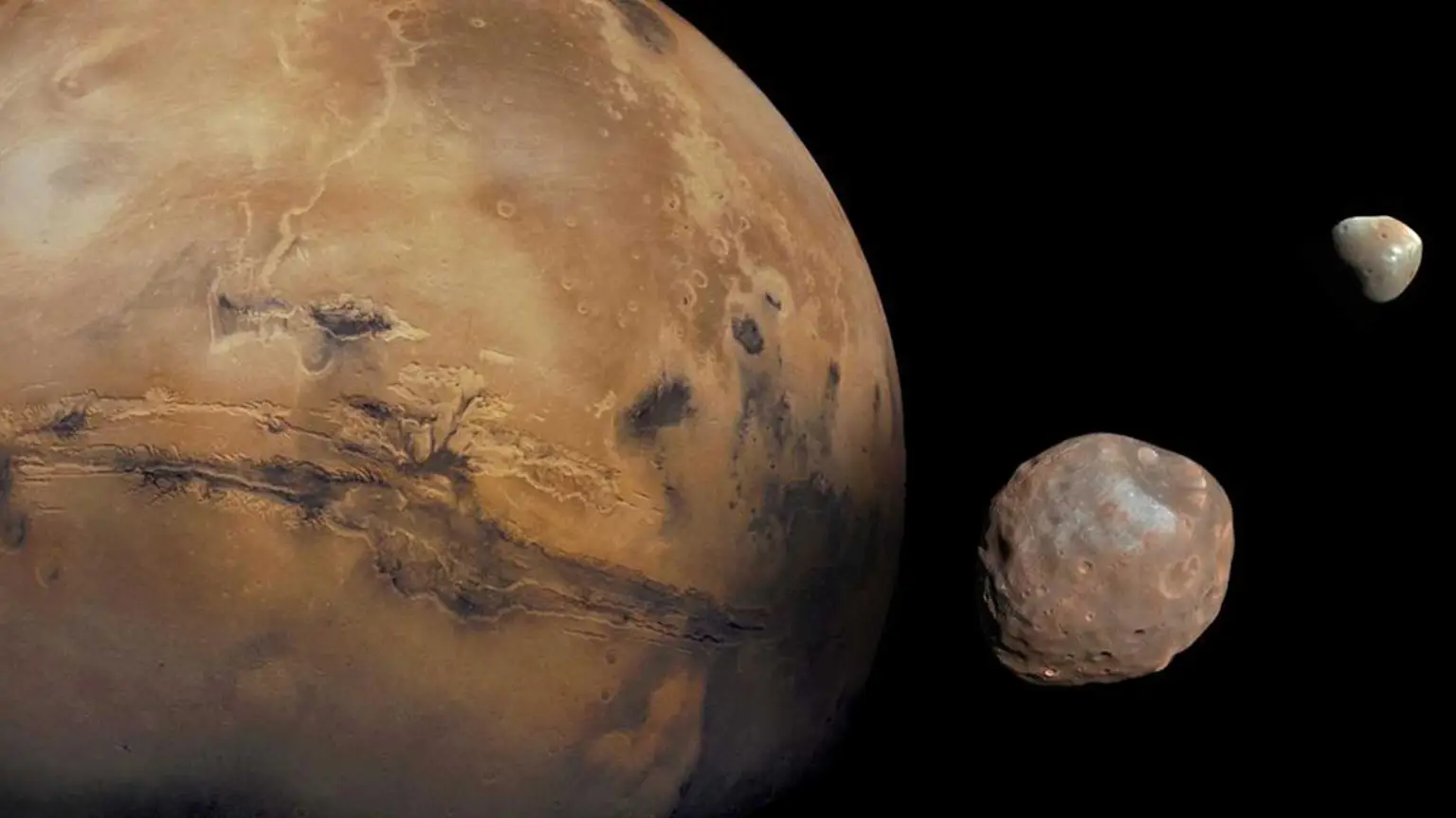
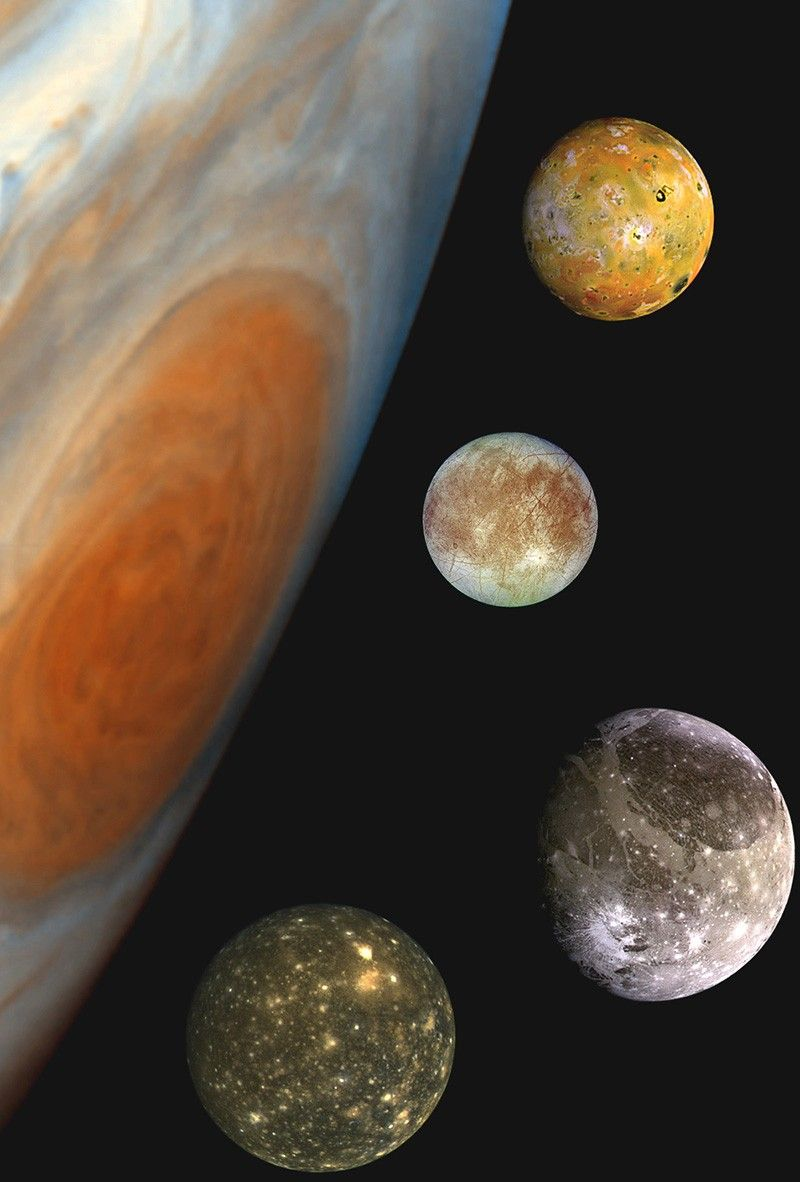
The Galileans
Density falls steadily outward — 3.53 g/cm³ at Io, 1.83 at Callisto. The inner two are rock; the outer two are about half water ice. Distance from Jupiter set how much ice survived.
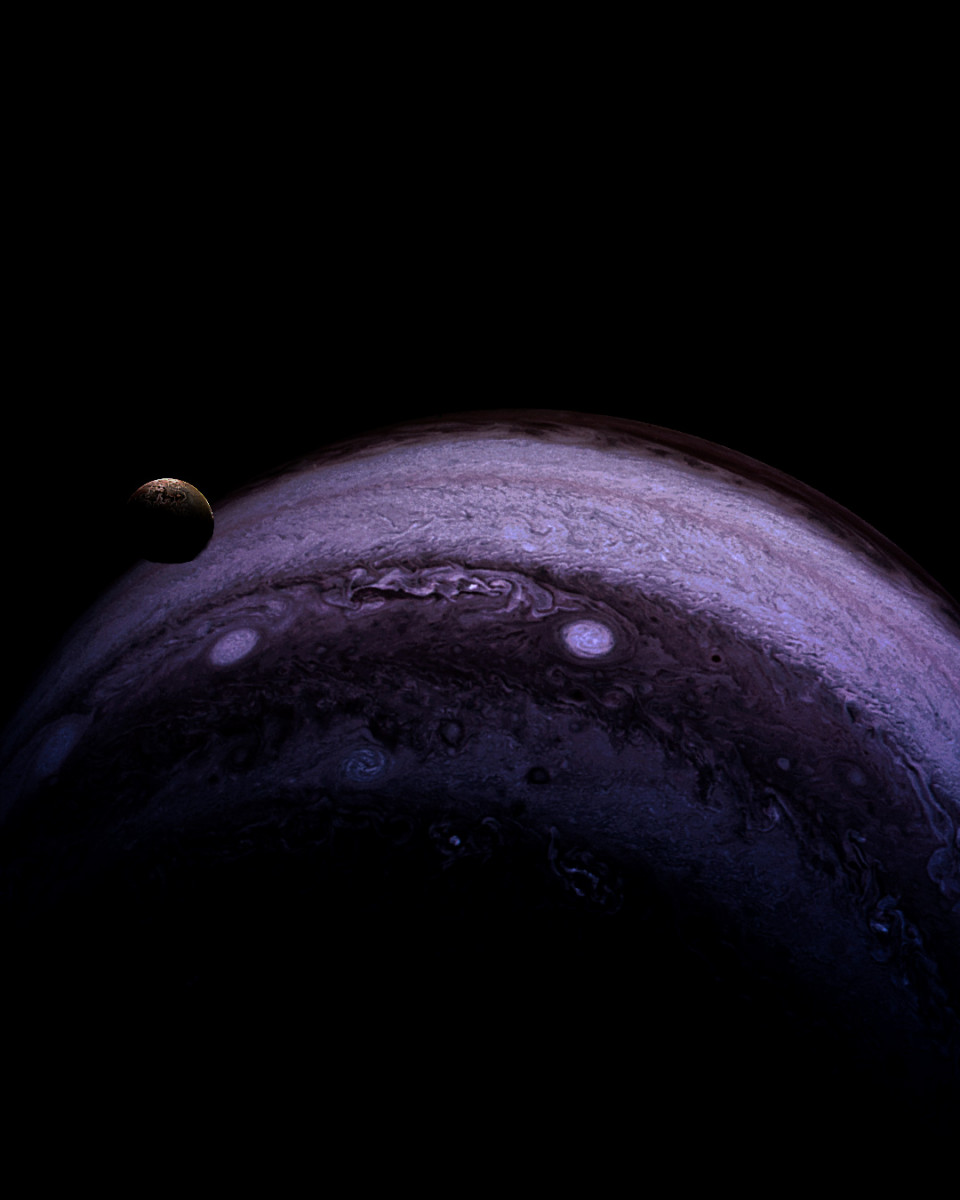
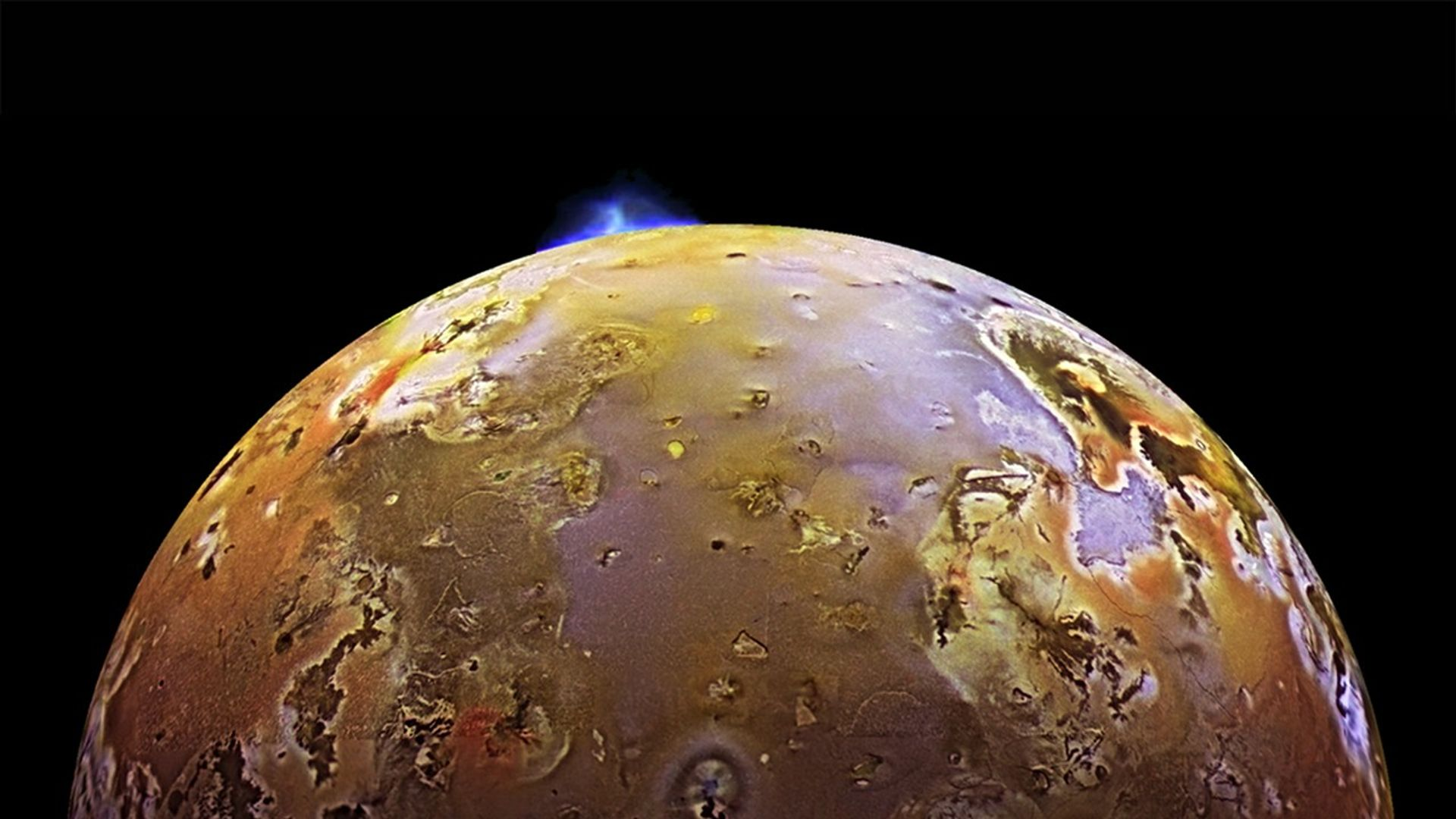
Io
The most volcanically active world in the solar system — sulfur frosts, 400+ volcanoes. Squeezed by Jupiter and pulled on by Europa and Ganymede, its interior is kneaded hard enough to stay molten.
The material it throws off feeds the plasma torus that powers Jupiter's radiation belts — the same belts steadily wrecking the camera that took this picture.
- Radius
- 1,821.5 km
- Orbit
- 422,019 km, 1.769 d
- Density
- 3.528 g/cm³ — the densest moon
- Eccentricity
- 0.0036 — small, and enough
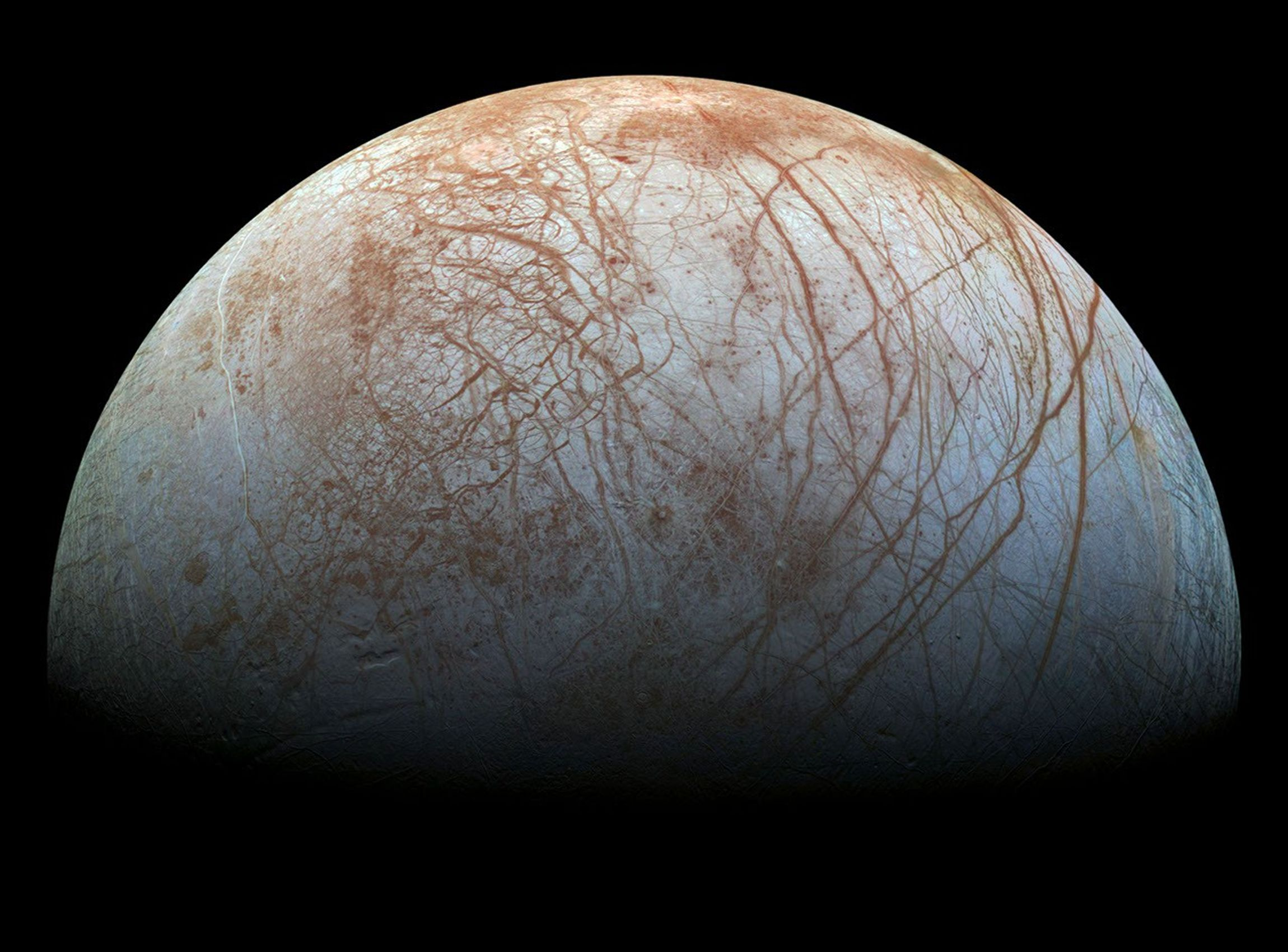
Europa
The smoothest body in the solar system: an ice shell over a global salt-water ocean holding roughly twice the water of every ocean on Earth. Almost no craters, because the surface keeps renewing itself.
The rust-coloured streaks are salts and sulfur compounds carried up through the cracks — the ocean, sampled at the surface.
- Radius
- 1,560.8 km
- Orbit
- 671,100 km, 3.551 d
- Density
- 3.013 g/cm³
Ganymede and Callisto
Ganymede
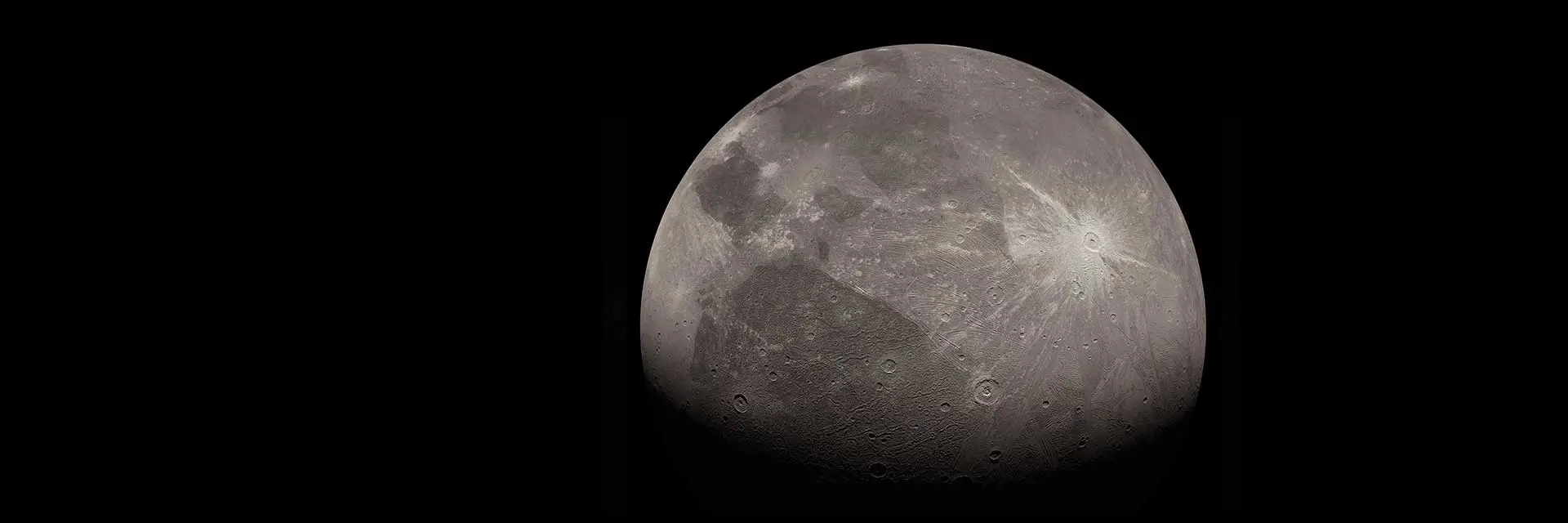
Larger than Mercury, and the only moon known to generate its own magnetic field. Bright young craters cut across darker terrain four billion years old.
Callisto
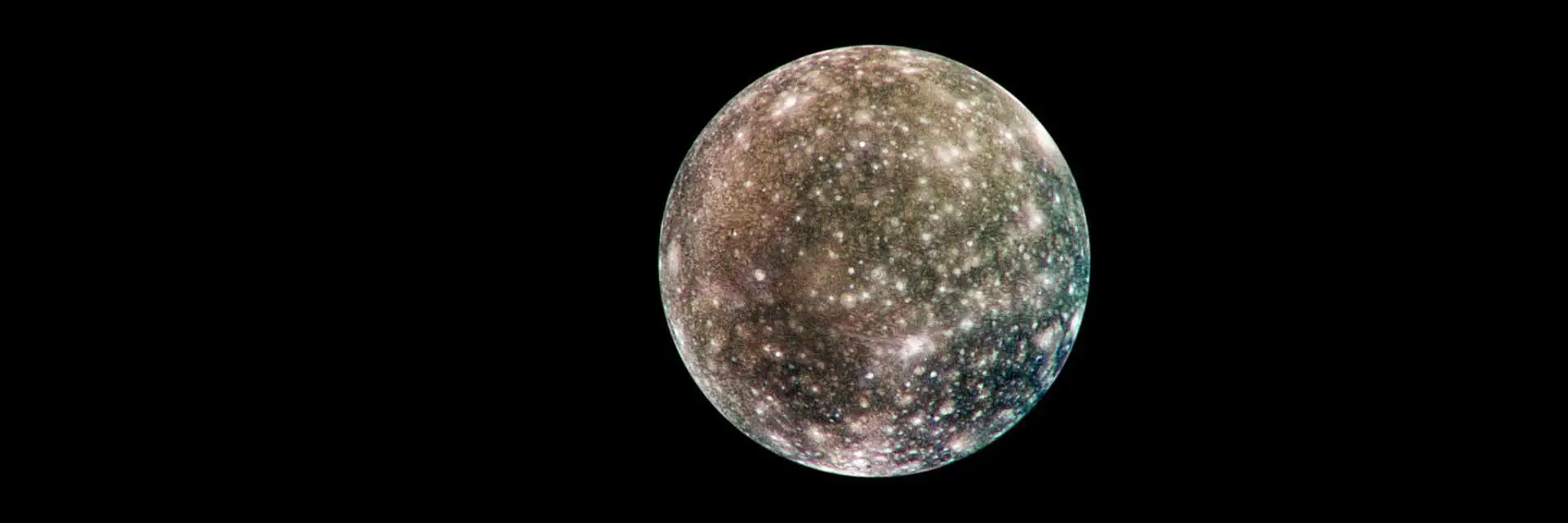
The most heavily cratered object known. Nothing has resurfaced it since the early solar system, so every impact it has ever taken is still there to count.
Saturn's ice moons
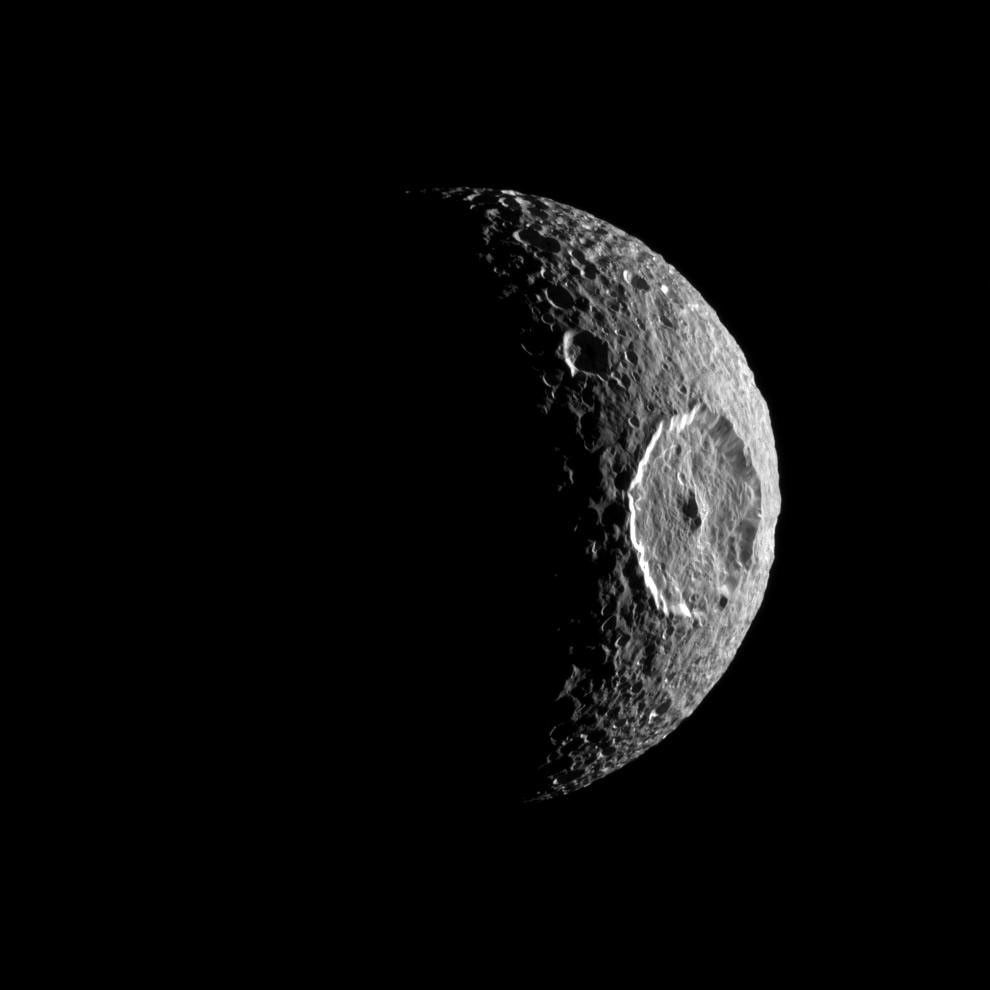
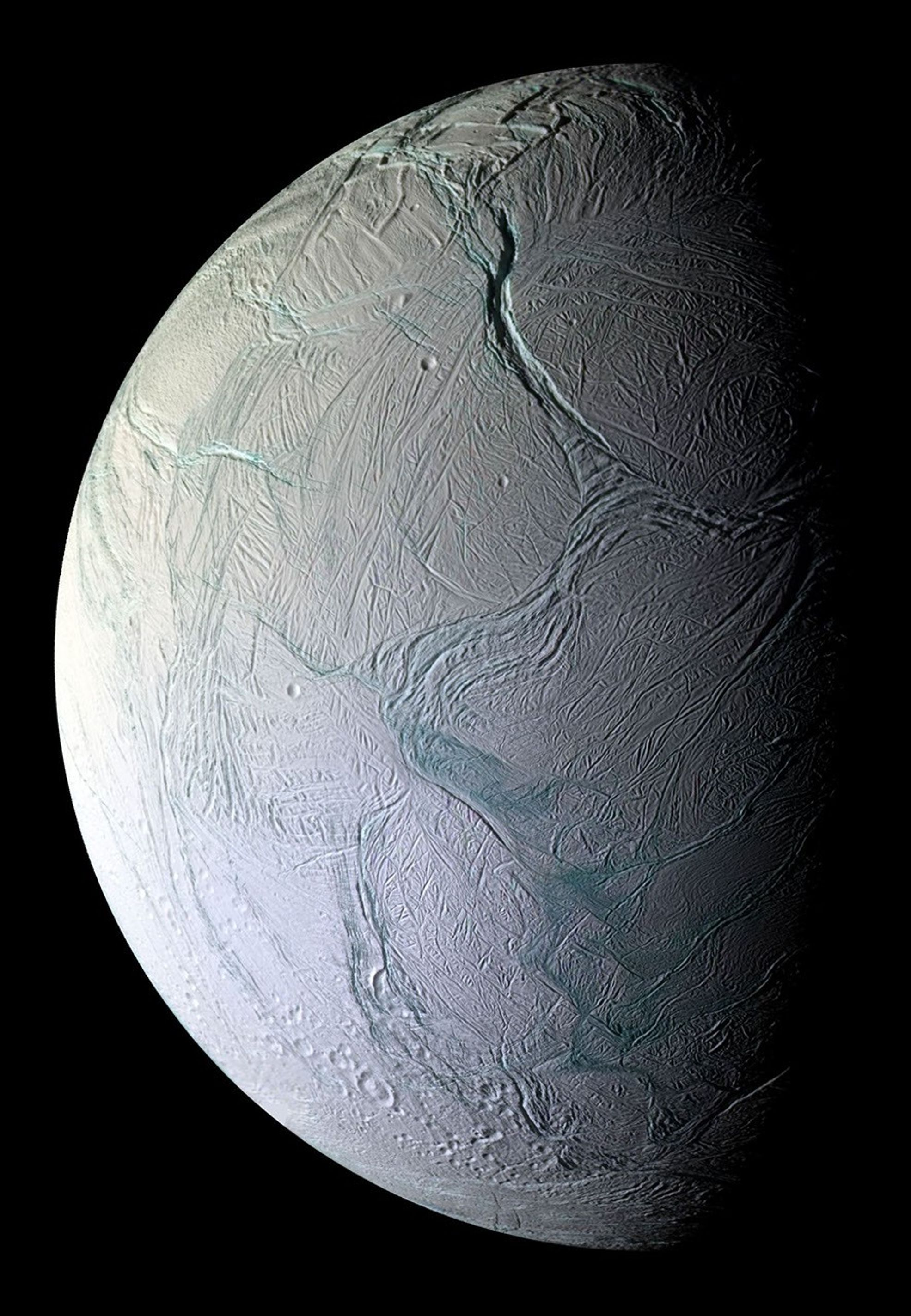
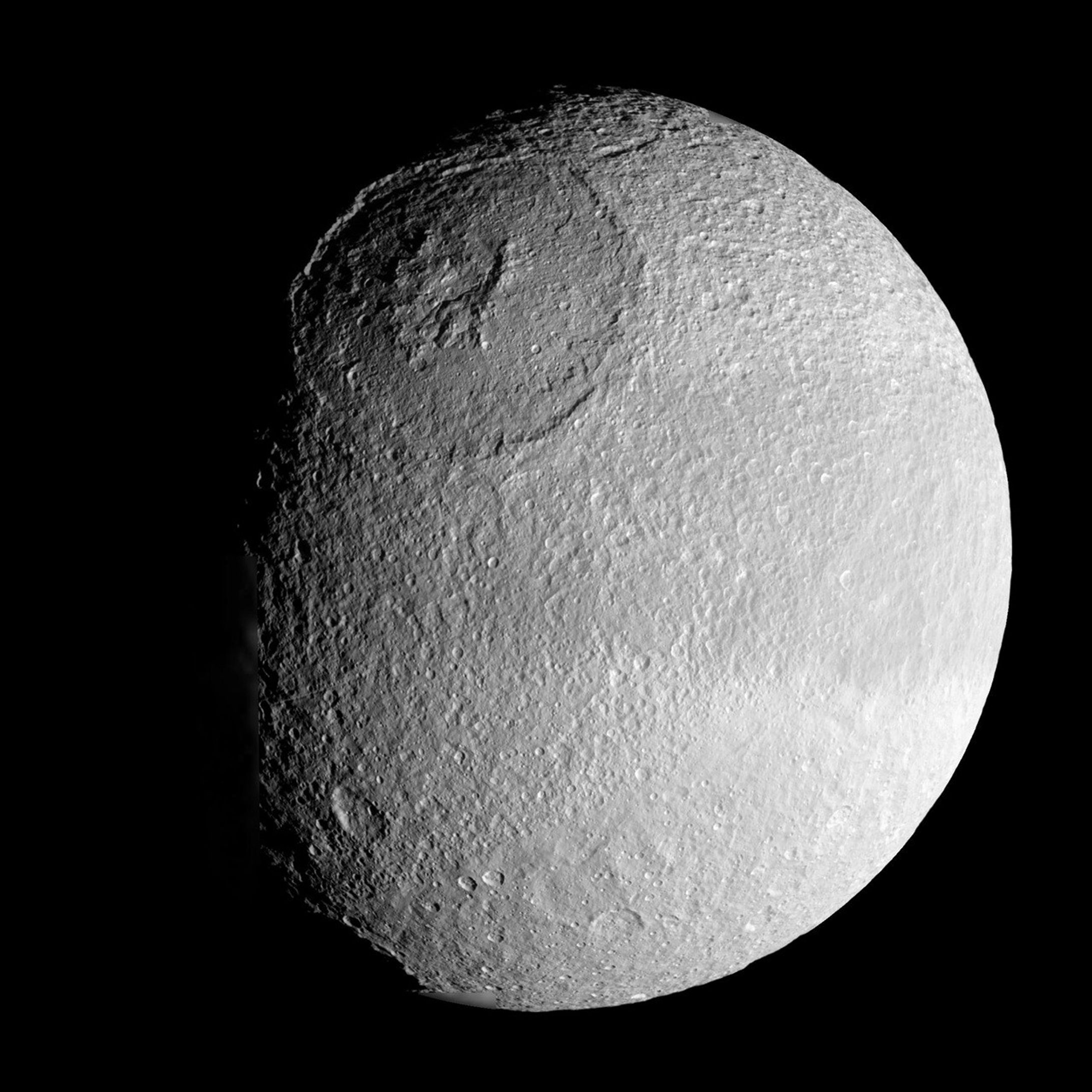
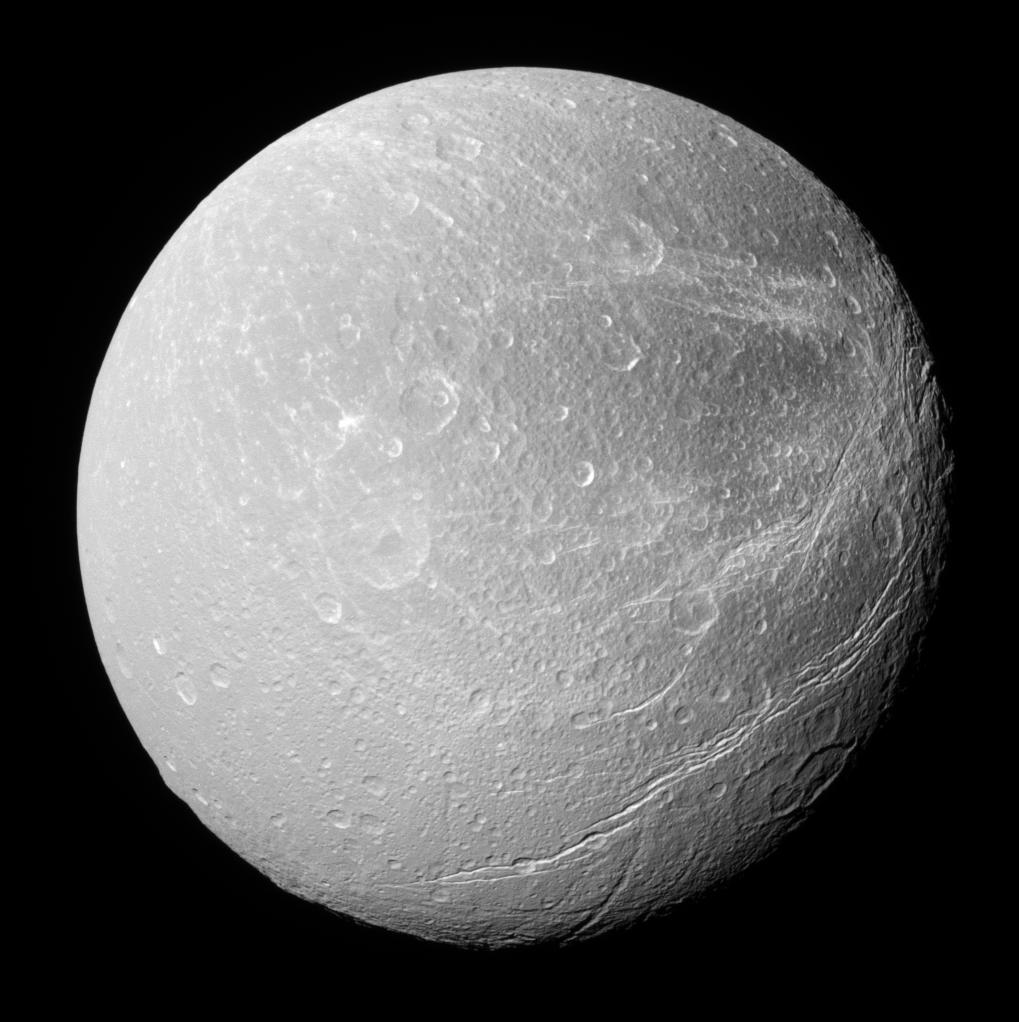
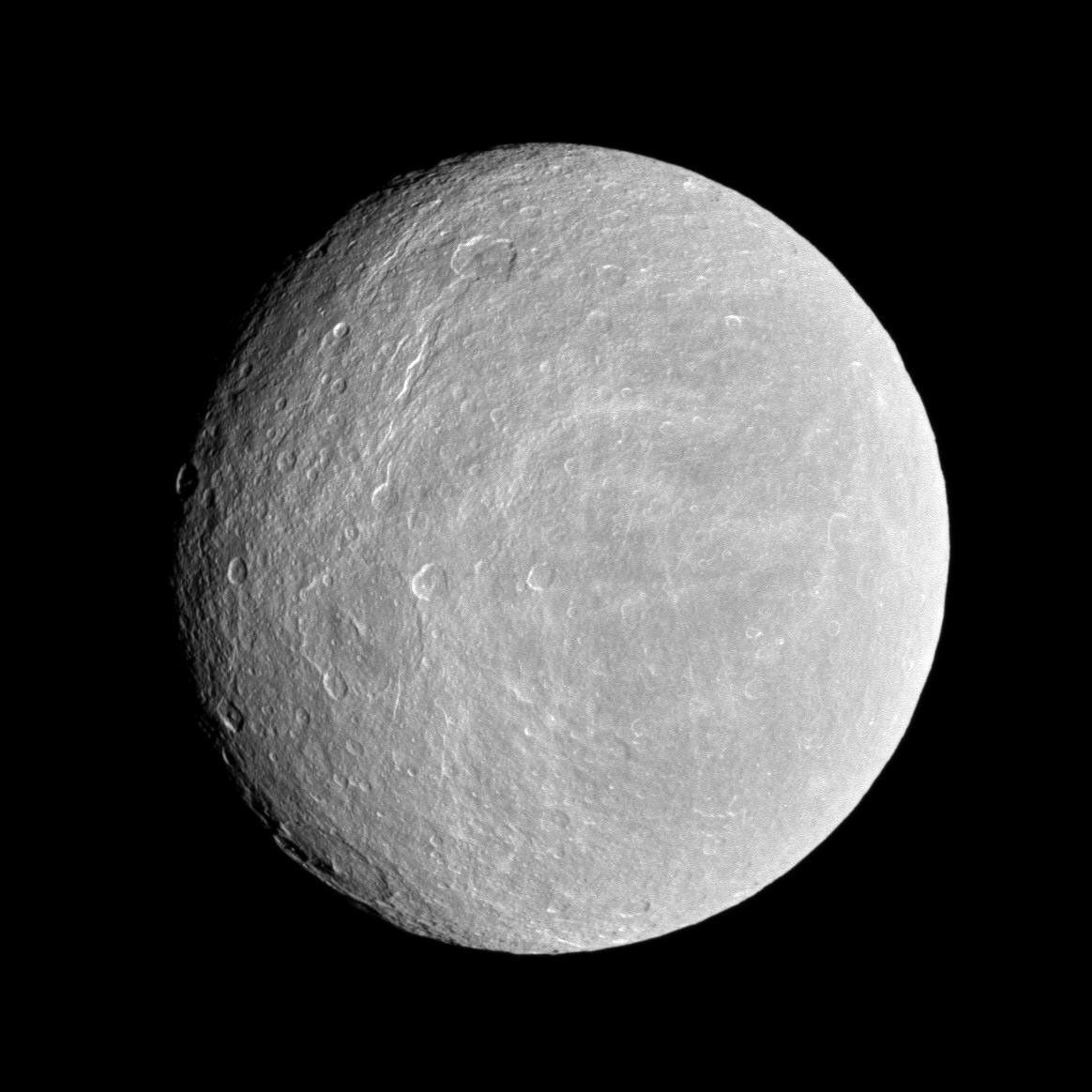
Six small worlds made mostly of water ice. Tethys, at 0.98 g/cm³, is barely denser than the stuff it is made of. Titan is left out of this row — at the same scale it would be three and a third times Rhea's width.
Titan
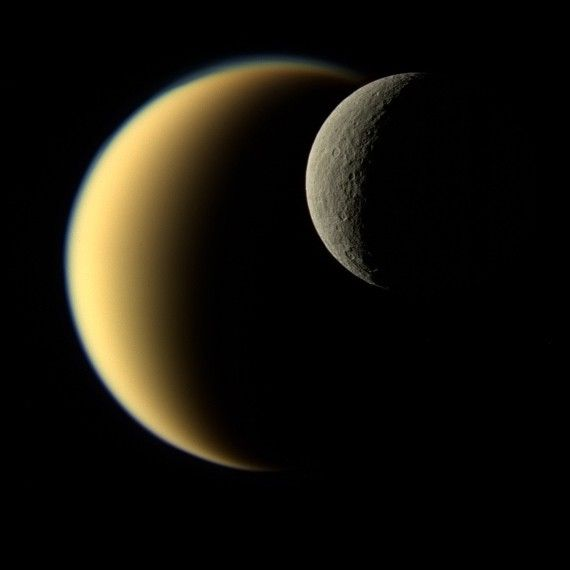
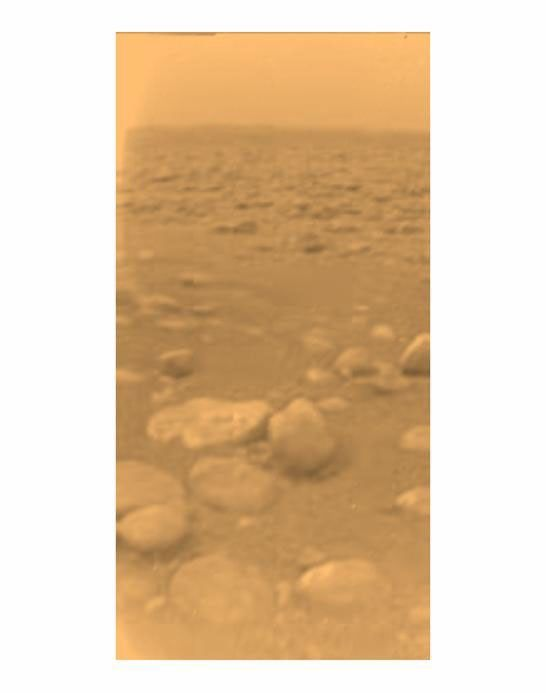
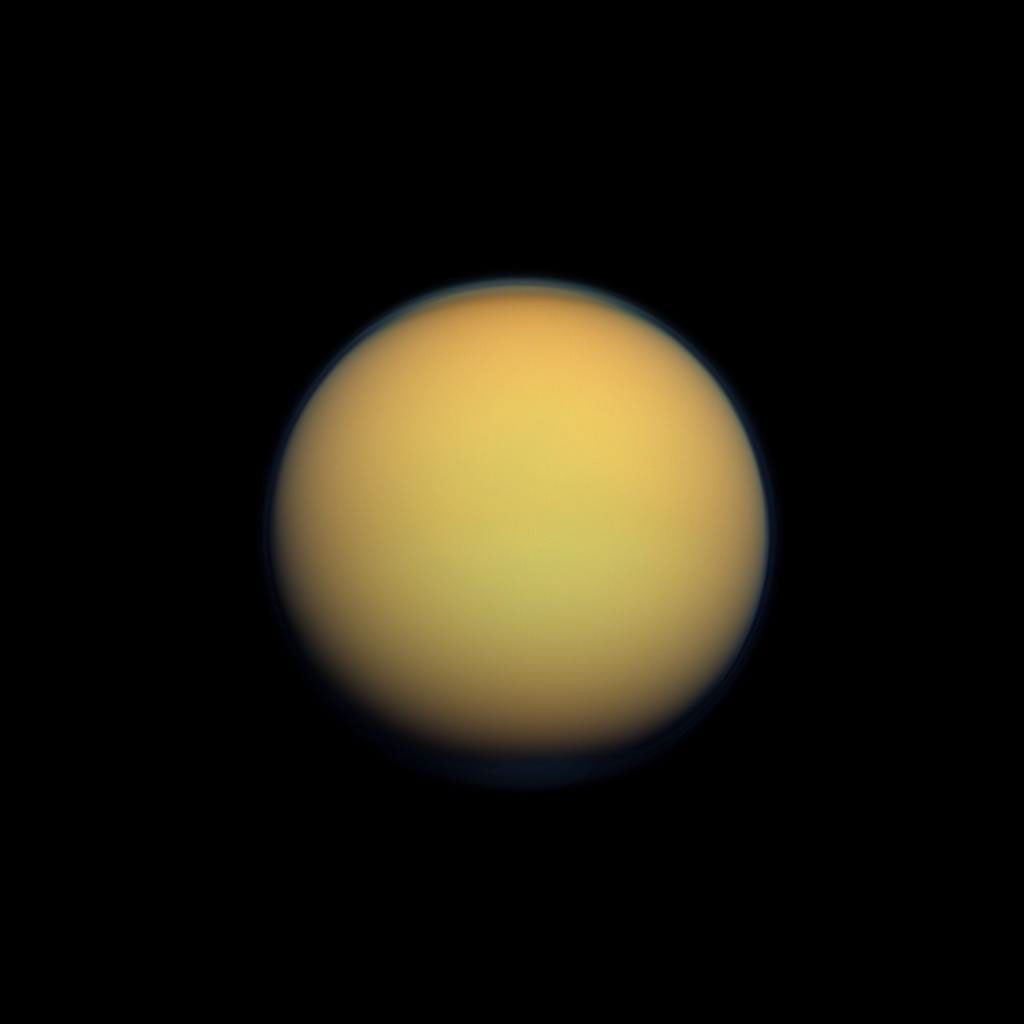
The only moon with a thick atmosphere, and the only other world with standing liquid — methane lakes. Wider than Mercury, and the second largest moon in the solar system.
Under the haze
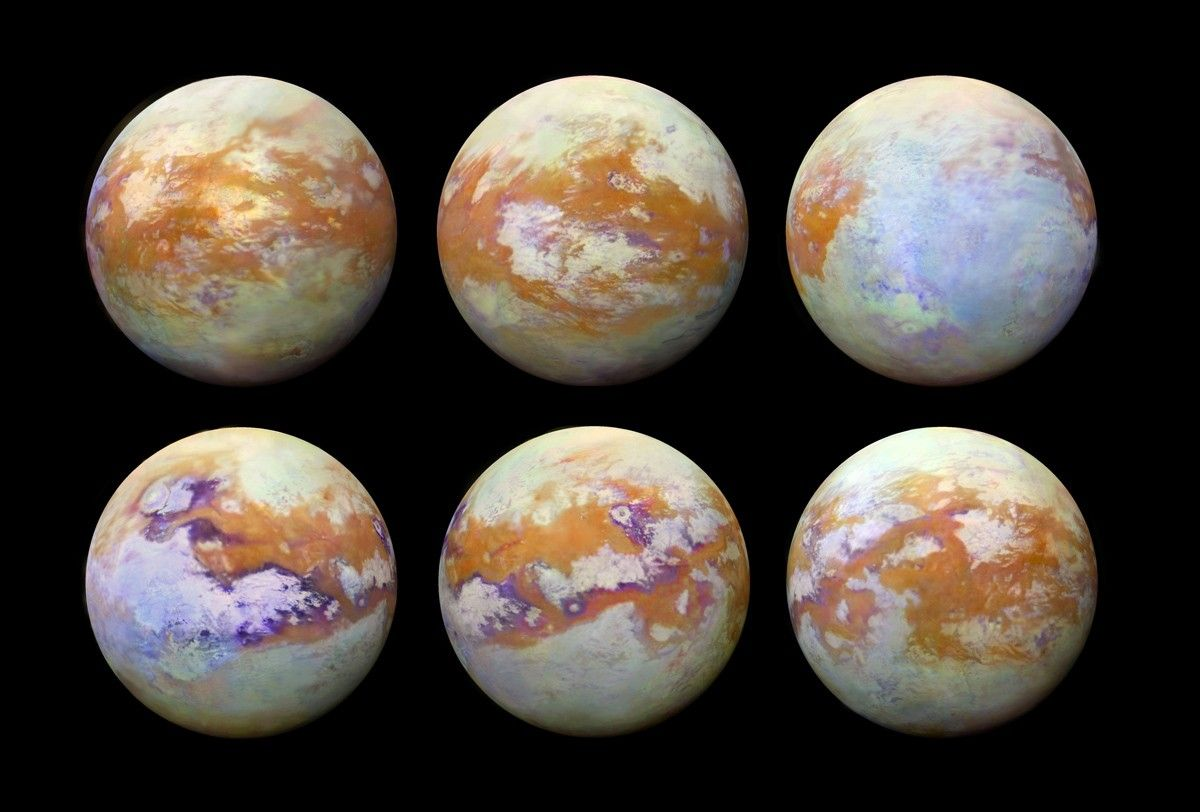
Cassini carried an infrared spectrometer that sees straight through the haze. Assembled from thirteen years of flybys, these six views show what the orange ball conceals: bright equatorial dune fields, darker highlands, and the methane lakes near the pole.
Enceladus
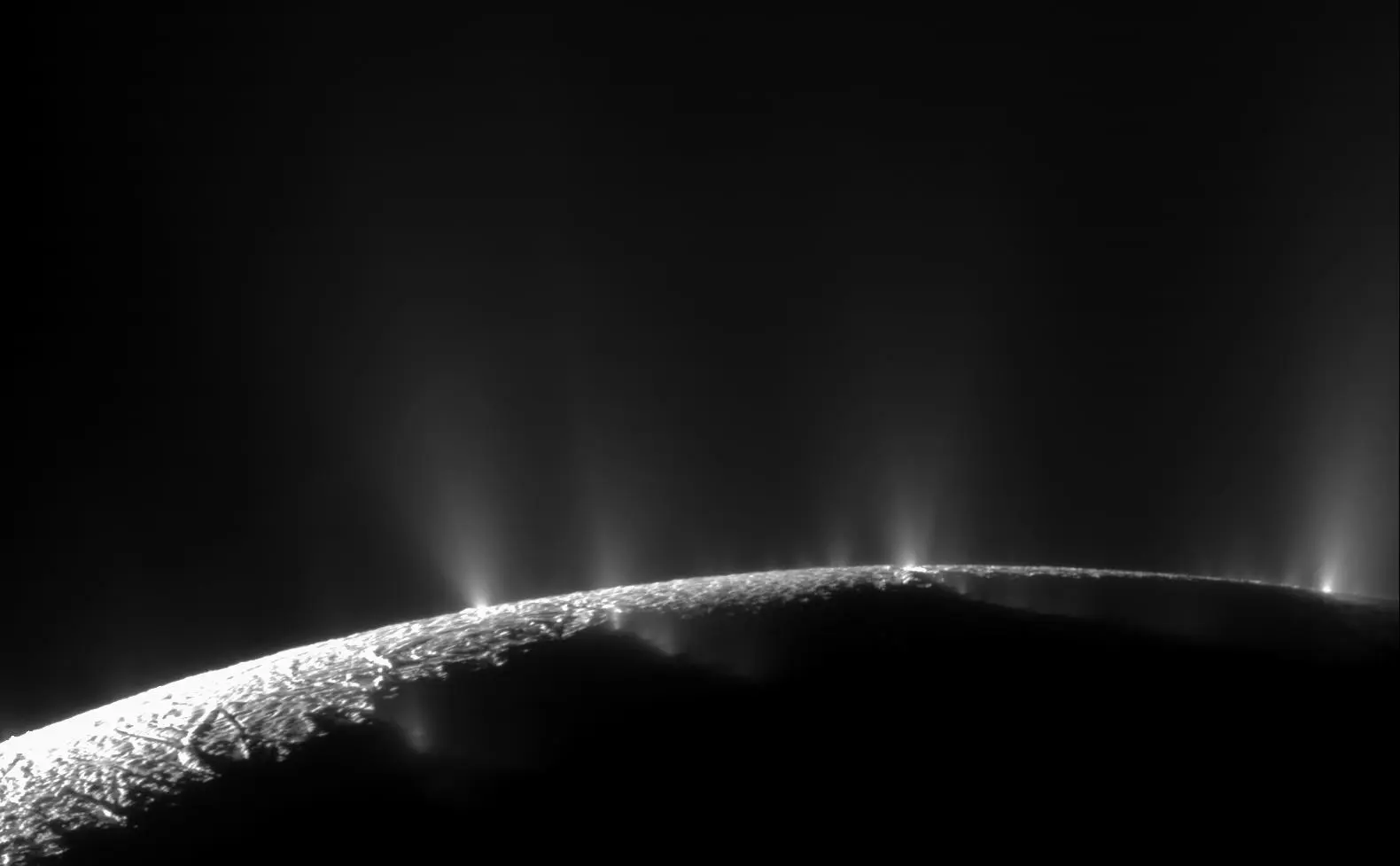
Brightest surface in the solar system, venting water ice from a subsurface ocean. Two hundred and fifty kilometres across — small enough to sit inside the length of Britain — and geologically alive.
Mimas
Herschel crater spans a third of its diameter. Whatever struck Mimas came close to destroying it — the fractures on the far side may be from the same impact.
At 198 kilometres it is the smallest of Saturn’s round moons, and only just round: its own gravity barely wins.
- Radius
- 198.2 km
- Orbit
- 186,007 km, 0.942 d
- Density
- 1.150 g/cm³ — nearly all ice
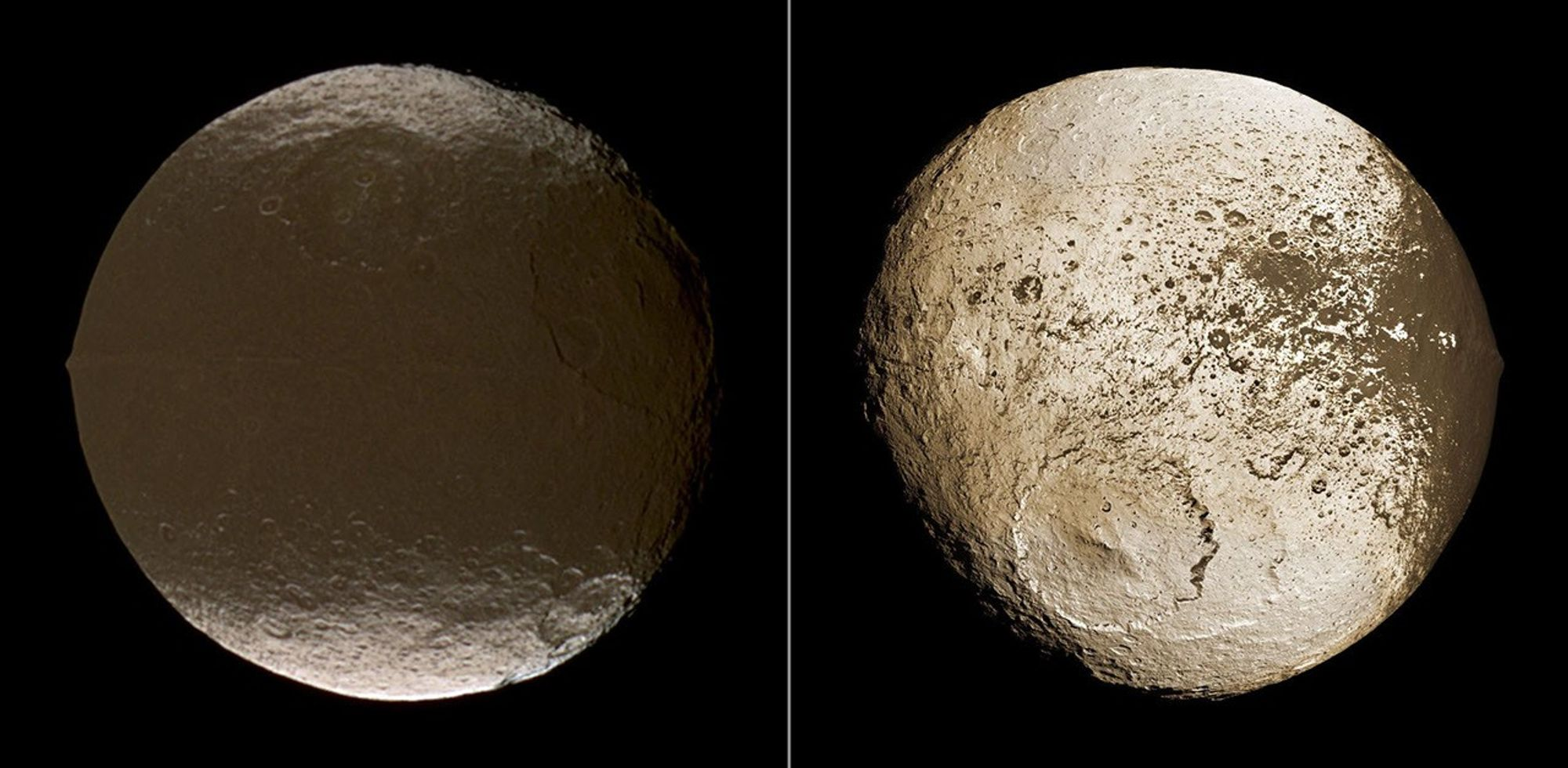
Iapetus
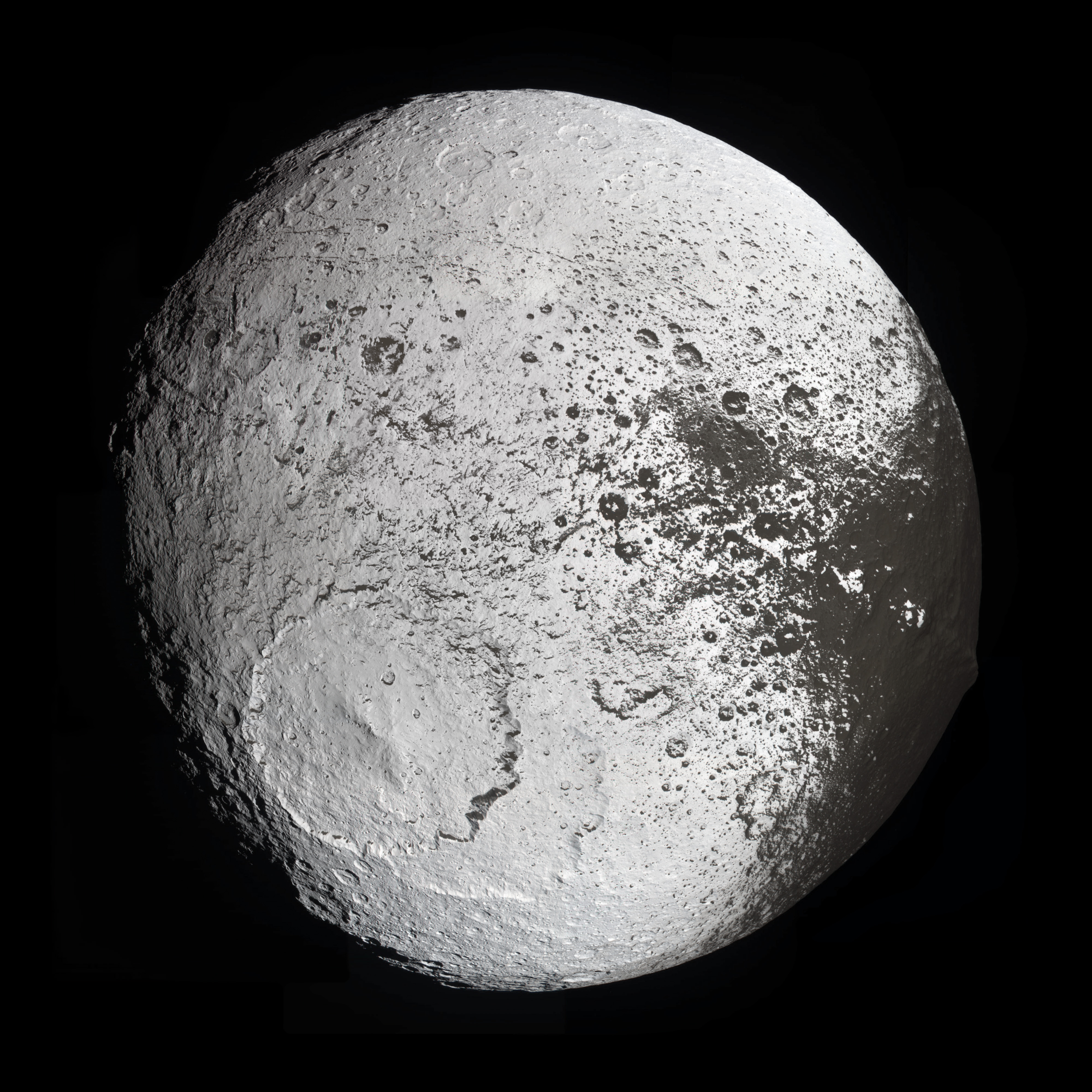
One hemisphere is as dark as coal, the other as bright as snow. The dark side always leads, sweeping up material as it goes; ice sublimates away from the warmed surface and refreezes on the cold bright side.
A ridge twenty kilometres high runs most of the way around the equator. Nobody knows why it is there.
- Radius
- 734.5 km
- Orbit
- 3,560,820 km, 79.33 d
Uranus’s five
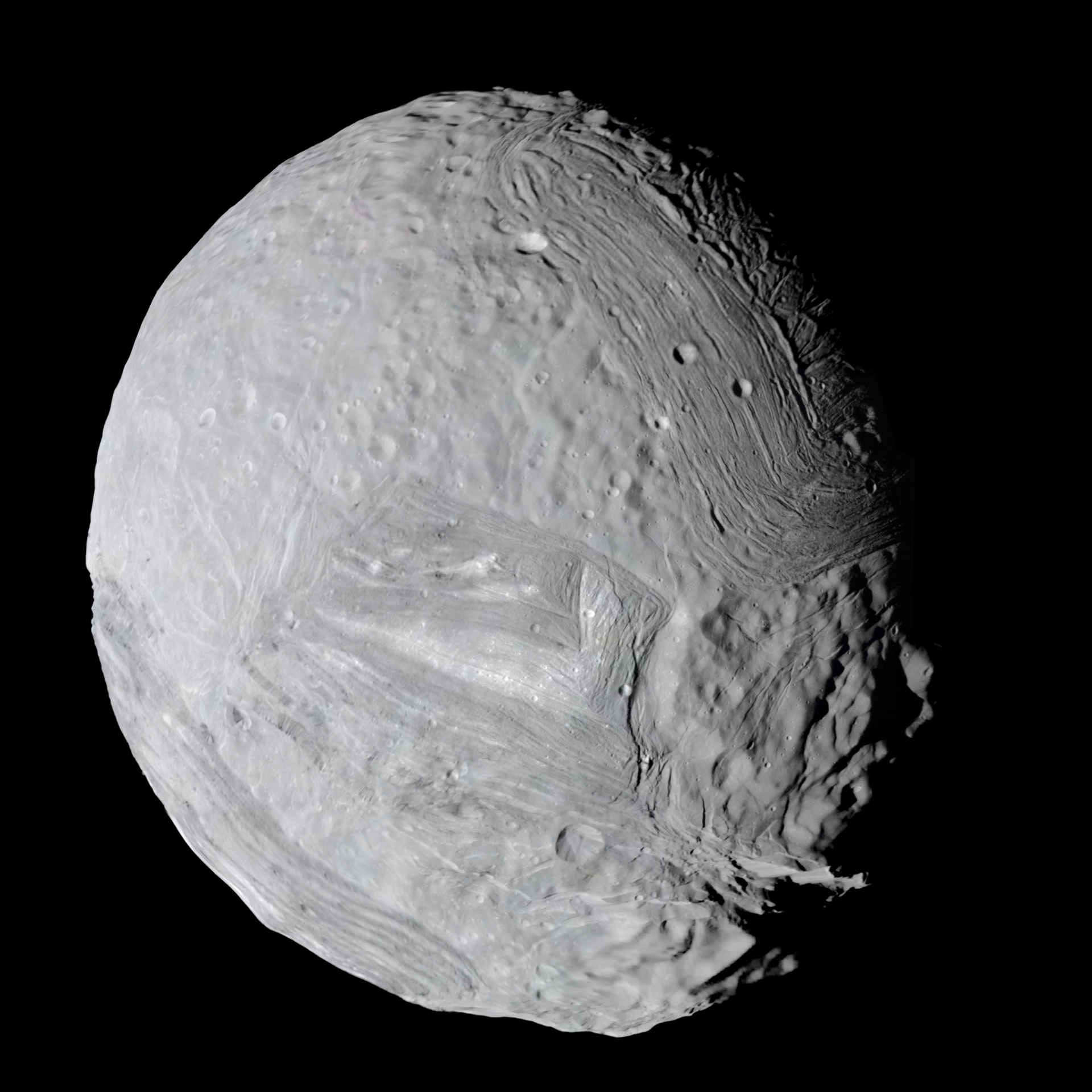
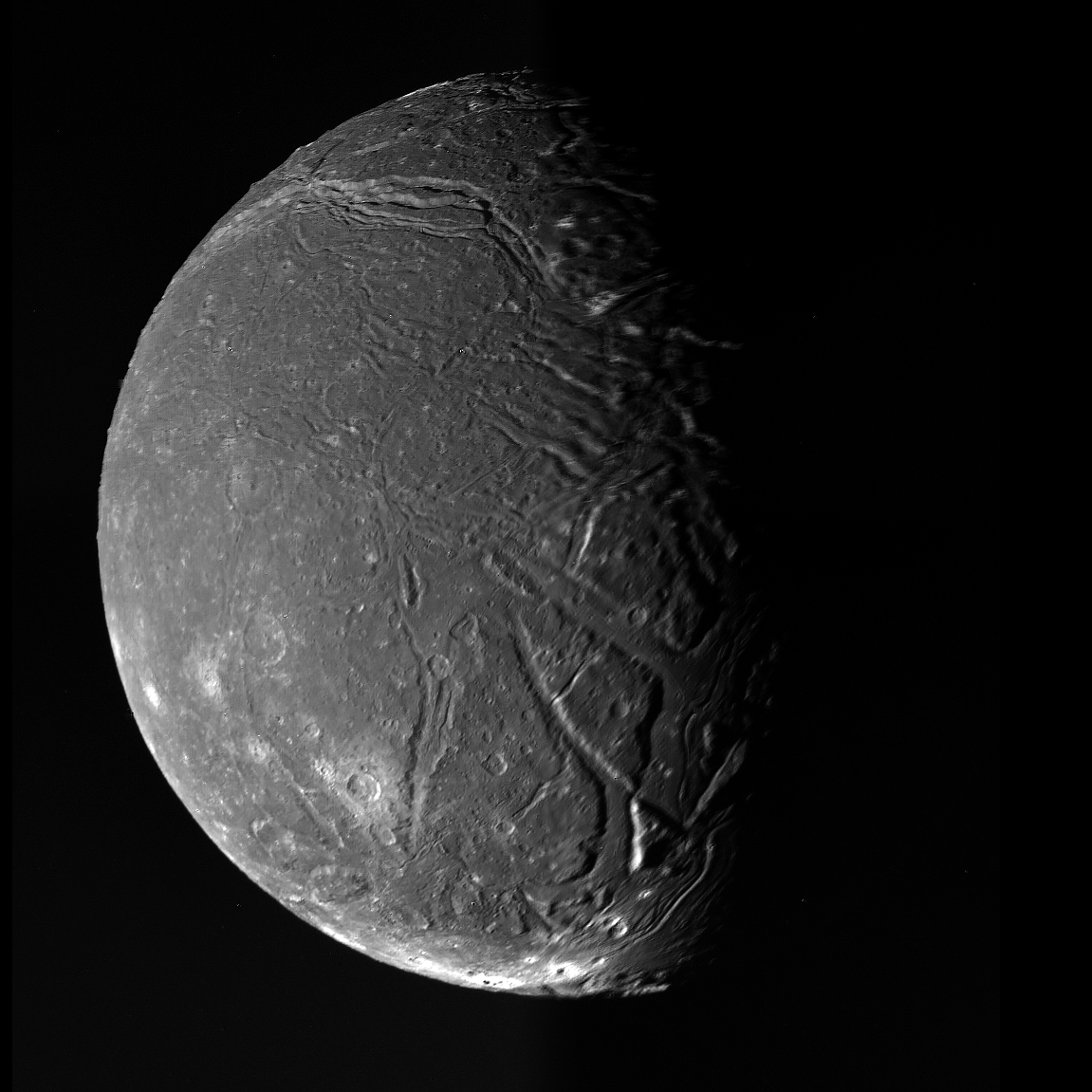
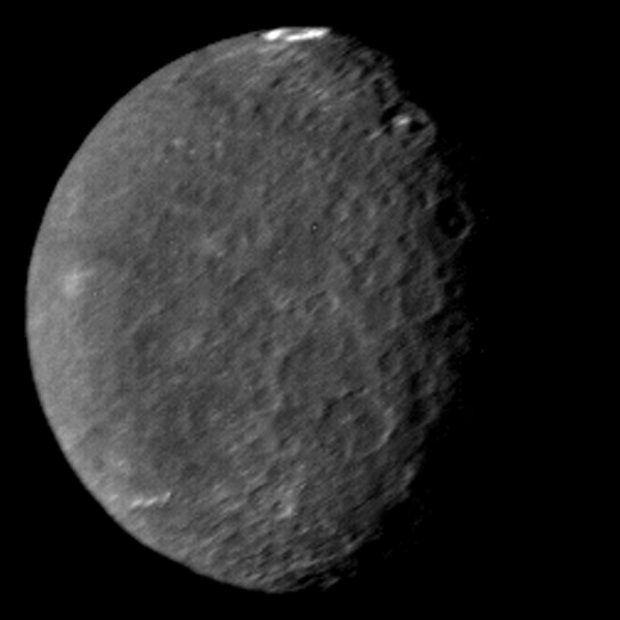
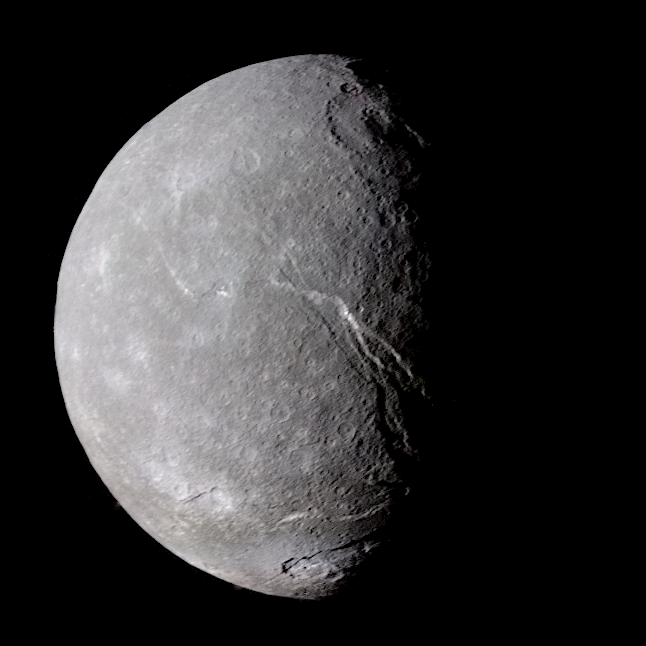
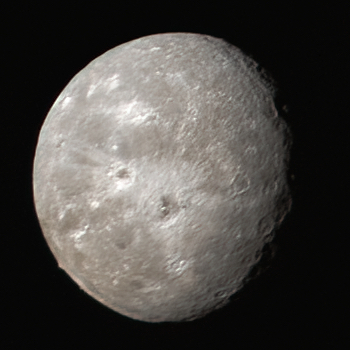
All five orbit in their planet’s equatorial plane — which, tipped 98°, means their inclinations read 97.7° to 99.2° and their orbits run over the poles as seen from the ecliptic.
Neptune’s three
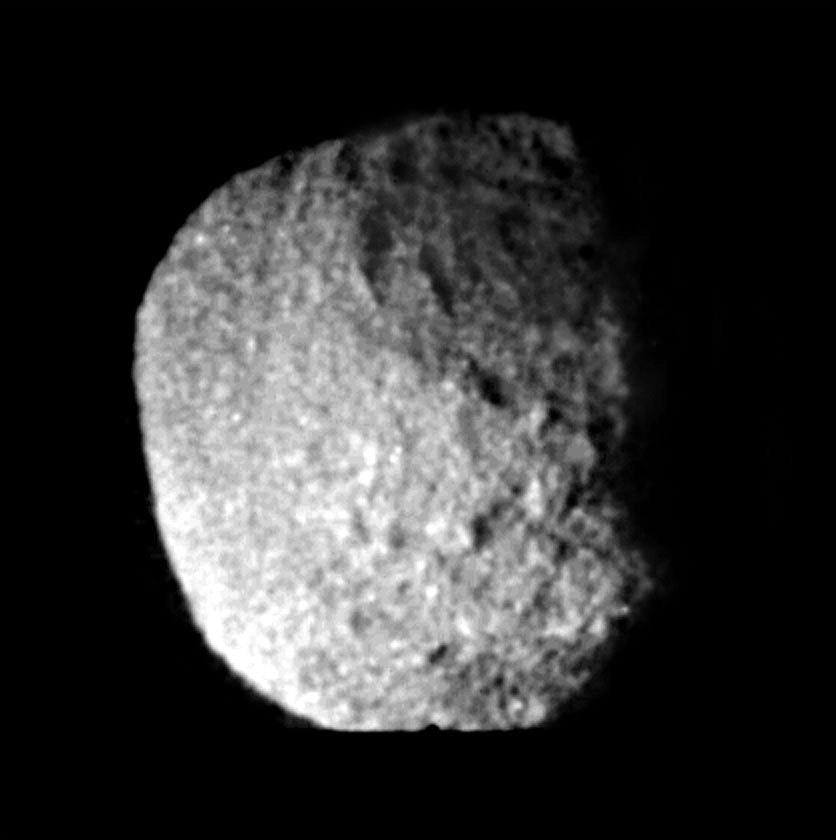
Two of these were almost certainly not born here. Triton orbits backwards at 129° inclination, and Nereid swings between 1.4 and 9.7 million kilometres on a 360-day loop.
Where the numbers come from
Radii, orbits, periods and densities are read straight from the orrery’s satellite table. Every disc is sized to true relative scale, so the size comparisons hold even where a moon is still a drawn circle.
- Satellite data
- The orrery’s own satellite table — radius, semi-major axis, period, eccentricity, inclination and density for 21 moons
- The Moon
- The body constants table: NASA Planetary Fact Sheets and IAU WGCCRE 2015
- Descriptions
- The satellite table’s own note fields, quoted unchanged
- Photographs
- Cassini (Titan, Enceladus, Mimas, Tethys, Dione, Rhea, Iapetus): NASA / JPL-Caltech / Space Science Institute. Voyager 2 (Miranda, Ariel, Umbriel, Titania, Oberon, Triton, Proteus, Nereid): NASA / JPL / USGS. Juno (Io at the limb, Ganymede): NASA / JPL-Caltech / SwRI / MSSS, Io via a citizen scientist. Galileo (Galilean group portrait, Callisto): NASA / JPL / DLR; Io’s plume and Phobos: NASA / JPL / University of Arizona; Europa: NASA / JPL-Caltech / SETI Institute. Titan’s surface: ESA / NASA / JPL / University of Arizona; Titan in infrared: NASA / JPL-Caltech / University of Nantes. Mars and Deimos: NASA / JPL-Caltech / MSSS. Mercury: NASA / Johns Hopkins APL / Carnegie Institution. The Moon: NASA.
- Still needed
- All twenty-two are photographs. Nereid is the weakest: Voyager 2 passed too far off to resolve more than a smudge, so it is shown enlarged from a few dozen pixels.